The cedar chest at the foot of Amina Bibi's bed had not been opened in eleven years.
It was not that she had forgotten it. She dusted it every Friday morning, running her cloth over the carved roses on its lid the way other women stroked the hair of sleeping children. Inside, folded in layers of soft white muslin, was her wedding dress. Deep red silk, heavy with gold thread, the sleeves still smelling faintly of rosewater and the smoke of the winter evening when she had worn it, forty-five years ago, as a girl of seventeen who had laughed so much her cheeks had ached for days.
A woman's wedding dress was not a piece of cloth. It was the first day of her life, folded away for safekeeping.
Amina lived alone now in the small house at the end of Noorabad Street, the house Kareem had built with his own hands when they were young and poor and happy. Her children had grown and moved away to the city. They called on Sundays and begged her to come and live with them. But Amina always refused with the same gentle smile. "This house has my whole life in it," she would say. "Where else would I keep it?"
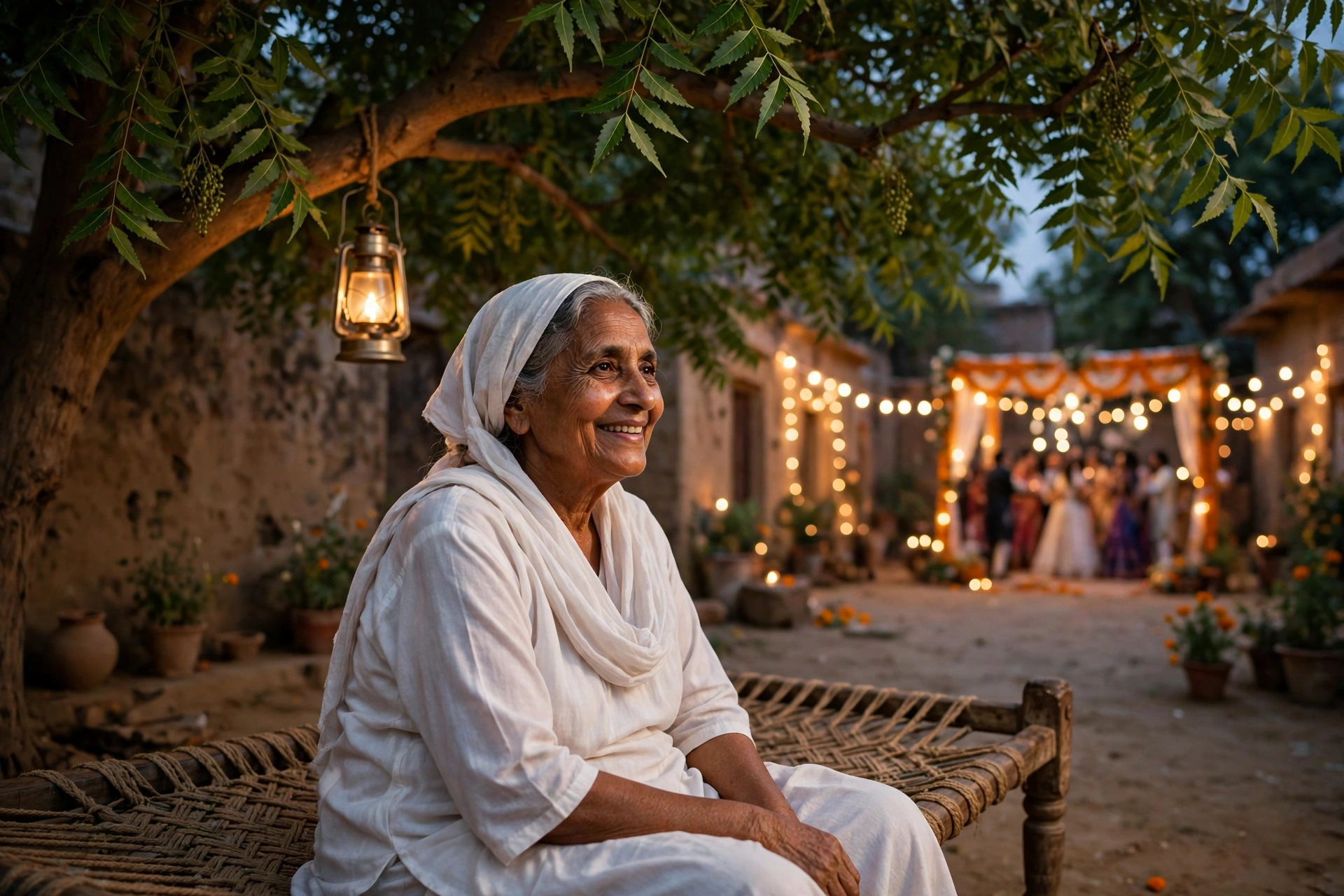
In the evenings she sat on the charpoy under the neem tree and watched the street fill with the sounds of other people's lives: children chasing a tyre, the vegetable seller calling out his prices, and, from the small house three doors down, the sound of a sewing machine that never seemed to stop.
That house belonged to the family of Zara, a girl of nineteen with large dark eyes and hands that were always busy. Zara's father drove a rickshaw from dawn until midnight, and her mother stitched clothes for the whole street. Zara herself had left school at sixteen to help her mother, and she had never once complained — not about the long hours, not about the plain meals of lentils, not about the dresses she stitched for other brides while wearing her own faded cotton shalwar kameez.
There was only one problem, and it was the kind of problem that poor families carry like a stone in the shoe: the wedding dress. A bride's dress in their town cost more than Zara's father earned in three months. "We will manage," her mother said. "A simple dress is enough. What matters is the girl, not the cloth."
But Amina, passing their open door that evening, saw Zara sitting alone in the courtyard, holding a magazine picture of a bride in a deep red dress — a picture she had cut out months ago and kept folded in her school notebook. She was looking at it the way a thirsty traveller looks at a river in the distance. There were no tears on her face. That was the saddest part. She had already accepted that some dreams were not for girls like her.
Amina walked home slowly that night and did not sleep. She lay in the dark and thought about the cedar chest at the foot of her bed, and the dress inside it — red silk, gold thread, forty-five years of waiting in the dark. She thought about Kareem, and what he would have said. She knew exactly what he would have said. "A dress you never wear is just a beautiful prison for the cloth," he had told her once, long ago. "Cloth is meant to be worn, Amina. It is meant to dance and laugh and be seen. Locked away, even silk forgets what it is for."
The next morning, Amina woke before dawn, said her prayers, and did something she had not done in eleven years. She knelt beside the cedar chest, lifted the lid, and took out her wedding dress. The muslin fell away like a sigh. The red silk caught the morning light and seemed to glow, as if it had been holding the sunlight inside itself all those years. Amina held it up, and for a moment she was seventeen again, standing in her mother's courtyard with henna on her hands and her whole life shining in front of her like a road after rain.
She folded it again, wrapped it in fresh white muslin, and placed it in a cloth bag. Then she put on her shoes, took her walking stick, and went to the house three doors down.
Zara appeared from the back room, her sewing needle still in her hand, her eyes wide. Amina took the girl's hands in her own — hands that were thin now, spotted with age, but still warm — and looked at her the way a grandmother looks at a granddaughter she has loved since birth.
"I have something for you," Amina said. "It has been waiting a long time for the right girl."
She opened the cloth bag and lifted out the dress.
Zara's mother gasped and put a hand to her mouth. Zara froze, her eyes filling with tears, her hand reaching out and then stopping, afraid to touch something so beautiful.
"It is your wedding dress, Amina Bibi," her mother whispered. "We cannot take this. This is your life."
"It was my life," Amina corrected her gently. "Forty-five years ago, it was my life. Today, my life is a quiet house and a jasmine plant and prayers in the morning. This dress has done its work for me. But it has not finished its work in the world. A dress like this is not meant to sleep in a chest. It is meant to walk into a wedding and make a bride feel like the most beautiful girl God ever made."
Zara took the dress in her arms as if it were a newborn baby. She carried it into the back room, and when she came out a few minutes later, her mother burst into tears and Amina pressed her hand to her own heart.
The dress fit as if it had been stitched for Zara all along. The red silk fell in graceful folds to the floor. The gold embroidery caught the light from the window and scattered it across the walls like small suns. Zara stood in the middle of the little room, her face glowing, her eyes shining, and she looked — there was no other word for it — like a bride.
"How do I look?" she whispered.
"Like the whole street's daughter," Amina said, and her voice trembled. "Like the girl I was, and the girl you are, and every girl who will ever wear this dress after you."
Zara turned in front of the small cracked mirror, touching the embroidery with her fingertips, and then she knelt down — in the dress, in all that red silk and gold — and pressed her forehead to Amina's hands.
"Thank you, Dadi," she said. "I will take care of it like it is my own heart."
"It is yours now," Amina said, lifting the girl up. "But listen to me, and remember this. One day, many years from now, when your hair is white and some girl in some street needs a dress she cannot afford — you will take this dress out of your own chest, and you will give it to her. That is the price of it. Not money. A promise. Do you understand?"
"I promise," Zara said, and she meant it with her whole soul.
The wedding day came on a Friday, under a sky so clear it looked washed. The whole of Noorabad Street was decorated with strings of marigolds, and the sound of drums rolled down the lanes like happy thunder. Zara walked out of her house in Amina's dress, and the street went quiet — not the quiet of emptiness, but the quiet of people holding their breath at something beautiful.
Her father, the rickshaw driver, who had not cried since his own father's funeral, wept openly as he walked beside her. Her mother walked on her other side, holding the edge of the dress so it would not touch the dust. And behind them, walking slowly with her stick, came Amina Bibi, wearing her best white shalwar kameez, her face shining like a lamp in a window.
After the ceremony, Amina sat on the charpoy under the neem tree, tired and happy, watching the lights go out in the houses one by one. Zara came to her before leaving for her new home, still in the red dress, and knelt beside her one last time.
"Dadi," she said softly, "why did you give it to me? You could have sold it. It is worth a lot of money."
Amina took the girl's henna-covered hands and held them against her cheek.
"My dear," she said, "forty-five years ago, my mother stitched this dress with her own hands, and she told me something I never forgot. She said, 'Amina, a wedding dress is not a possession. It is a prayer that you wear. And a prayer grows stronger every time it is spoken by a new heart.' Your mother will tell you that I gave you a dress. But the truth is that I gave you a prayer — my mother's prayer, and mine, and now yours. Keep it safe. Wear it with joy. And when the time comes, pass it on. That is how a prayer lives forever."
The next morning, Amina opened the cedar chest again. It was empty now, except for the folded white muslin and the faint smell of rosewater. She ran her hand over the carved roses on the lid and smiled. The chest was empty, but her heart had never felt so full.
Some gifts are not given away. They are passed on — and they grow warmer with every heart they touch.
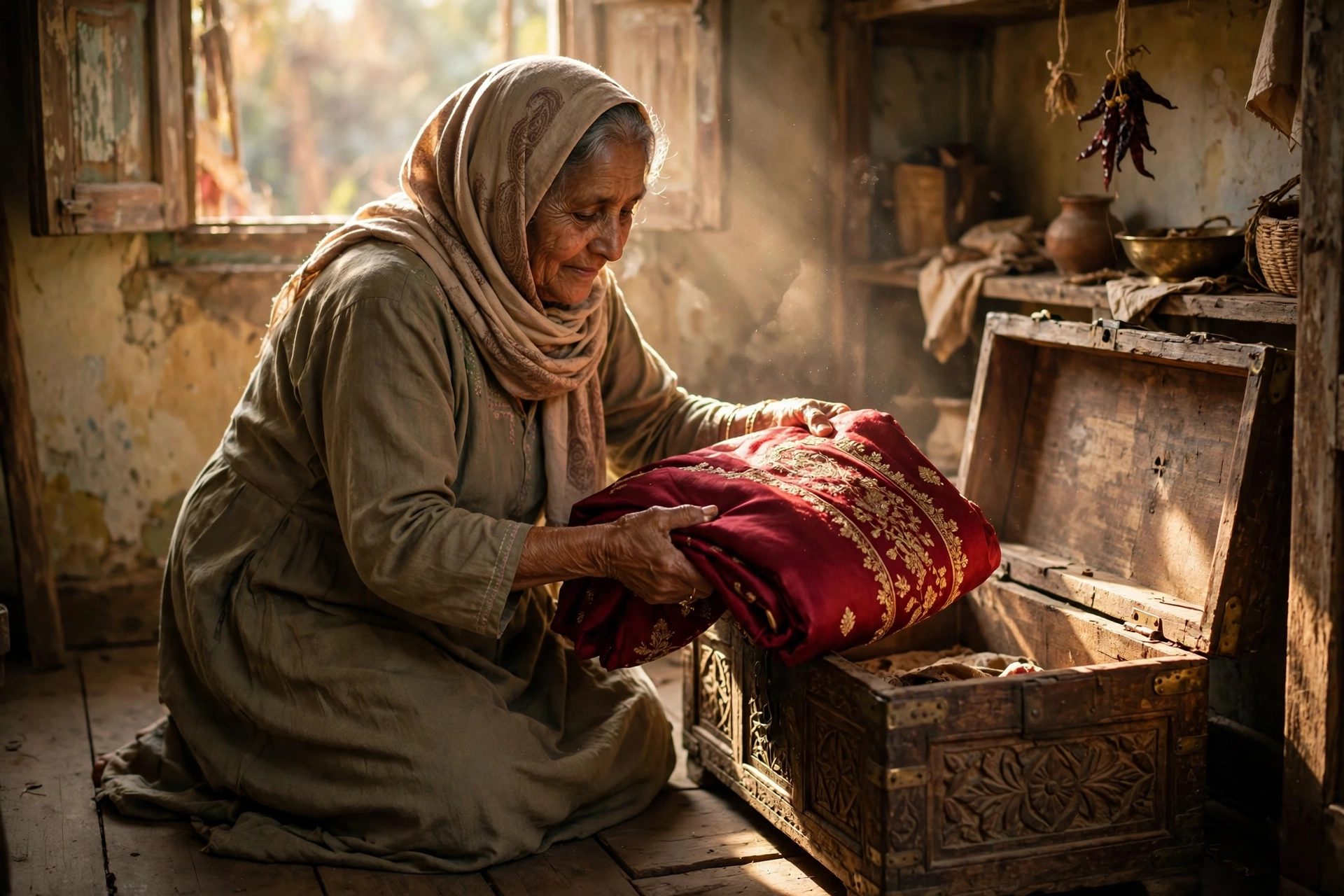
The dress had waited forty-five years in the dark, but silk never forgets the sunlight.
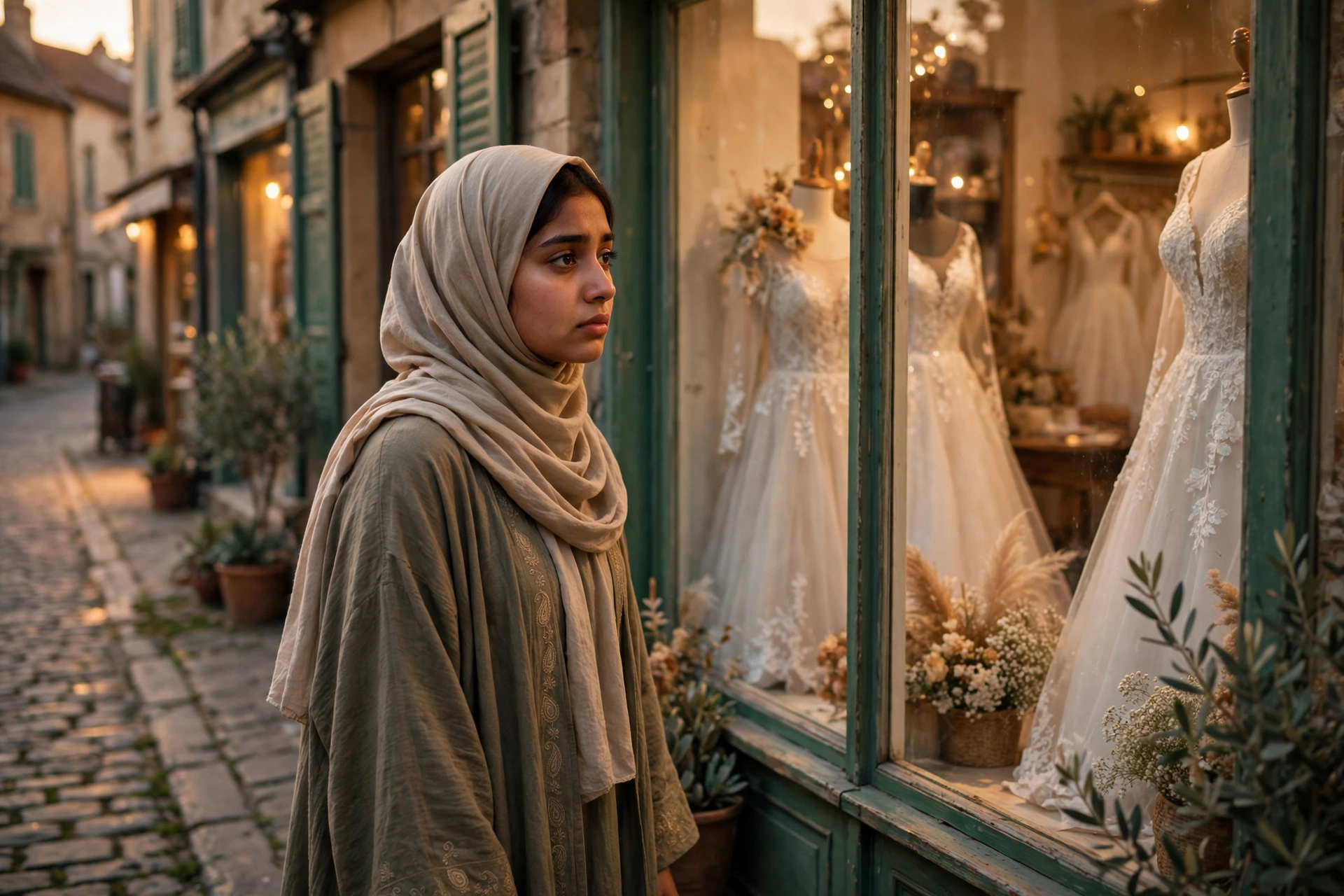
Zara had already accepted that some dreams were not for girls like her — but the street had other plans.
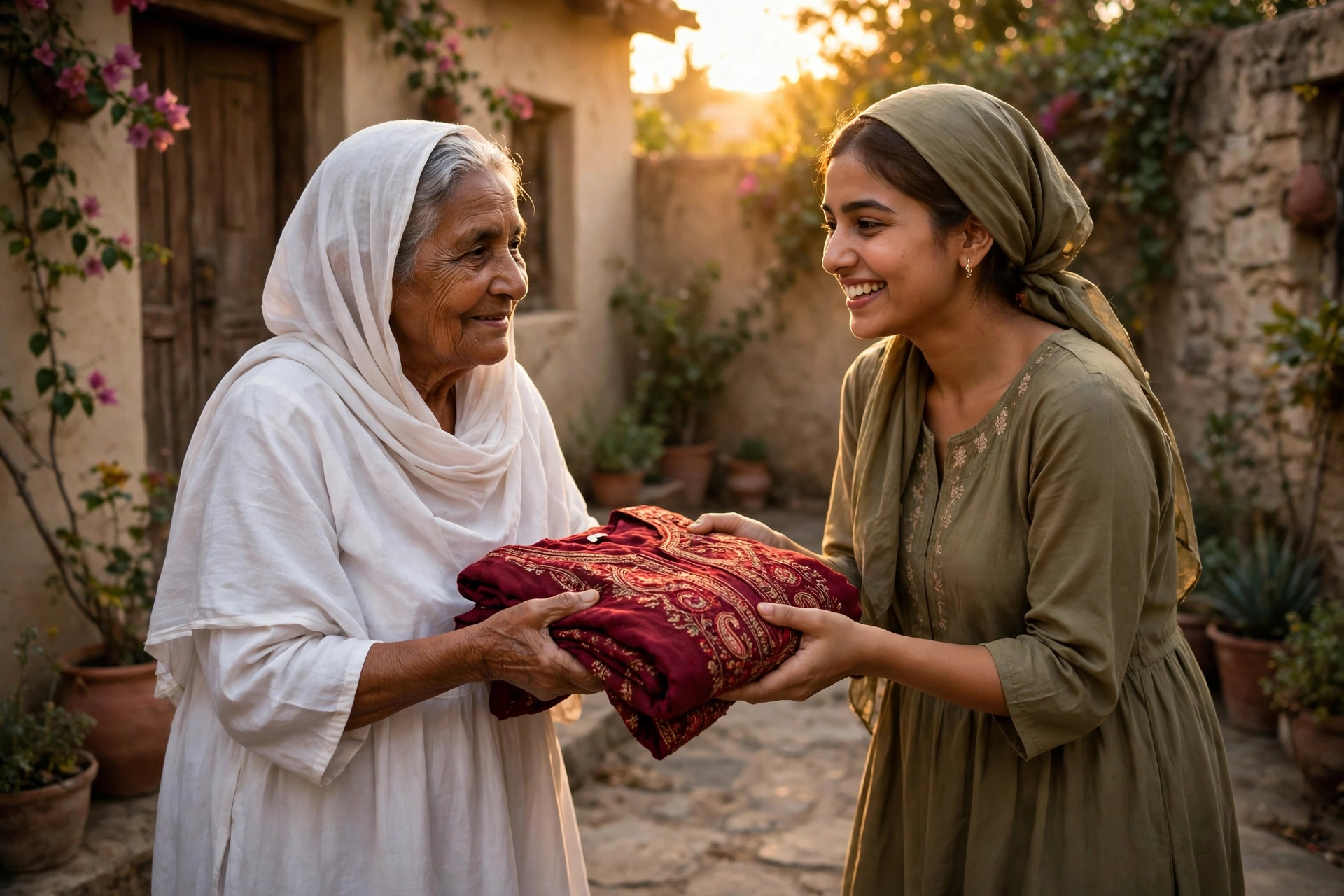
"The dress had waited forty-five years for the right girl — and it had found her."
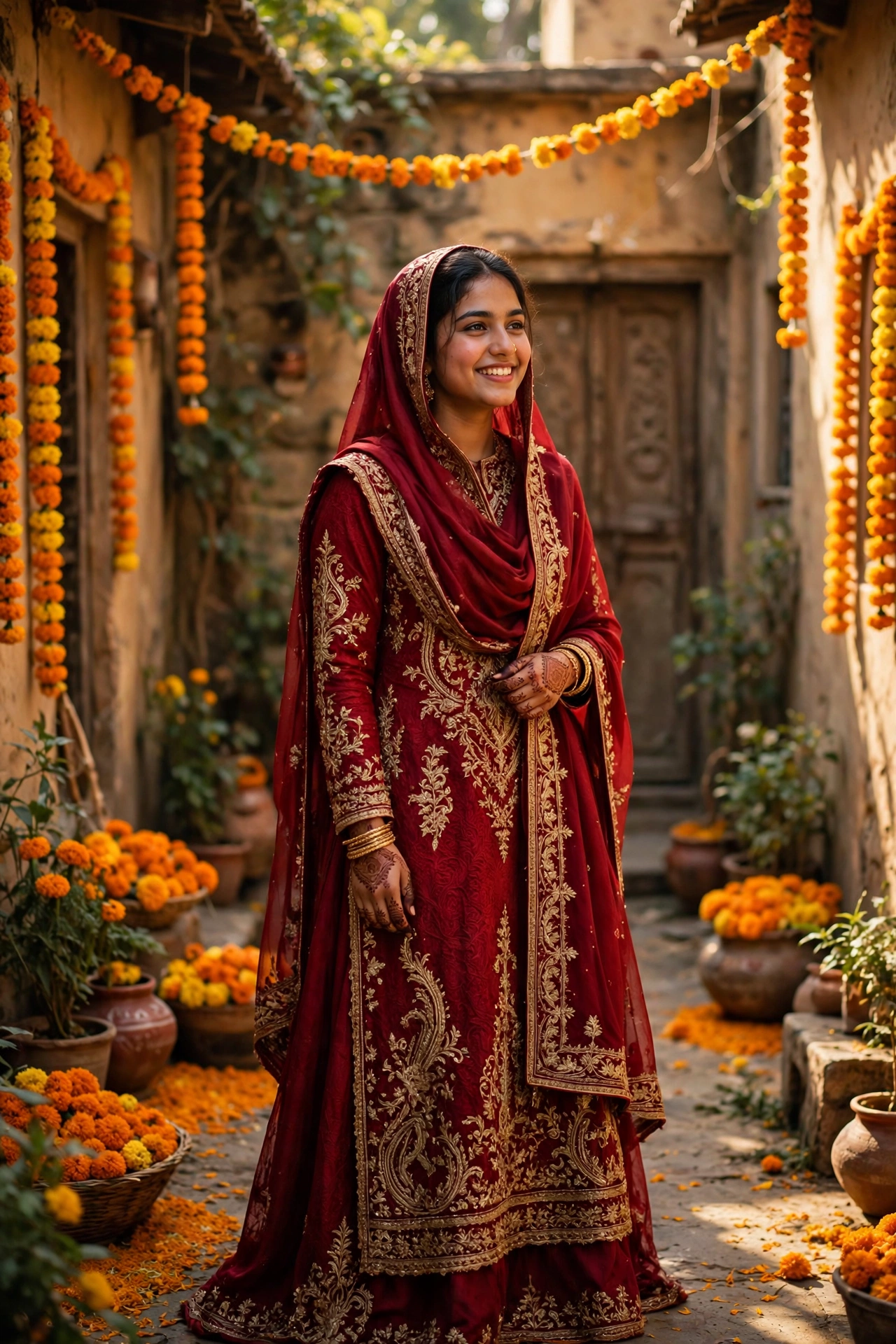
The street went quiet — not the quiet of emptiness, but the quiet of people holding their breath at something beautiful.
The chest was empty, but her heart had never felt so full.