The fence had stood between the two villages for thirty years, and so had the silence.
On one side lay Baraka, where the wells ran deep and the bread ovens never cooled. On the other lay Noor, where the wheat grew tall and the children sang in the evenings. Thirty years ago, over a piece of land no bigger than a courtyard, the two villages had quarrelled, and in the end soldiers put up a fence of wire and wooden posts across the hillside, and told everyone to stay on their own side.
The fence stayed. The quarrel stayed. The people on both sides grew old carrying it.
In Baraka lived an old widow named Salma, seventy-one, her back bent like the branch of an old tree, her hands rough from a lifetime of work. Her husband had died in the year of the quarrel — not from the fighting, but from a heart that gave out while he watched his neighbours become strangers. On his last evening, he had held her hand and said, "Salma, the land never quarrelled with anyone. Only people do. Remember that."
For thirty years, Salma kept a small garden behind her mud-brick house, and in it she grew the finest olive saplings in the whole valley — a craft her husband had taught her. Every spring, people from Baraka came to buy her saplings. She sold them cheaply, and to the poor she gave them for free, saying only, "Plant it where someone can sit under it one day."
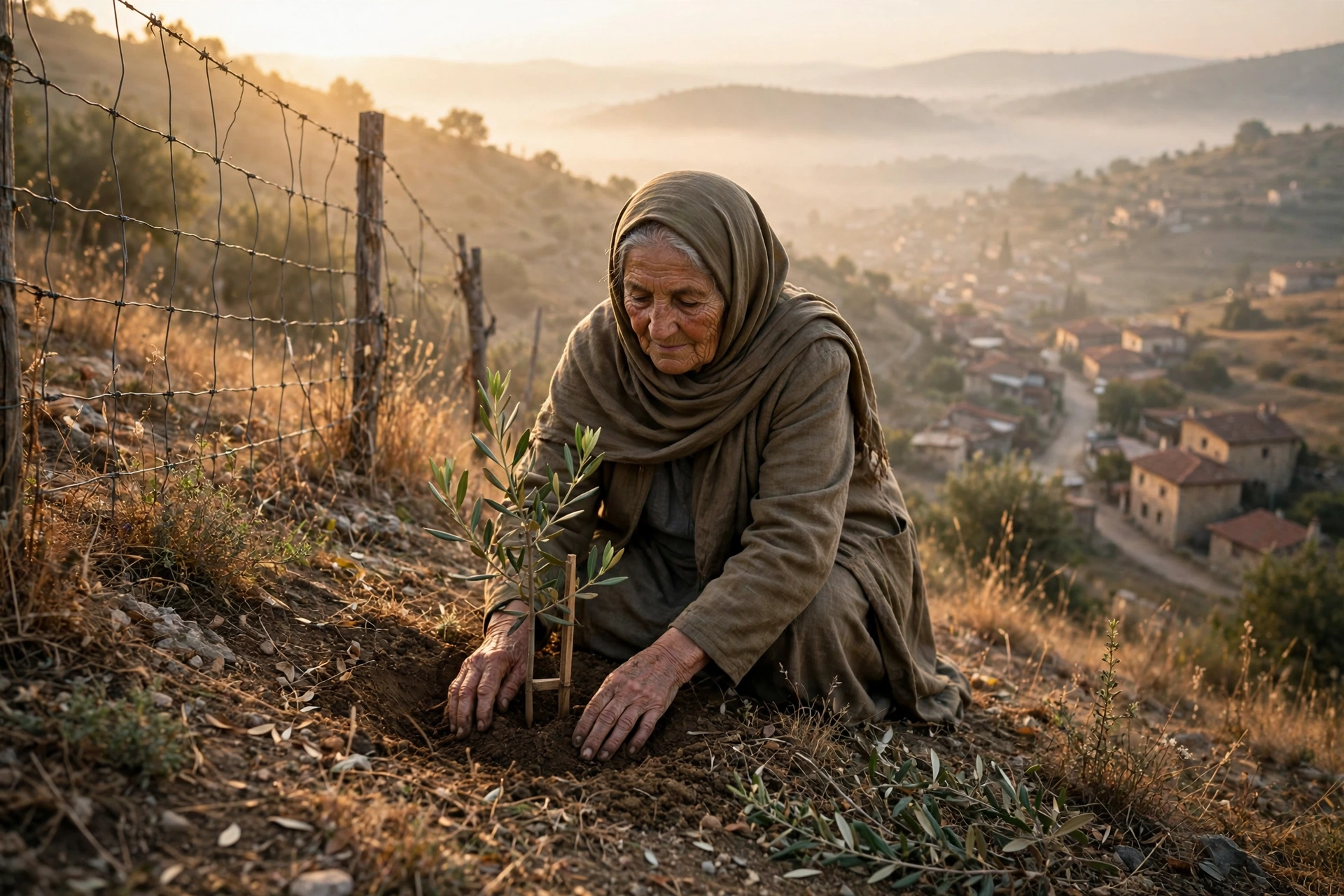
One cold morning in early spring, Salma woke before dawn, wrapped her shawl tight, and picked up her spade. She walked past the last houses of Baraka and up the hillside toward the fence, her basket carrying ten young olive saplings, their roots wrapped in wet cloth, and a clay pot of water.
At the fence she stopped and looked through the wire at the dry, empty strip of land on the other side — nobody's land, everybody's land. The same dry earth waited on her own side. She pushed her spade into the soil, a hand's breadth from the fence, and began to dig.
By midday she had planted five saplings in a neat row and watered each one. She sat on a stone and ate the bread she had brought, looking at the little green shoots standing in the dust like a row of small promises.
"Are you planting on the border, Mother Salma?" a voice called out. It was Kareem, a young soldier posted at the fence, no older than twenty-five, with a rifle on his shoulder and dust on his boots.
"I am planting olive trees," Salma said. "The land does not know about fences."
Kareem laughed, but not unkindly. "The officers will not like it."
"Then the officers can come and dig them up," she said. "But they will have to dig up an old woman first."
Kareem said nothing, and watched her walk slowly back down the hill.
The next morning, Salma came again. Word spread through Baraka — through the bread oven, the well, the Friday gathering — and some people laughed. "The old woman has lost her mind," they said. "She is planting trees for the soldiers."
But a few came to watch. An old farmer named Dawood climbed the hill one evening and stood beside her. "My brother lives in Noor," he said quietly, staring through the wire. "I have not seen him in thirty years. He has grandchildren I have never met."
Salma did not look up from her watering. "Then when the trees grow tall, your brother's grandchildren will sit in their shade," she said. "That is how it begins."
Dawood was silent for a long time. "Tomorrow I will bring my own spade," he said.
The next day he did, and the day after, his neighbour came too. By the end of the week, six people from Baraka were walking up the hill each morning with spades and water pots.
On the other side of the fence, people in Noor began to notice.
At first they only watched from a distance. Then one morning, a woman from Noor walked up to the fence, carrying a basket of her own. She was about Salma's age, her face lined like a dried riverbed. "Sister, are those olive trees?" she called out.
Salma looked up and smiled. "They are. Would you like to plant one on your side?"
The woman hesitated. Her hands tightened on her basket. "My husband says we must not speak to your side."
"Then do not speak to me," Salma said gently. "Just plant a tree. The tree will do the talking."
The woman stood there for a long moment. Then she laughed — a short, surprised sound — and set down her basket, took out a spade, and began to dig on her side of the fence, exactly opposite Salma's row.
Her name was Mariam. The next morning she came back with her daughter, and the day after that, her daughter brought a friend. Within two weeks, a row of olive saplings stood on the Noor side too, mirroring the ones on the Baraka side, like two hands reaching toward each other.
Kareem reported it to his officer, who came to look and said, "They are only trees. Let them be." Neither side wanted to uproot an old woman's olive trees. And so the trees stayed.
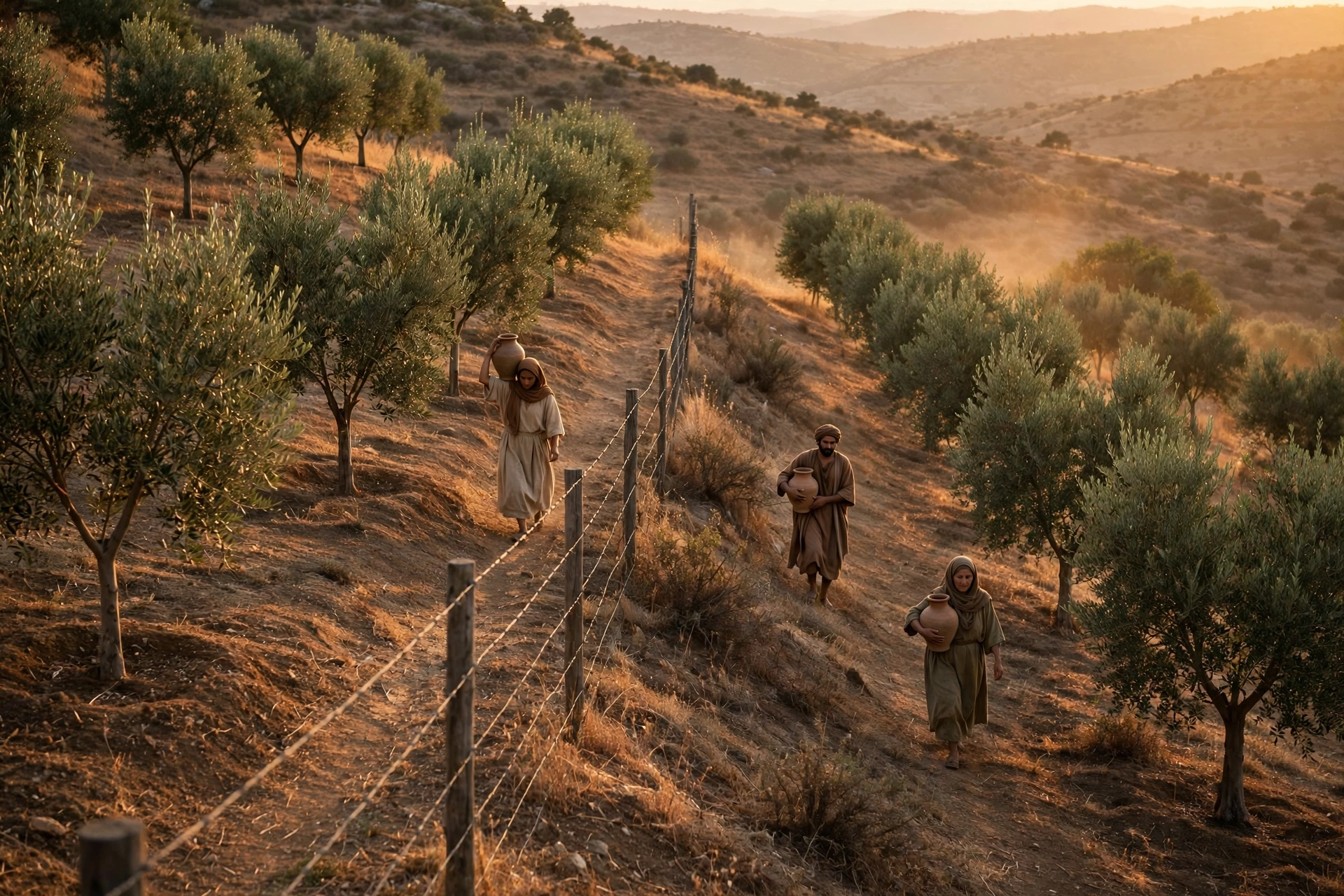
Summer came, hot and merciless. One afternoon, Salma arrived to find her saplings already watered. Across the fence, Mariam smiled, holding an empty clay pot. "I brought extra water today," she called out. "Your side looked thirsty."
From that day on, the watering became a shared task, without a word spoken about it. It simply happened, the way rain happens.
Then, one evening in late summer, a boy from Noor, chasing a runaway goat, tripped near the fence and cut his knee open on a stone. Salma hurried over as fast as her old legs would carry her, tore a strip from her own shawl, pressed it against the wound, and spoke to him softly until his crying slowed.
"Where does it hurt, child?" she asked.
"My knee," he sniffled. "And I am scared my mother will be angry about the goat."
Salma laughed. "Goats run. That is their job. Your knee is more important." She looked across the fence. "Mariam! Your grandson has fallen!"
Mariam came running, and when she saw Salma holding her grandson, she stopped dead. For a moment, thirty years of silence stood between the two old women. Then Mariam knelt down beside them and took the boy's hand.
"Thank you, sister," she said, and her voice broke a little. "Thank you."
The next morning, the boy came back with a small bag of figs and gave them to Salma through the wire, his knee bandaged with her shawl. The fence, for the first time in thirty years, had a crack in it — not in the wire, but in the silence.
Autumn arrived, and the saplings were young trees now, standing waist-high, their leaves silver-green in the afternoon sun.
One morning, Salma found a basket waiting on her side of the fence: fresh flatbreads, still warm, and a small jar of honey. There was no note. There did not need to be. That evening, she sent back a basket of her own — olives from her garden, pickled in salt and lemon. The baskets began to travel back and forth through the wire, week after week. Bread for olives. Honey for figs.
Then winter came. A storm rolled down from the mountains, the worst in years, and by morning three trees on the Baraka side had been ripped from the ground, their roots naked in the cold air.
Salma stood in the rain, looking at the fallen trees, and felt the old anger and grief rising up like floodwater. All that work. All those mornings. Was it all for nothing?
Then she heard a voice through the rain. "Sister Salma! We are coming!"
It was Mariam, and behind her, a dozen people from Noor, carrying spades and ropes, wading through the mud toward the fence. On Salma's side, Dawood and his neighbours were already climbing the hill, soaked to the skin.
For three hours, in the pouring rain, people from both villages worked side by side along the fence — replanting the fallen trees, tying the young trunks to stakes, packing the mud firm around the roots.
When the storm passed, every tree stood again. Salma looked around at the muddy, laughing people on both sides of the fence, and thought of her husband's last words: the land never quarrelled with anyone. Only people do.
That spring, the olive trees flowered for the first time. Small white blossoms opened along the branches, and the hillside smelled sweet for a mile. Children from both villages pressed their faces to the wire, arguing happily over which side's trees were prettier.
Then, one morning in early summer, an official letter arrived from the district office. The elders read it aloud in the square: the fence was coming down. The border would open for one day each week, a market day, where people from both sides could meet, trade, and talk. If it went well, the fence would come down for good.
No one in the square cheered. They were too stunned. Then Dawood began to laugh, and then his neighbour, and then the whole square was laughing and crying at the same time, and the children ran up the hill to tell Salma.
They found her sitting on her usual stone beside the olive trees, watering the youngest sapling. When they told her the news, she was quiet for a long time. Then she smiled like sunrise.
"Good," she said. "Then the trees will not need the fence anymore. They will just be trees."
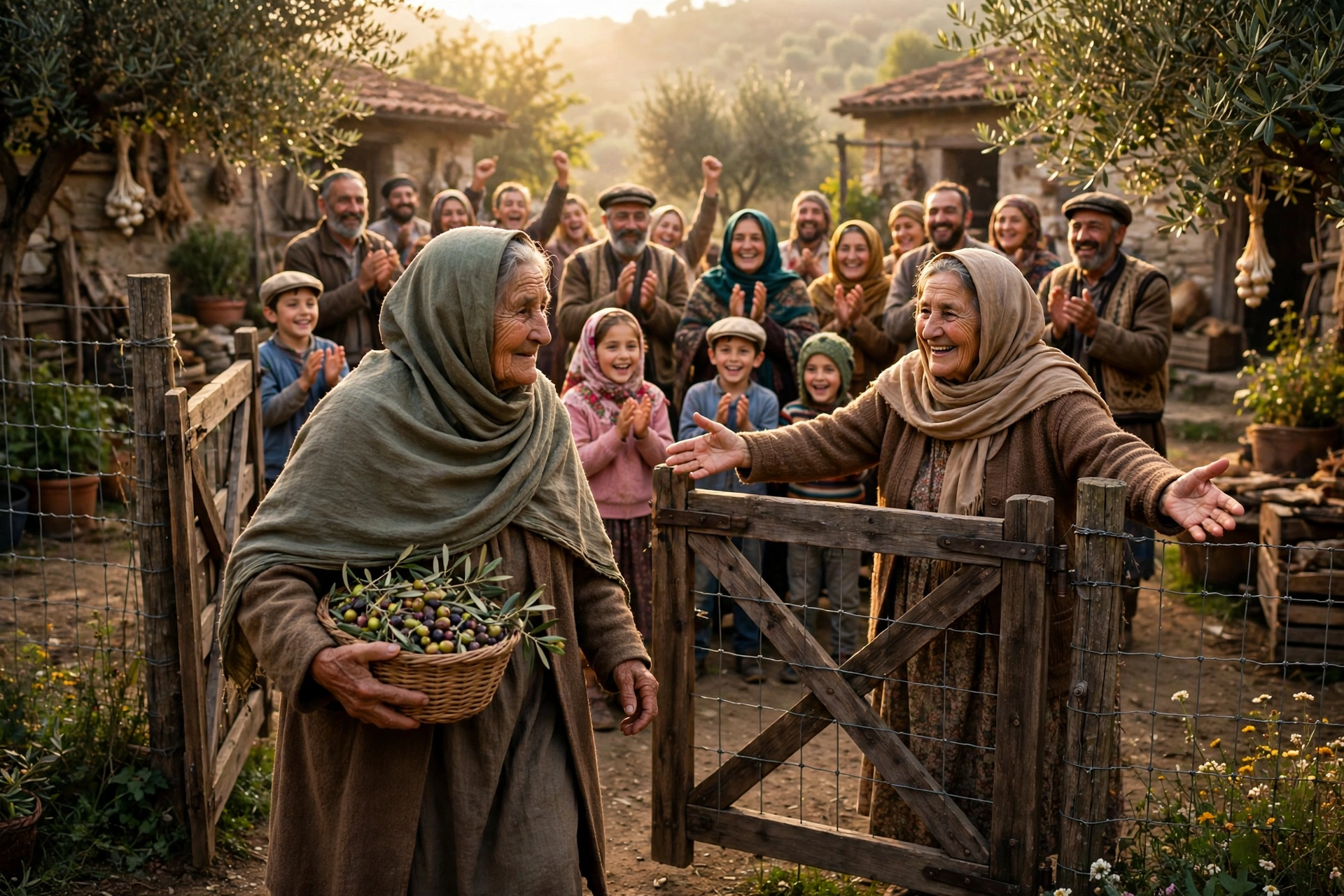
On the first market day, the gate in the fence was opened — a simple wooden gate, built by Dawood and his neighbours, painted green. Salma was the first to walk through it, carrying a basket of olives, and on the other side, Mariam was waiting with a basket of bread.
The two old women embraced in the middle of the open gate, and the children ran through it in both directions, laughing, as if the fence had never been there at all.
Dawood found his brother that day. They stood looking at each other, two old men with grey beards and tears in their eyes, then embraced, and Dawood's brother said, "You are still ugly, brother," and Dawood said, "And you are still a thief — you stole my best goat in 1974," and they both laughed until they could not breathe.
Years passed. The fence came down for good, and the hillside became a shared grove, belonging to no one and to everyone. The trees grew tall and wide, and beneath them the people built stone benches and a small well, and every year at harvest time they gathered there to pick the olives and press the oil together.
Salma did not live to see the grove at its fullest. She died peacefully in her sleep one winter, at seventy-nine. Both villages buried her together, on the hillside, beneath the oldest olive tree she had planted. Mariam planted a sapling beside her grave that same day. "So she will not be lonely," she said.
On the stone above her, they carved only a few words: "She planted trees where others built fences."
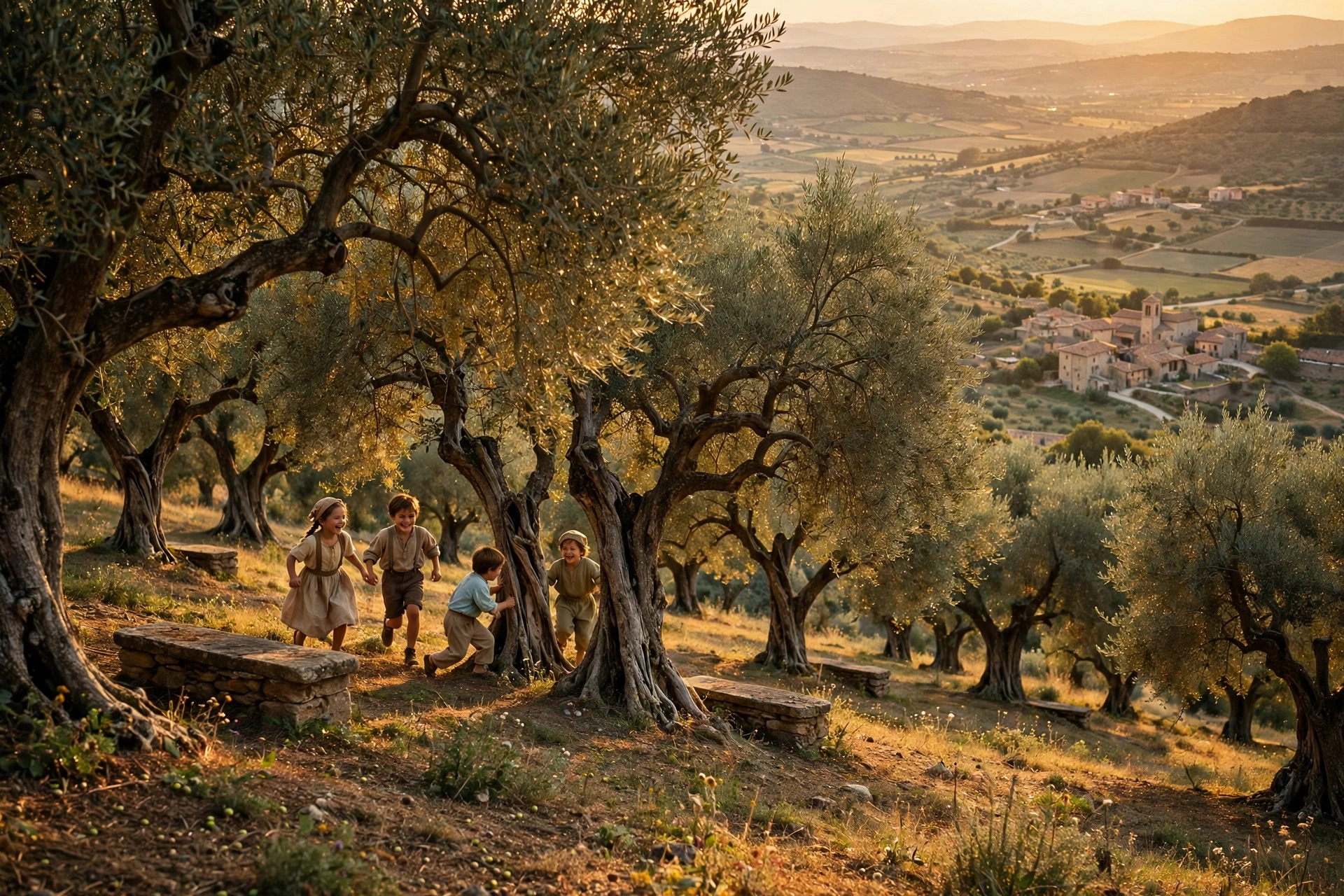
Today, if you walk up the hillside between Baraka and Noor, you will find a grove of olive trees so old and so wide that their branches touch across the path, making a green tunnel of shade. Children climb the low branches and eat the olives straight from the tree, wincing, laughing, reaching for another.
And if you ask anyone in either village who planted the grove, they will tell you the same story, as if it were a prayer: an old widow, a spade, ten saplings, and a belief that the land never quarrelled with anyone.
Only people do. And people, given a tree and a little time, can change their minds.