The morning after her husband's funeral, Maryam woke to a house that was too quiet and did not know what to do with her hands.
For forty-one years, those hands had known their work. They had kneaded bread before dawn, mended her husband Kareem's shirts, held his hand on the walk to the market, and, in the last hard months, smoothed the thin hospital blanket over his legs while he slept in the third-floor ward of St. Mary's Hospital. Now Kareem was gone, the blanket was folded in a cupboard, and her hands lay empty in her lap like two strangers.
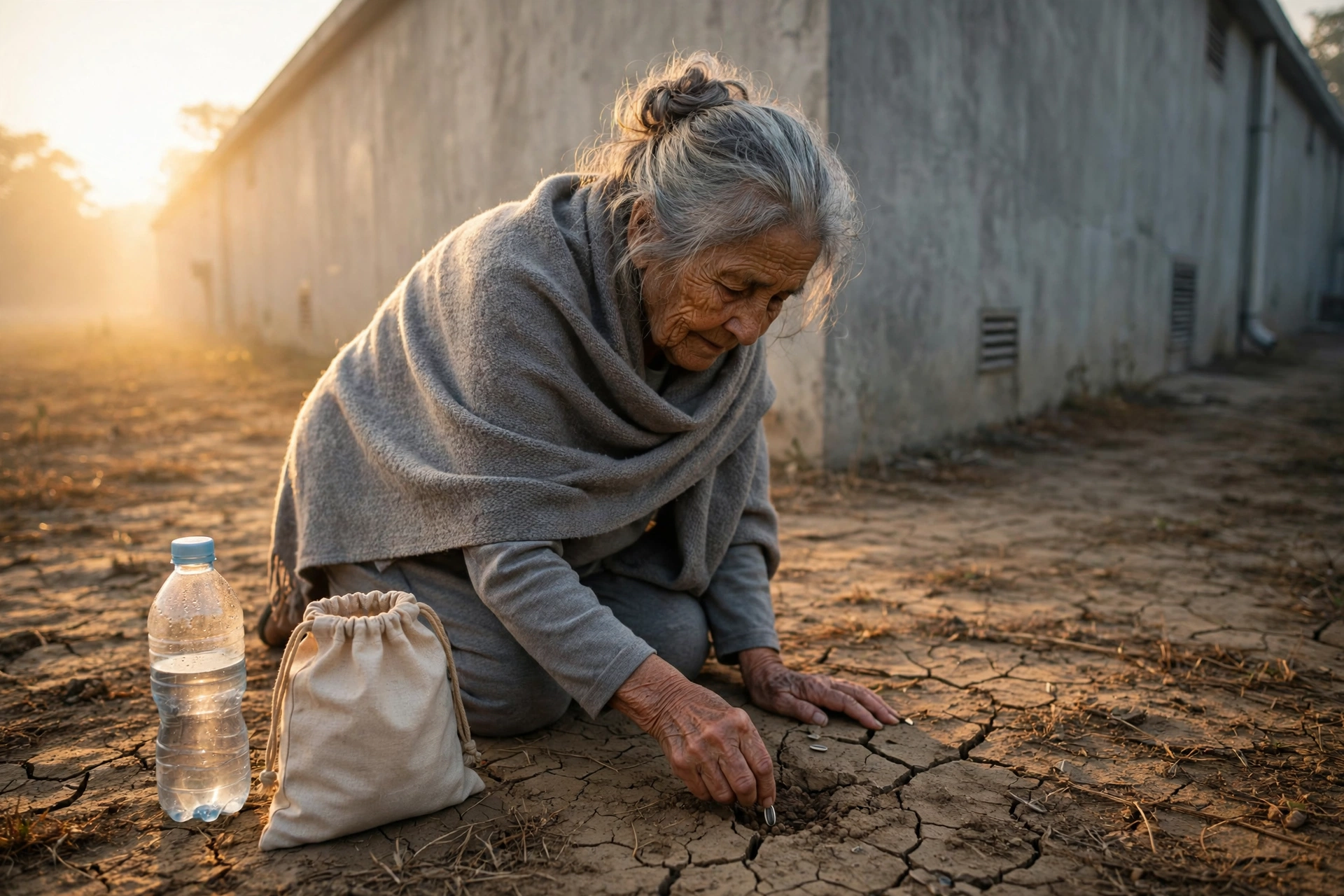
On the third morning, she put on her old grey shawl, picked up the small cloth bag of sunflower seeds she had meant to plant in her own garden that spring, and walked to the hospital. She did not go inside. She could not bear the smell of the corridors yet, or the sight of the lift doors opening on the third floor. Instead she stopped outside, at the long grey wall that ran along the side of the building, where the earth was dry and cracked and nothing had ever been planted. She knelt down, pushed her fingers into the hard soil, and pressed the first seed into the ground.
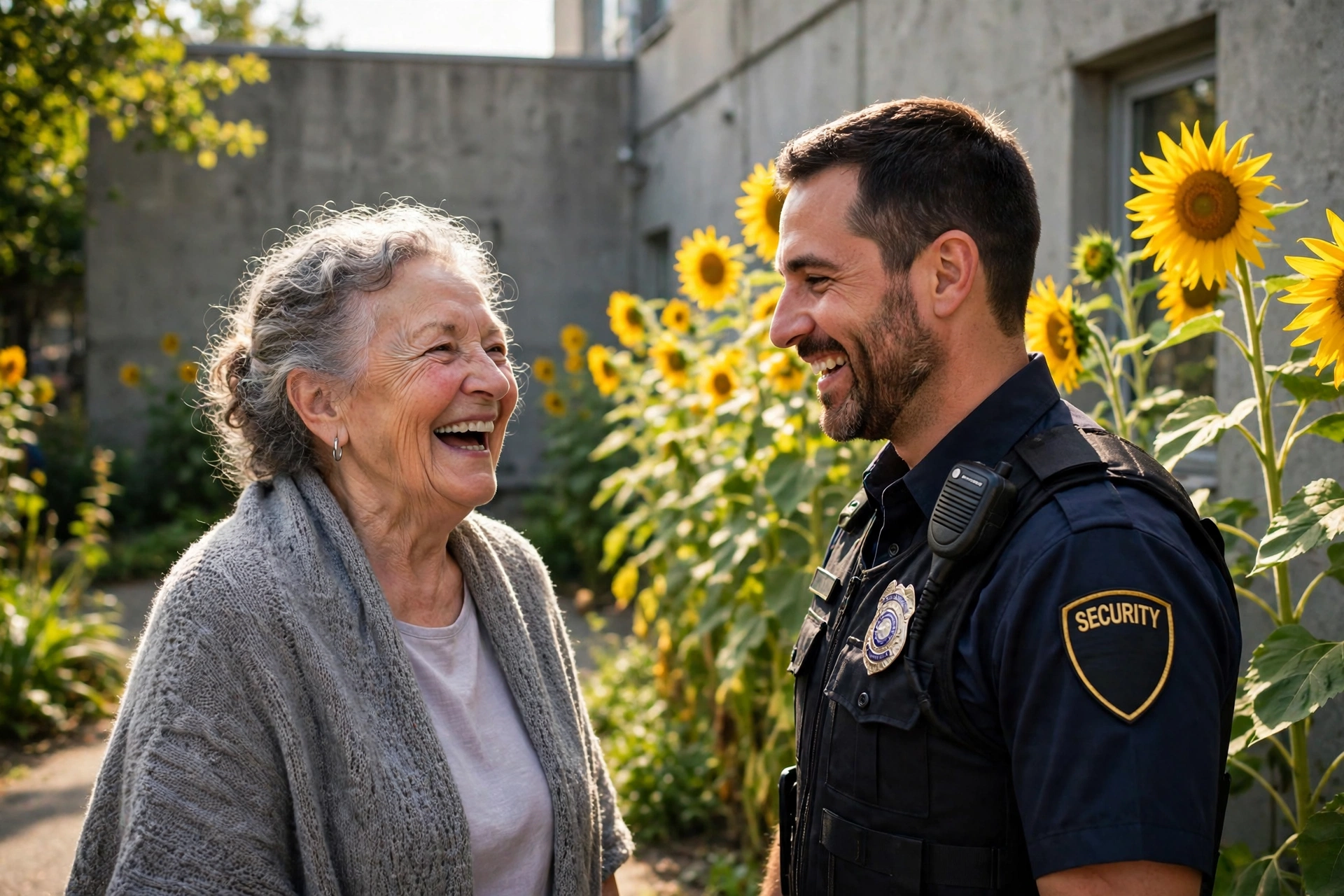
A security guard watched her from the gate. "Madam, you can't dig here," he said, not unkindly. "This is hospital ground."
"I am not digging," Maryam said, looking up at him. "I am planting."
He studied her for a moment, this small woman in a grey shawl with dirt already under her nails, and then he shrugged and turned back to his post. Maryam planted the whole row, one seed at a time, all the way to the corner where the wall met the visitors' car park. When she finished, the strip of earth still looked bare and hopeless. She poured her bottle of water over it anyway, stood up slowly because her knees ached, and walked home.
She came back the next day with a watering can. And the day after that. The guard, whose name she learned was Joseph, began to nod at her when she arrived. A nurse on her smoke break asked what she was doing, and Maryam told her, simply, that her husband had died upstairs and she wanted something living to grow in the place where she had waited for him. The nurse did not say anything for a while. Then she said, "My mother died on that ward too," and the two women stood in silence beside the bare earth.
Weeks passed. The seeds did nothing that anyone could see. Maryam kept coming. She brought a small trowel, then a bag of compost she had carried on the bus, then a second bag of seeds when she worried the first ones had failed. People began to notice her. Visitors hurrying in with flowers and fruit baskets glanced at the old woman watering an empty strip of dirt and thought, perhaps, that she was a little lost in her grief. In a way, they were right. She was lost. But she had chosen where to be lost.
Then one morning in late spring, Joseph called out to her before she had even reached the wall. "Madam! Come and see!"
Green shoots, thin and brave, had pushed through the soil in a neat, hopeful line. Maryam knelt beside them as if they were something holy, and she laughed — a real laugh, the first since Kareem's funeral, startled out of her like a bird from a bush. Joseph laughed too, and for a moment the hospital gate did not feel like a place of bad news at all.
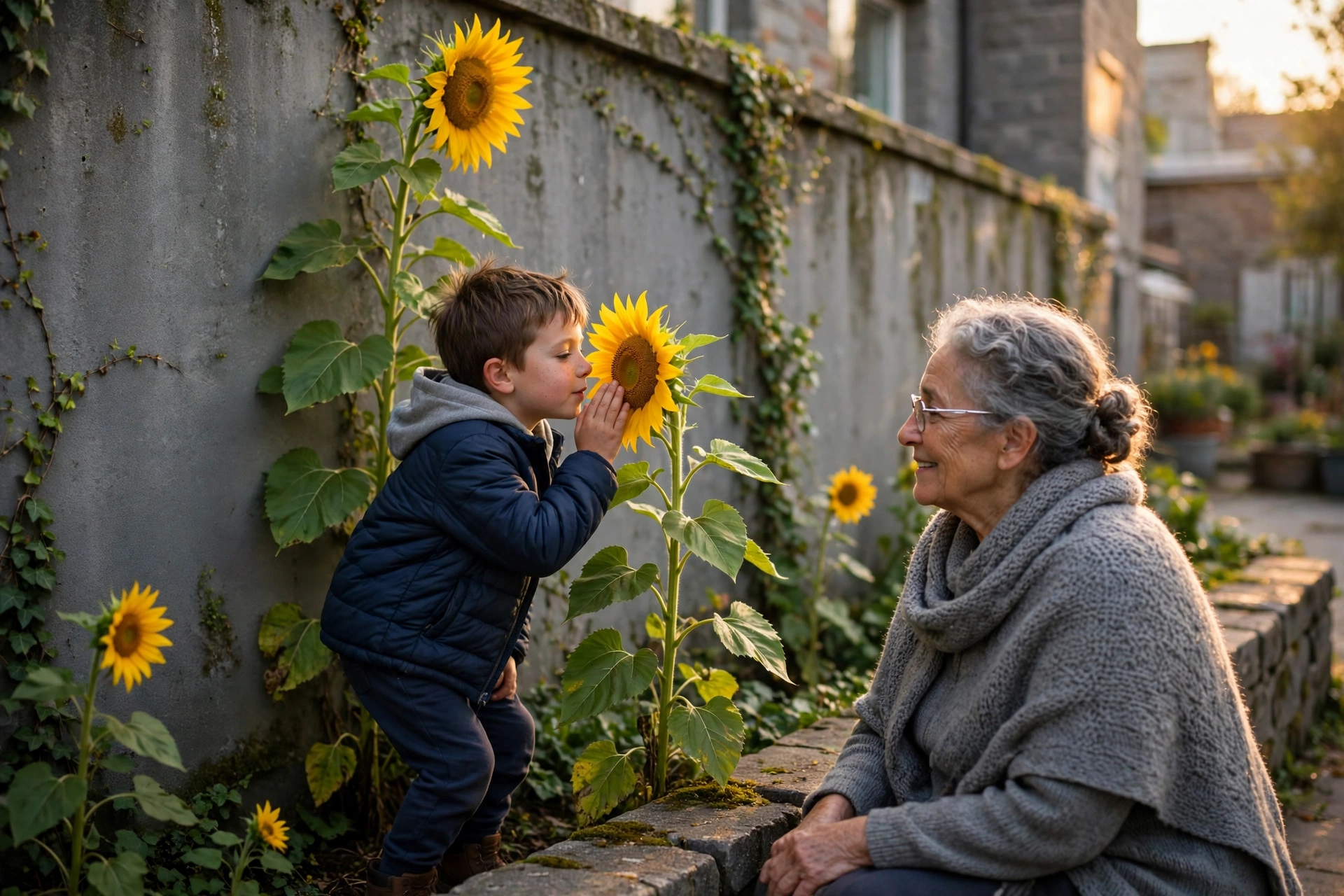
By midsummer, the sunflowers were taller than Maryam herself. Their faces turned toward the morning sun, great golden discs nodding above the grey wall, and something extraordinary began to happen. People stopped. A man who had just been told his wife's operation would take six hours sat on the low wall beneath the flowers and wept quietly, and the swaying yellow above him seemed to keep him company. A little boy named Amir, whose mother was having surgery on the fourth floor, pressed his face between the stems and whispered to the tallest flower, telling it to look after his mother because he could not go in with her.
An old man in a wheelchair, wheeled out by his daughter for fresh air, reached up with a trembling hand and touched a petal, and smiled for the first time in days.
Maryam learned their names, one by one, the way she had once learned the names of her neighbours. She learned that Amir's mother sold vegetables in the market and that he was afraid of the hospital smell. She learned that the weeping man's name was Daniel and that his wife, Ruth, had taught children to read for thirty years. She learned that the old man in the wheelchair was called Thomas, and that his daughter, Grace, had not slept properly in a week. She never offered advice. She offered water from her bottle, a place to sit, and sometimes, when a sunflower had finished its season, a pocketful of seeds wrapped in a piece of newspaper, with the words "plant these somewhere that needs them" written in her careful handwriting.
One evening, as the light turned gold, Grace found Maryam sitting on the low wall, looking tired. "Why do you do this?" she asked. "You lost your husband here. Doesn't it hurt to come back every day?"
Maryam was quiet for a long time, watching the sunflowers turn their faces to the last of the light. "At first, it did," she said. "I came because I did not know where else to go. My house was too quiet and the hospital was the last place I had been with him. But then I saw that I was not the only one waiting here. Everyone who comes to this wall is waiting for someone they love. And I thought — if I cannot make the waiting shorter, perhaps I can make it a little less lonely."
Grace cried then, quietly, the way people cry when someone has said exactly the true thing. She took Maryam's hand in hers, and they sat together until the sun went down and the flowers closed for the night.
Autumn came, and the sunflowers bowed their heavy heads. Maryam gathered the seeds with Joseph's help, and the hospital staff, who had once watched her with polite confusion, now saved her cardboard boxes and asked when the new planting would begin. The head nurse of the third floor, a stern woman named Sister Agnes who had cared for Kareem in his final days, came down one afternoon with an envelope. Inside was a letter, written in a child's uneven handwriting. It was from Amir. His mother had recovered and gone home, and he had planted the seeds Maryam gave him in a pot on their balcony. "The flowers are looking after us now," he had written. "Thank you for teaching me that waiting can be beautiful."
Maryam read the letter three times, standing in the corridor where she had once waited for news of Kareem, and she wept — not the sharp, tearing grief of the early days, but a softer sorrow, mixed with something warm that she recognised, after a long absence, as gratitude.
That winter, the wall was bare again, and Maryam missed the flowers the way she missed Kareem — not as a wound, but as a presence that had changed shape. She came anyway, clearing weeds, turning the soil, preparing the ground. And in the spring, she was not alone. Daniel came with his wife Ruth, recovered and walking slowly with a stick, carrying a bag of compost. Grace came with Thomas, who insisted on pressing the first seed into the earth himself. Amir came with his mother, who hugged Maryam so hard that the old woman laughed until her eyes watered. Even Sister Agnes came, in her off-duty coat, with a tray of seedlings she had grown on her own windowsill.
They planted the whole wall together, laughing and arguing gently about spacing, and Joseph directed them like a general, pointing with his walking stick.
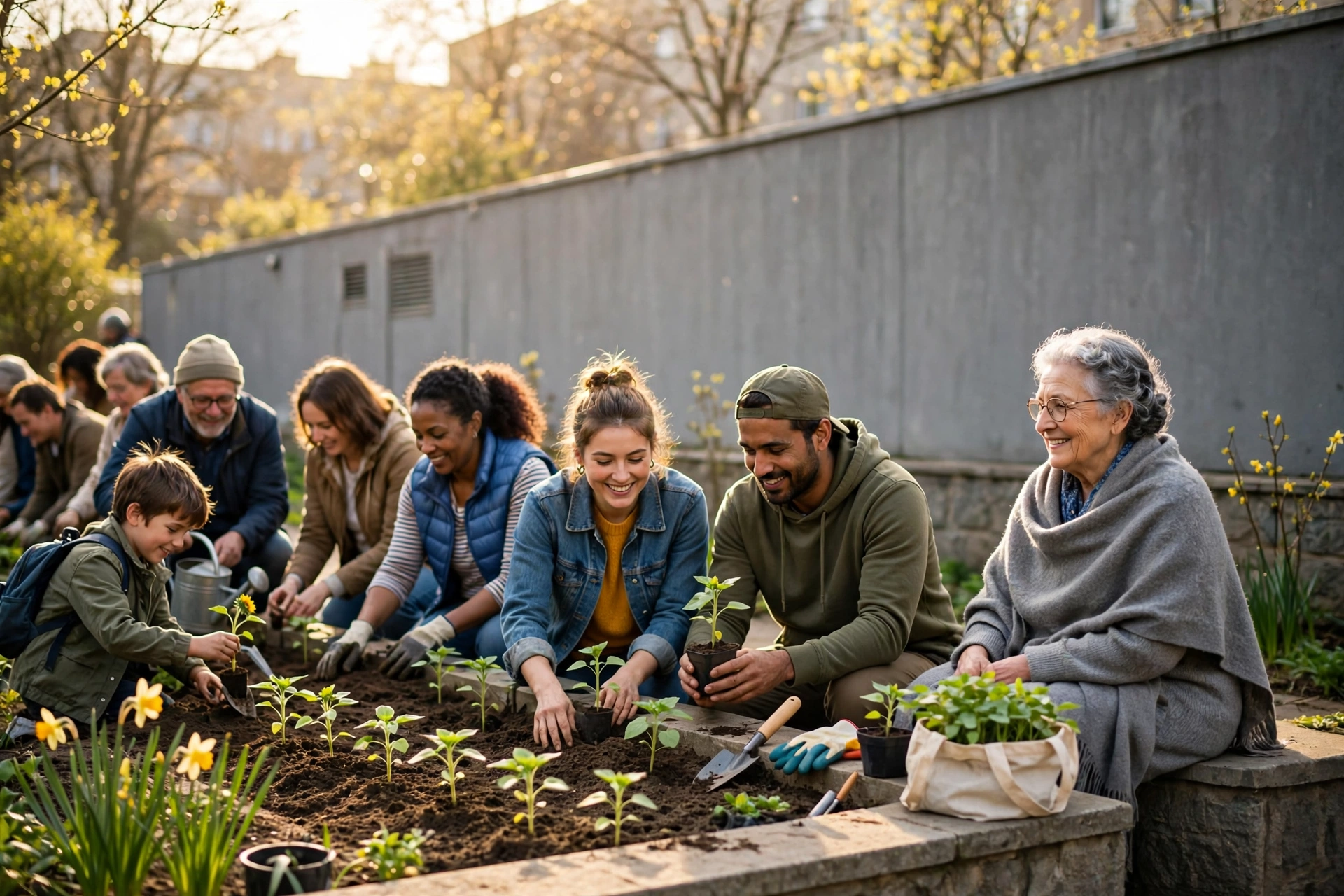
By summer, the wall was a blaze of gold again, twice as long as before, because the hospital had quietly given them the strip of ground around the corner too.
Years later, when Maryam's own knees would no longer let her kneel in the soil, she still came every morning and sat on the low wall with her watering can beside her, watching the young volunteers — some of them people she had once comforted — tend the flowers. New visitors still stopped. New names were still learned. New seeds were still wrapped in newspaper and pressed into shaking hands, with the same words written in Maryam's careful hand: plant these somewhere that needs them.
Maryam never got her husband back. No garden, however golden, could do that. But she had discovered something on that grey wall that no one had ever taught her: that grief, when you keep it locked inside your own house, only grows heavier, but when you carry it outside and plant it in the ground beside other people's sorrow, it grows into something that can shelter strangers. The sunflowers did not take her pain away. They gave it somewhere to go, and in going, it became a gift.
And so every summer, outside the hospital where so many people wait for the worst news of their lives, a row of sunflowers turns its face to the sun, as if to remind everyone who passes that even in the hardest places, something kind can still grow — and that the most beautiful gardens are often planted by people with broken hearts and dirt under their nails.