On Willow Lane, people threw their chairs away when they broke. A leg would snap, a back would split, a seat would sag in the middle, and out the chair would go, left beside the rubbish bins at the end of the street, waiting for the truck. Nobody thought twice about it. A broken chair was a finished chair. Everyone knew that. Everyone, that is, except Yusuf.
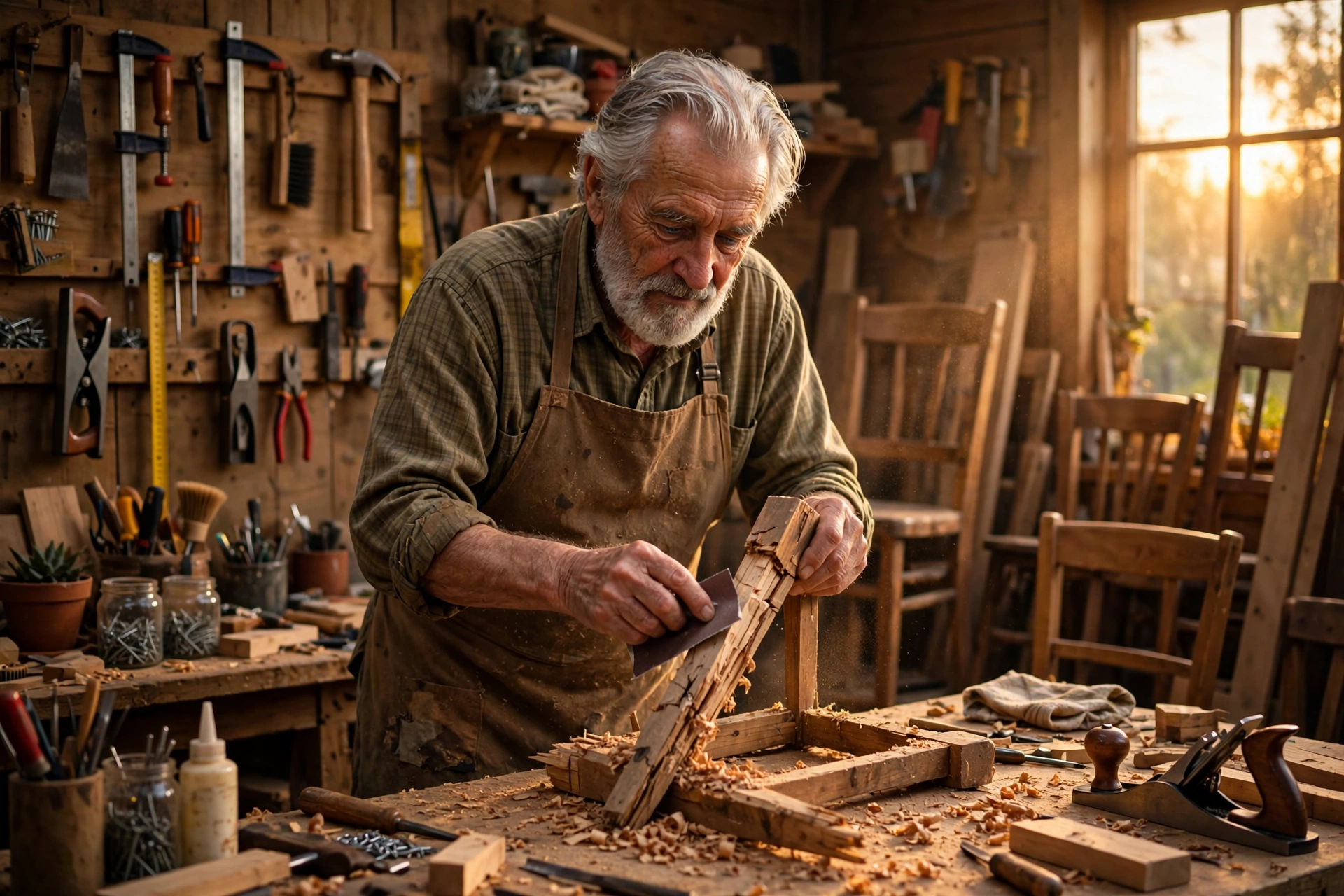
Yusuf was seventy-four years old, with silver hair, hands roughened by sixty years of woodwork, and a small workshop at the end of the lane that smelled of sawdust and linseed oil. He had been a carpenter all his life. He had built doors and tables and beds for half the neighbourhood, and when his working days ended, he did not stop working. He simply started working for free. Every morning, before the sun grew hot, he walked slowly down Willow Lane with his walking stick, and whenever he saw a chair left out for the rubbish, he stopped, looked at it the way a doctor looks at a patient, and carried it home.
His neighbours thought he was a little strange. "Yusuf, why do you bring home other people's rubbish?" the grocer would ask, laughing. Yusuf would only smile and tap the chair's broken leg. "This one is not rubbish," he would say. "It is only tired." And in his workshop, with glue and clamps and sandpaper and patience, he would bring it back to life.
For a long time, nobody understood why he did it. They did not know that Yusuf had once been a man who fixed everything except the one thing that mattered most. Four years earlier, his wife Amira had fallen ill, and no amount of care, no medicine, no prayer whispered through long nights had been able to mend her. She died in the winter, quietly, holding his hand, and after that the house felt too large and too silent. The workshop was the only place where the silence did not hurt him, because there, at least, broken things could still be fixed.
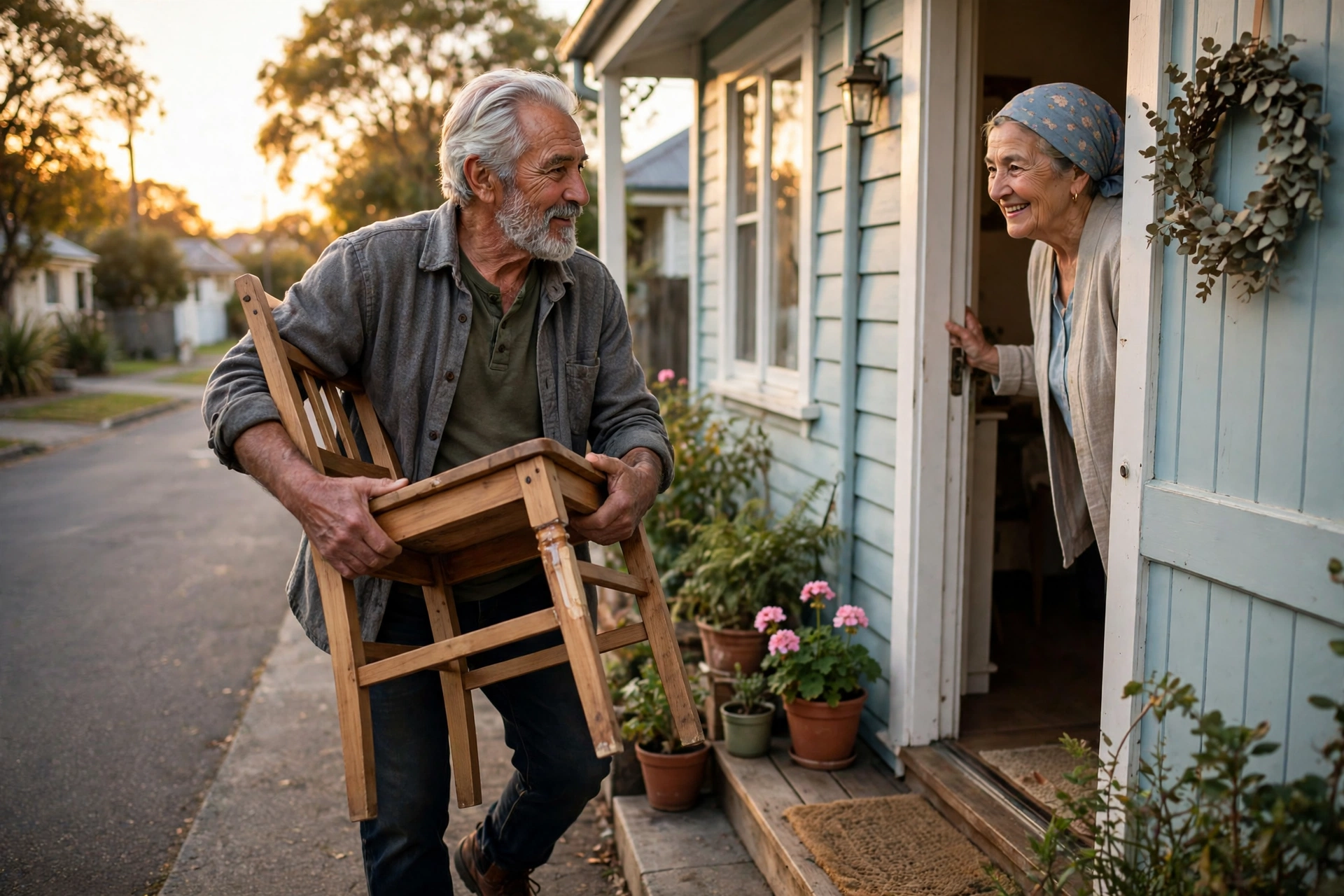
The first chair he gave away went to Mrs. Haleema, a widow who lived three doors down. She was eighty-one, and her kitchen chair had broken one evening while she was reaching for a tin on the top shelf. She had not told anyone. She simply began eating her meals standing up at the counter, because asking for help felt heavier than the hunger. Yusuf noticed. He always noticed such things. One morning he knocked on her door carrying a sturdy wooden chair with a newly polished seat and legs as solid as tree trunks. "I had a spare one," he said, which was not quite true, but it was the kind of lie that only kindness tells. Mrs. Haleema stared at the chair, then at him, and her eyes filled with tears. "Sit," he said gently. "A meal tastes better sitting down." She sat, and she laughed through her tears, and from that day on she saved him a plate of whatever she cooked, sliding it across the fence with a proud little nod.
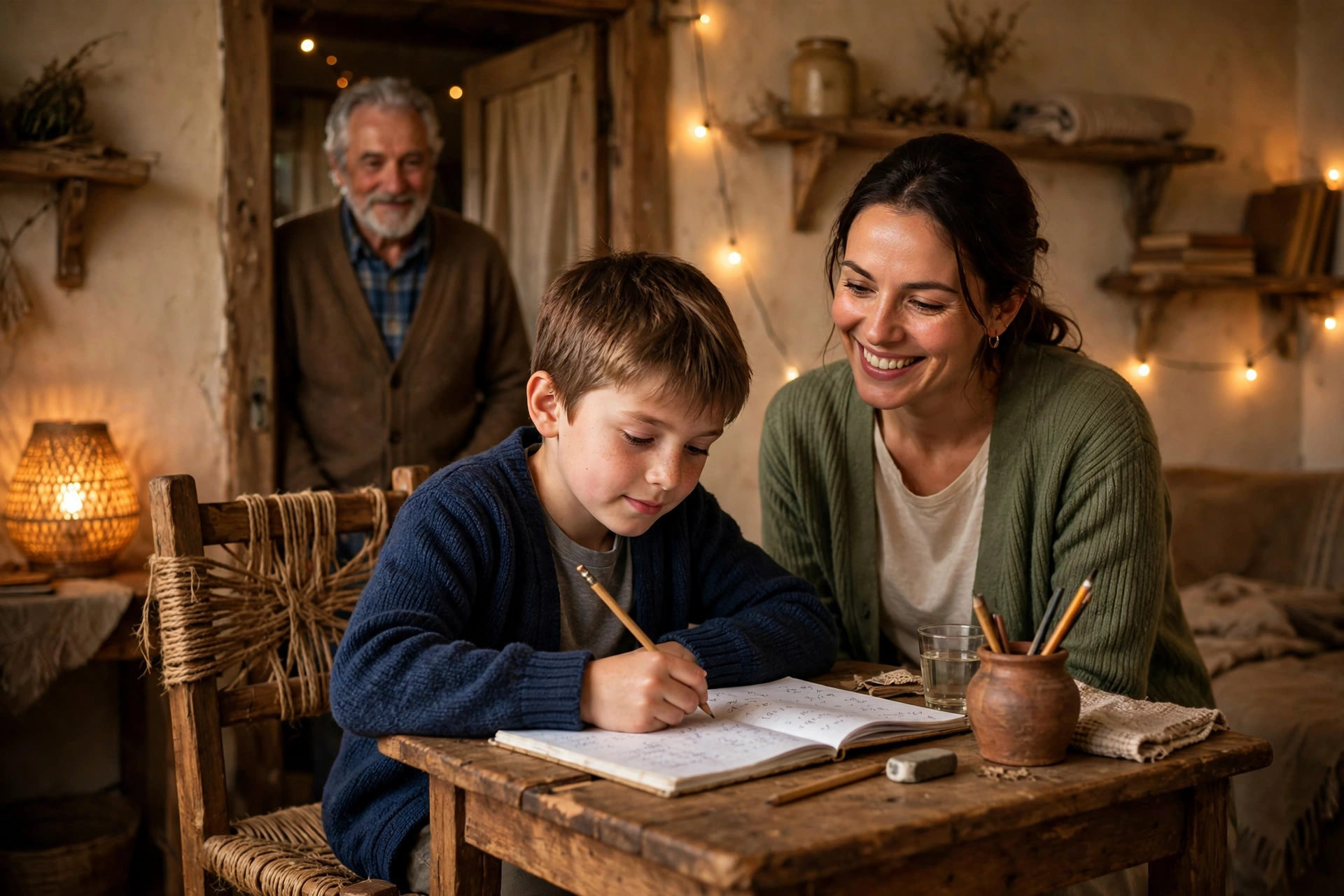
The second chair went to a boy named Omar. Omar was nine years old, and he lived with his mother Layla in a small flat above the tailor's shop. Layla worked two jobs, cleaning offices in the morning and a restaurant at night, and she was doing her very best, but there was not much money for furniture. Omar did his homework on the floor, lying on his stomach with his schoolbooks spread around him, and his back ached by bedtime. One afternoon Yusuf saw him through the open window, bent over his notebook on the floor, and something in the old man's chest tightened. That evening he knocked on Layla's door with a small chair he had painted a warm honey colour. "For the scholar of Willow Lane," he said, bowing slightly, as if he were presenting a gift to a king. Omar's face lit up like a lamp being switched on. He sat in the chair at once, straightened his back, and opened his book with great seriousness. Layla pressed her hands to her mouth. "I cannot pay you," she whispered. Yusuf waved the words away. "You can pay me," he said, "by letting him read to me sometimes. I miss being read to." And so Omar began visiting the workshop twice a week, perched on his honey-coloured chair, reading his school stories aloud while Yusuf sanded and glued, both of them happier than they had been in a long while.
The third chair was the hardest to give, because it belonged to a man who refused to be helped. Tariq had been Yusuf's friend for fifty years. They had grown up together, worked together, and buried their wives in the same year. But where grief had made Yusuf quiet and gentle, it had made Tariq proud and sharp. His favourite armchair had broken at the arm, and he sat in it anyway, leaning to one side, insisting it was perfectly fine. "I don't need charity," he snapped when Yusuf mentioned it. So Yusuf did not argue. He waited until Tariq went to the clinic one morning, slipped into the house with the spare key Tariq had given him decades ago, carried the armchair to his workshop, and repaired it properly, strengthening the frame and re-covering the torn cushion with cloth the colour of autumn leaves. Then he carried it back and put it exactly where it had been, as if nothing had happened. When Tariq came home and sat down, he frowned. The chair did not wobble. The arm did not dip. He sat in silence for a long time, and then he walked down the lane to Yusuf's workshop and stood in the doorway, a proud man with tears in his eyes. "You stubborn old fool," he said. Yusuf grinned. "Takes one to know one," he said. "Come in. The tea is hot." They drank tea together that afternoon for the first time in two years, and Tariq never again pretended he did not need anyone.
Word began to spread, quietly, the way good news does on a small street. A night-shift nurse named Fatima, who came home exhausted at dawn, received a comfortable chair for her tiny balcony, so she could sit with her morning tea and watch the street wake up. A young father who had just lost his job found a set of four dining chairs outside his door one morning, repaired and polished, with no note at all. An old schoolteacher, whose hands shook too much to eat at a table any more, received a chair with strong arms she could hold on to. Nobody ever saw Yusuf deliver most of them. He came at dawn or dusk, silent as a kind ghost, and left a chair where a chair was needed. Willow Lane began to change. People who had eaten alone began inviting each other over.
But there was one chair in Yusuf's workshop that he never repaired, and Omar was the one who finally asked about it. It stood in the darkest corner, covered with a cloth, its rocker snapped clean in two. One afternoon, while reading aloud, Omar lifted the cloth and stared. "Why don't you fix this one?" he asked. "It looks like it was beautiful once." Yusuf stopped sanding. His hands, which never shook, shook a little. "That was Amira's chair," he said quietly. "She rocked in it every evening, by the window, while I worked. After she died, I could not touch it. Fixing it felt like... like saying she was gone, and the chair was just a chair. So I left it broken, because broken felt closer to her."
Omar was quiet for a moment, the way children sometimes are when they understand more than adults expect. Then he said, "But if you fix it, someone could sit in it again. And then her chair would not be lonely either." Yusuf looked at the boy, and then at the chair, and something that had been locked tight inside him for four years began, very slowly, to loosen. That night he sat in the workshop long after dark, the lamp burning low, looking at Amira's chair. He thought about all the chairs he had mended for other people, and all the lonely evenings he had eased, and he realised, with a sudden ache that felt almost like relief, that he had been mending other people's loneliness because he did not know how to mend his own.
The next morning, he began. He worked on Amira's chair the way he had never worked on any chair before, slowly, tenderly, as if he were holding her hand. He carved a new rocker from strong oak, sanded every curve until it was smooth as silk, and polished the wood until it glowed warm in the light. He did not rush. Some repairs take a long time, and the most important ones cannot be hurried at all. When it was finished, it was beautiful, but Yusuf did not keep it in his house. He carried it, with Tariq's help, to the small patch of garden at the end of Willow Lane, where an old tree spread its branches over a circle of bare earth, and he placed it there in the shade. Then, one by one, he brought out the other chairs he had repaired that month, and arranged them in a circle under the tree, like guests gathering for a celebration.
That evening, something wonderful happened. Mrs. Haleema came with a pot of tea. Tariq came with biscuits. Fatima, home from her shift, came with her tea and sat in her balcony chair, which someone had carried down to the garden. Layla and Omar came, and Omar sat proudly in his honey-coloured chair and read a story aloud to everyone, his voice rising and falling under the tree. Neighbours brought more chairs, more tea, more food, and laughter that had not been heard on Willow Lane in years drifted up into the evening air. And in the centre of it all, gently rocking in the breeze, sat Amira's chair, empty and yet not empty at all, because everyone who passed it touched its arm softly, as if greeting an old friend.
From that evening on, the garden under the tree became the heart of Willow Lane. Every evening, as the sun went down, the neighbours gathered there with their tea and their stories, sitting on chairs that had once been thrown away. Children did their homework in the circle. Old friends argued about football and laughed about the past. Newcomers to the street were welcomed with a chair and a cup of tea before they had even unpacked. And Yusuf, sitting quietly among them with his hands folded in his lap, was no longer the strange old man who collected rubbish. He was the man who had taught a whole street something simple and true: that nobody is too broken to be mended, and nobody is too lonely to be given a seat among friends.
One evening, as the light turned gold and the first stars appeared, Omar climbed onto the chair beside Yusuf and whispered, "Your wife would have liked this." Yusuf looked around the circle at all the faces, all the repaired chairs, all the people who were no longer alone, and he smiled through his tears. "Yes," he said softly. "I think she would have liked it very much. She always said a chair is only wood until someone sits in it with love. Tonight, every chair here is full of love." And under the old tree, as the tea grew cool and the stories grew warm, Willow Lane rocked gently on, together, the way it was always meant to.