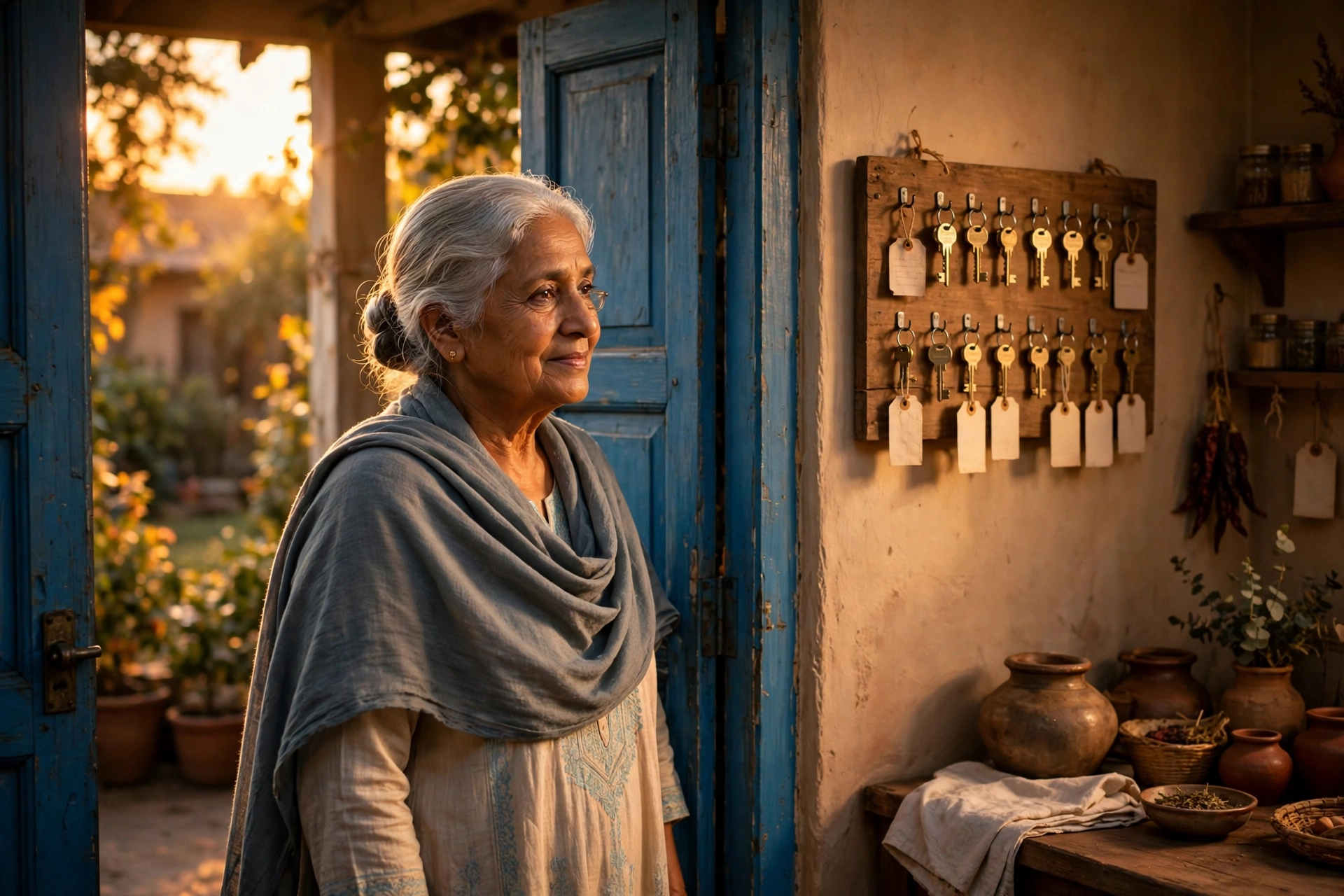
On Jasmine Lane, there was a house with a blue door that was never really locked, and inside that house lived a woman who held the keys to almost every home on the street. Her name was Amina, she was seventy-two years old, and on the wall beside her kitchen hung a wooden board with twenty-three small brass hooks. On each hook hung a key, and under each key, written in her careful, slanting hand on a little paper tag, was a name.
It had started more than thirty years ago, on the winter her husband died. Amina had been sitting alone in the quiet house when her neighbour, Mrs. Raza, knocked and said, "Amina, I am going to my daughter's for a week. If anything happens to my house, I want someone I trust to be able to get in." Amina had taken the key, and she had never given a reason for anyone to regret it. One by one, the rest of the street followed. The baker left his key before his early-morning trips to the market. The young nurse left hers in case her mother, who lived with her, ever needed help while she was on night duty. Families going on holiday, students going home for the summer, old men who sometimes forgot whether they had locked up at all — they all left their keys with Amina.
She kept them the way other people keep precious things: not hidden away, but honoured. Each key was polished once a month. Each tag was rewritten whenever the ink faded. And she had only one rule, which everyone on the street knew by heart: "A key is a promise. I will never use it except when you ask me, or when someone inside needs help."
For years, that was simply how Jasmine Lane worked. Children grew up knowing that if they ever locked themselves out, they should run to the blue door. And they did, often, breathless and embarrassed, and Amina would smile, take down the right key, and walk with them to their house as if she had nothing more important in the world to do.
But that spring, something changed. A new family moved into number fourteen, the empty house at the end of the lane. Imran was a bank officer, careful and precise about everything, and his wife Hira was quiet and watchful, the way people are when they have been disappointed by strangers before. They had a small daughter, Mahnoor, who was four and curious about everything. When the neighbours came to welcome them with plates of food, Imran thanked them politely and kept his distance. When Amina herself knocked with a pot of soup, Hira smiled but did not invite her in. And when old Mr. Younus, who had lived on the lane for fifty years, mentioned in passing that Amina kept everyone's spare keys, Imran's face changed completely.
"A stranger holding the keys to my house?" he said, too loudly, in front of everyone. "I would never do that. That is not trust. That is foolishness."
The words travelled down the lane faster than any news ever had, and they hurt Amina in a way she did not show. She simply nodded when she heard, and said, "Every person must do what feels safe to them," and she went on polishing her keys. But that night, for the first time in thirty years, she sat looking at the board for a long while, and she thought about the son she had not heard from in eight years — the son who had left for a job in another city and slowly, year by year, stopped calling. She had never told anyone on the street about him. She had simply poured all the mothering she had left into being the person everyone could count on. Sometimes, when a child ran to her door crying because they were locked out, she would hold them a moment longer than necessary, and she would think of the little boy who had once run to her the same way, and she would wonder where he was now, and whether anyone was there to open a door for him when he needed it. She never let the thought make her bitter. Instead, it made her kinder. If she could not be there for her own son, she decided long ago, she would be there for everyone else's.
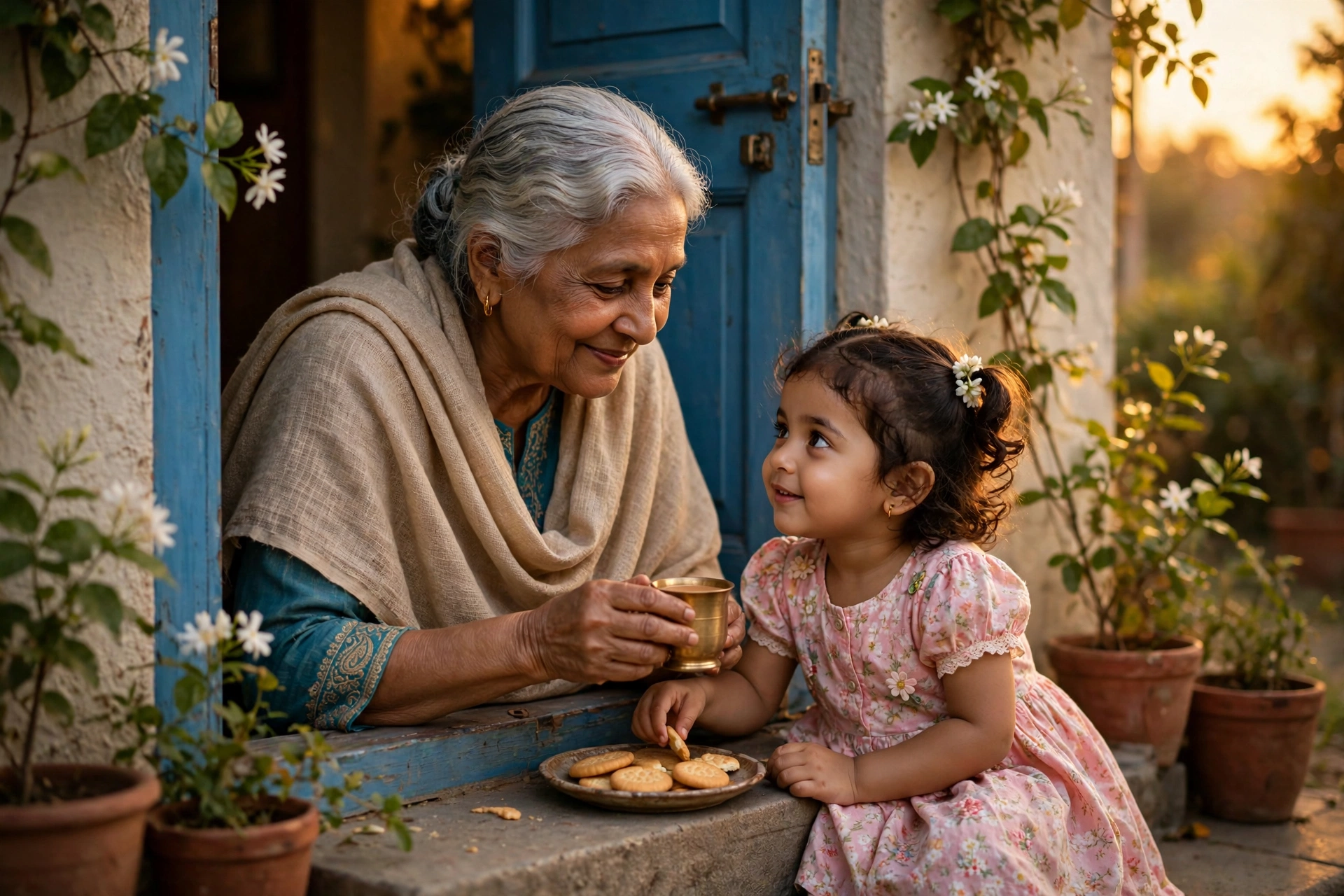
The weeks passed, and Imran and Hira stayed apart. Mahnoor, though, did not. She began to slip out of her gate in the afternoons and toddle down to the blue door, where Amina always had a biscuit and a story. Hira would come looking for her, flustered and apologetic, and Amina would only smile and say, "She is always welcome here, and she is always safe here."
Then came the night of the great storm. The rain began at dusk and by midnight it was hammering the roofs of Jasmine Lane, and the wind was tearing at the washing lines. Amina was awake, listening to it, when there came a frantic knocking at her door. She opened it to find Hira standing there, soaked to the skin, holding Mahnoor wrapped in a blanket, her face white with panic.
"Please," Hira gasped. "The back window — the rain came in and the floor — Imran went to the hospital, his mother fell — I locked the door behind me when I ran out and the keys are inside, and Mahnoor's medicine is inside, and my phone —"
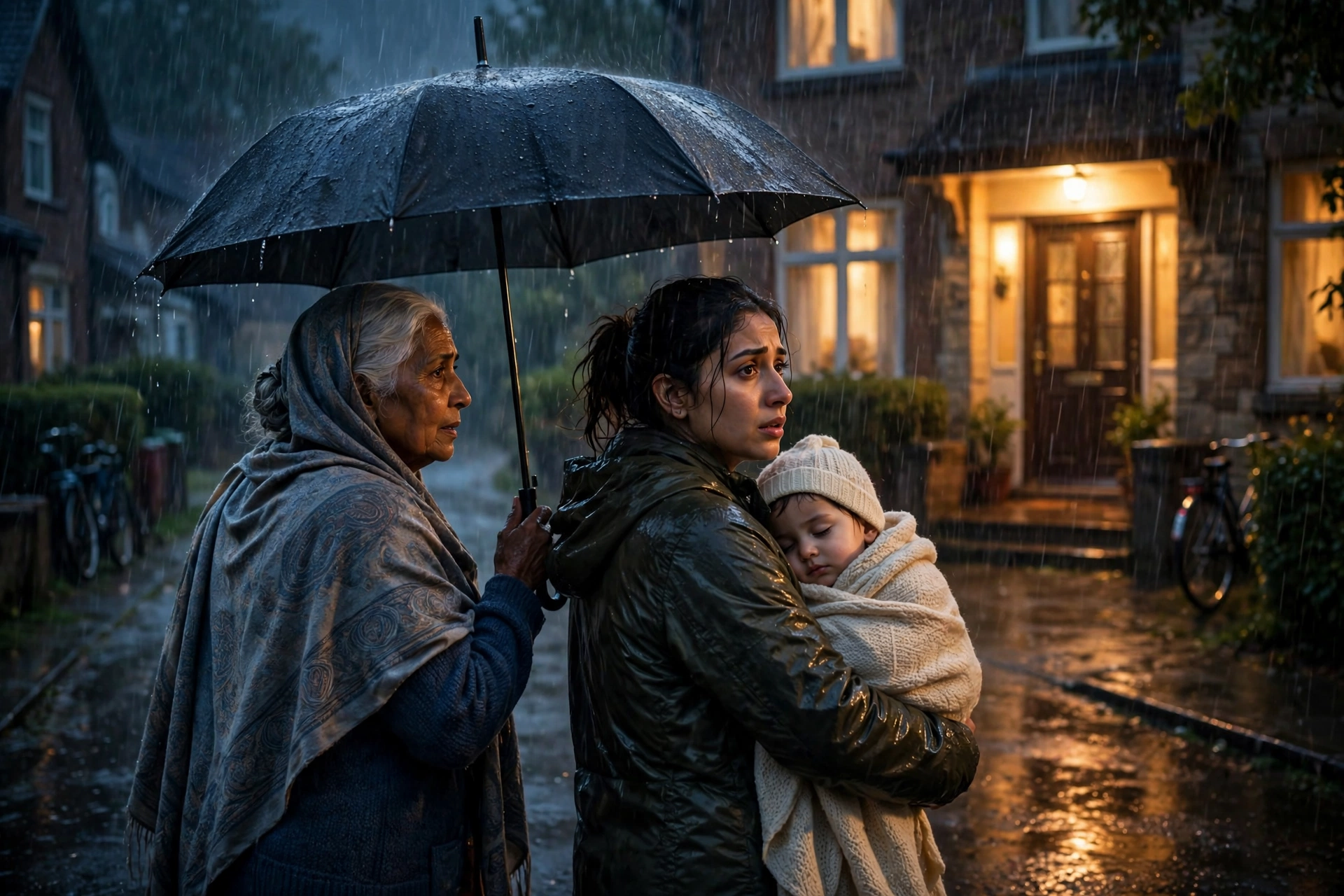
Amina did not ask a single question. She took her shawl, lifted her umbrella, and walked with Hira through the storm to number fourteen. From the pocket of her shawl she took out a key — a plain brass key she had cut herself three weeks earlier, on the afternoon Mahnoor had first toddled to her door. Hira had never given her a key. But Mahnoor, on one of her visits, had found the spare key to number fourteen where Imran kept it on the kitchen shelf, and had carried it to Amina like a treasure, saying, "For your board, Amma." Amina had kept it, meaning to return it, and had forgotten in the way old women sometimes forget small things — and now, in the storm, it opened the door.
Inside, the water was already creeping across the floor. Amina helped Hira find Mahnoor's medicine, found dry blankets, and stayed until the rain eased and Imran came home from the hospital, exhausted, to find his wife and daughter safe and warm in a house that was no longer flooding. He stood in the doorway, looking at the old woman in the wet shawl, and he could not speak.
The next morning, the whole street knew. Not because Amina told anyone — she never did — but because Hira herself went from door to door, telling the story exactly as it had happened, including the part where she had once called Amina's trust foolishness. She finished her story at the blue door itself, where a small crowd had gathered, and she held out her hand. In it was a key, with a fresh paper tag in her own handwriting.
"I was wrong," Hira said, her voice shaking. "I thought trust was something you lose when you give it away. Now I know it is the only thing that grows when you give it away."
Imran stepped forward then, and he did something no one on Jasmine Lane had ever seen him do. He took off his own house key, pressed it into Amina's hand, and said, "I judged you before I knew you, and I am sorry. If you will still have it, I would like our key to be on your board too."
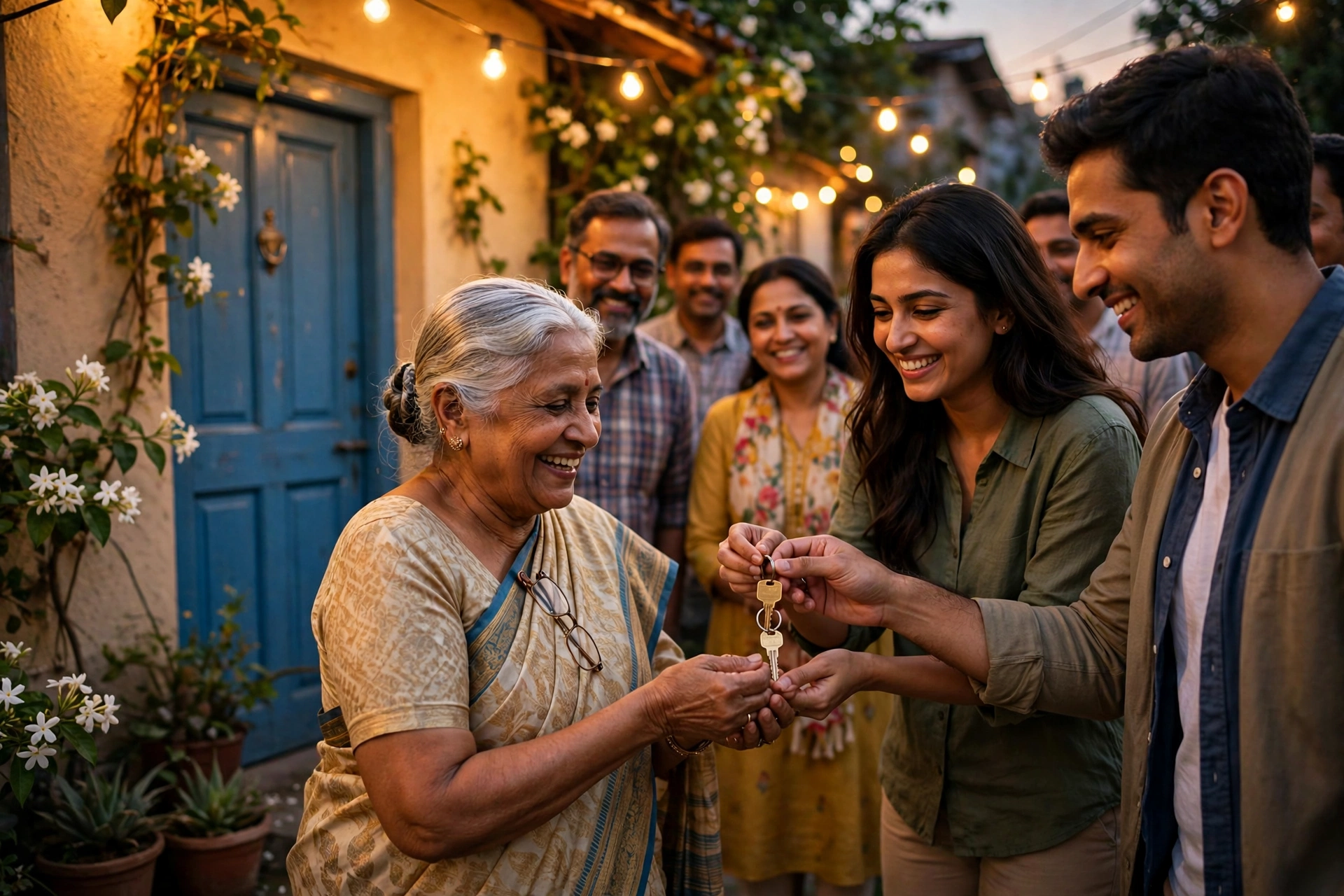
Amina looked at the key in her palm, and then at the faces around her — the baker, the nurse, the children, old Mr. Younus wiping his eyes — and for a moment she could not speak at all. Then she walked inside, hung the key on the last empty hook, and wrote the tag with particular care: "Number Fourteen — Imran and Hira."
That evening, there was tea at the blue door, and then there was more tea, and then the neighbours stayed so long that the streetlights came on and the jasmine flowers opened in the dark, filling the lane with their scent. The baker brought a tray of fresh bread, still warm from his oven. The nurse, just home from her shift, brought a plate of dates. Old Mr. Younus told the story of the first key Amina had ever been given, thirty years ago, and everyone laughed at how young they all had been. Mahnoor fell asleep on Amina's lap, and Hira sat beside them, and Imran, who had once kept his distance, told the story of his own mother, who had kept a spare key for a neighbour long ago and had never once regretted it.
Years later, long after Amina's blue door had passed to new hands, the board still hung in the kitchen, and the keys still hung on it. New families came to Jasmine Lane and were told the story, and one by one they added their own keys. Because the street had learned what Amina had always known: that a locked door keeps out a thief, but an open heart keeps a whole neighbourhood safe. And the greatest lock on any house was never made of brass at all. It was made of the trust between the people who lived on either side of the door.