Every morning, before the town woke up, Ilyas climbed the hill to the old cemetery with his tools wrapped in a faded cloth. He was seventy-one, his back bent from a lifetime of stone, his hands rough and scarred. The cemetery was old, and the graves there belonged to people whose families had moved away, grown old themselves, or simply stopped coming. Weeds grew between the stones, some stones had fallen over, and many graves had no stones at all, just low mounds of earth that the rain slowly washed flat until you could hardly tell anyone had ever rested there. Ilyas remembered, though. That was his work, and it was also his promise.
Forty years earlier, when he was a young man learning his father's trade, his younger brother Hamza had died of a fever in the middle of winter. The family was very poor then, and they could not afford a carved stone. Hamza was buried with only a wooden marker, and within two winters the wood rotted and fell. When Ilyas went back in the spring, he could not find the exact spot. He walked up and down the rows, his heart hammering, searching for anything that would tell him where his little brother lay. In the end, an old gravedigger pointed to a patch of bare earth and said softly, "Somewhere here, son. I am sorry." Ilyas never forgot that feeling. He went home that night, picked up his father's chisel, and made a vow that no one else would ever be lost like that, not if he could help it.
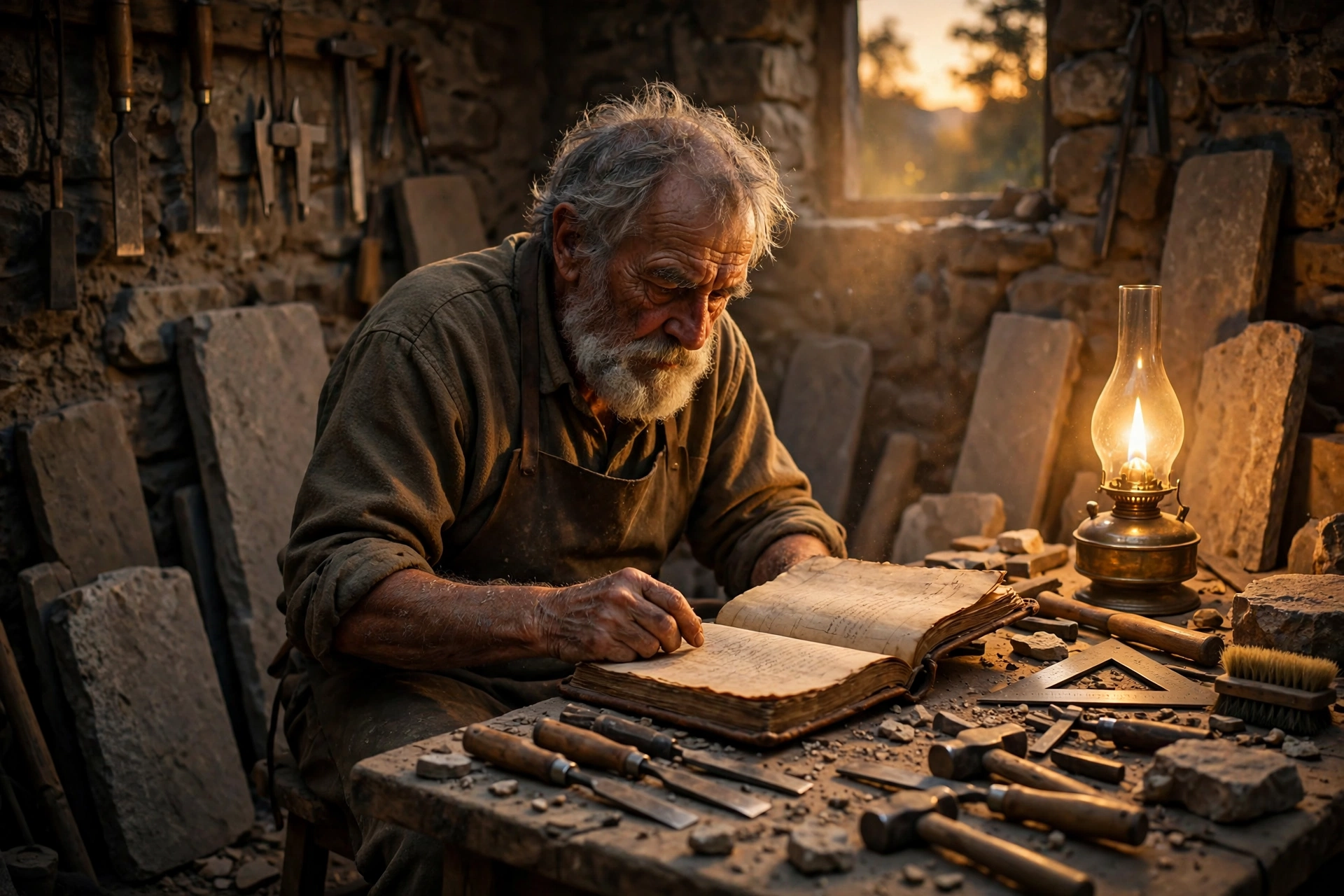
So he began to carve. At first he carved only for families who paid him, as any stonemason would. But then he noticed the unmarked graves, the ones with no one left to pay. He went to the town's old records, dusty books kept in the back room of the council office, and copied down every name he could find. He kept his own ledger too, a thick notebook with a cracked leather cover, in which he wrote each name in careful handwriting, along with whatever small detail the records gave him: a birth year, a trade, a village. Then, one stone at a time, paid for from his own small earnings, he carved the names and set the stones in place. A good stone took him a week. He never rushed a name. "A name is the last thing a person owns," he would say, tapping the chisel gently. "If I carve it crooked, it is as if I did not care. And I do care."
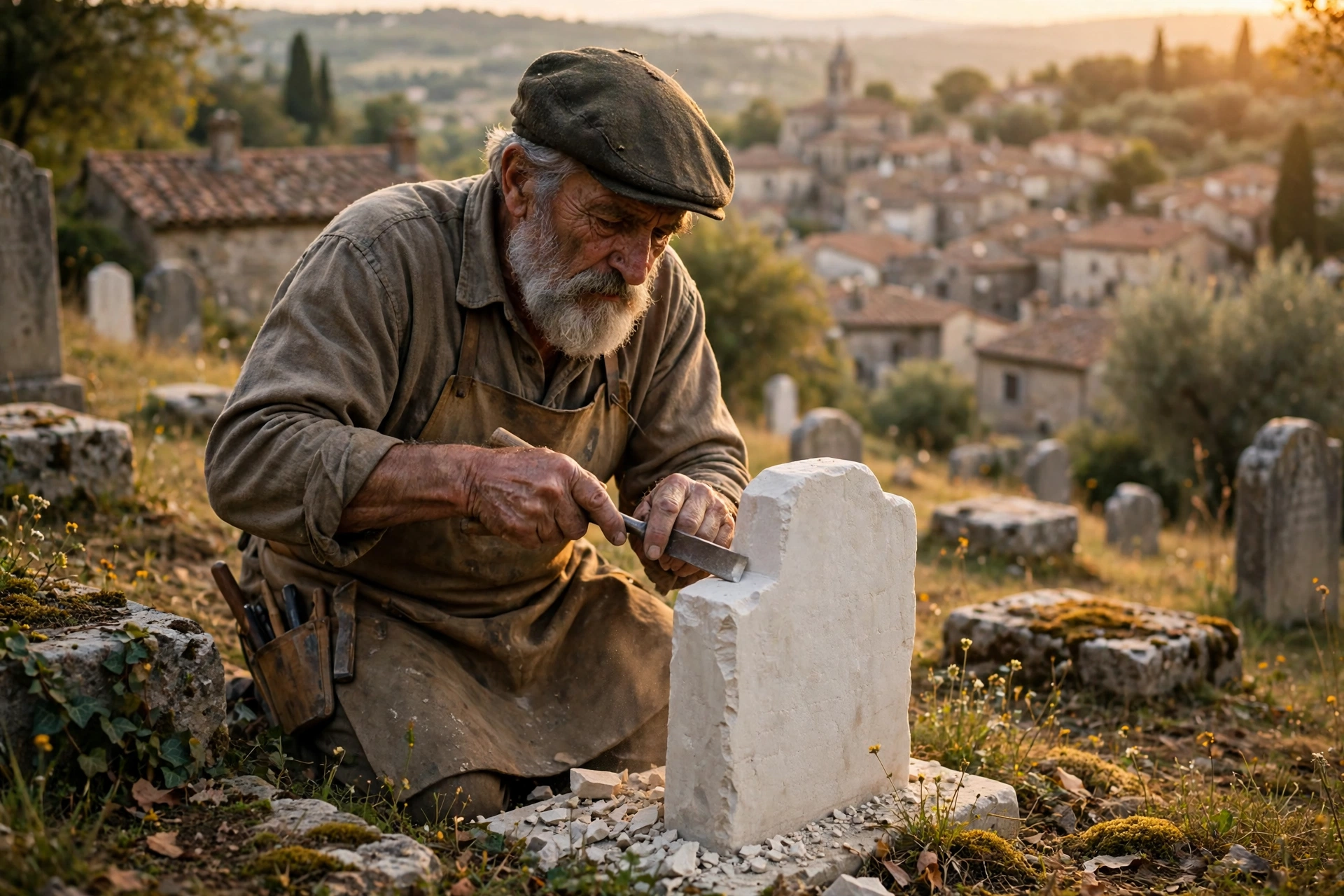
The town thought he was wasting his time. "Those people are gone," shopkeepers would say. "No one comes to visit them." Ilyas would only smile and say, "Then at least the crows will know their names." He simply kept climbing the hill.
Then, one bright autumn morning, a girl came up the hill after him. She was eleven, with dark braids and a dress mended twice at the hem, carrying a small bunch of wildflowers wrapped in newspaper. Her name was Amara, and she had recently lost her grandmother, the woman who had raised her and told her stories every night. Her grandmother had a proper stone, but Amara had heard her mother whisper at the funeral, "At least she will not be forgotten." Those words had stayed with the girl and led her to the old part of the cemetery, where Ilyas was working. She stood behind him for a long time, watching the chisel rise and fall, watching letters appear in the pale stone. Finally she asked, "Uncle, why are you carving a stone for someone nobody remembers?"
Ilyas stopped, wiped the dust from his hands, and looked at her, really looked at her, and saw in her eyes the same lost, searching look he had once carried himself. He sat down on a low wall, patted the space beside him, and told her the whole story: about Hamza, about the winter fever, about the rotted marker and the patch of bare earth. Amara listened without interrupting, her wildflowers forgotten in her lap, and when he finished, her eyes were shining with tears. "But if nobody remembers them," she said quietly, "does carving their names change anything? They are still gone."
"Yes, they are gone," Ilyas said. "And nothing I do will bring them back. But when we were children, my brother used to sing while he worked in the fields. He had a terrible voice, and we all laughed at him, but he sang anyway, because singing made the work lighter. When he died, the singing stopped. For a long time I thought that meant he was truly gone. Then one day, years later, while I was carving a stone for a schoolteacher I had never met, I found myself humming one of his songs without realising it. And I understood something. People do not live on only in the memories of those who knew them. They live on in every act of kindness done in their name, in every moment when someone chooses to care instead of walking past."
Amara thought about that all the way home. The next morning she came back, and the morning after that, and soon she was coming every day after school. She brought him water, swept dust from the stones, and read names aloud from his ledger while he worked. He told her what little he knew about each person: the baker who gave bread to hungry children during a famine, the midwife who walked ten miles through snow to deliver a baby, the shepherd boy who drowned trying to save a lamb. To Amara, they stopped being names in a dusty book. They became real people.
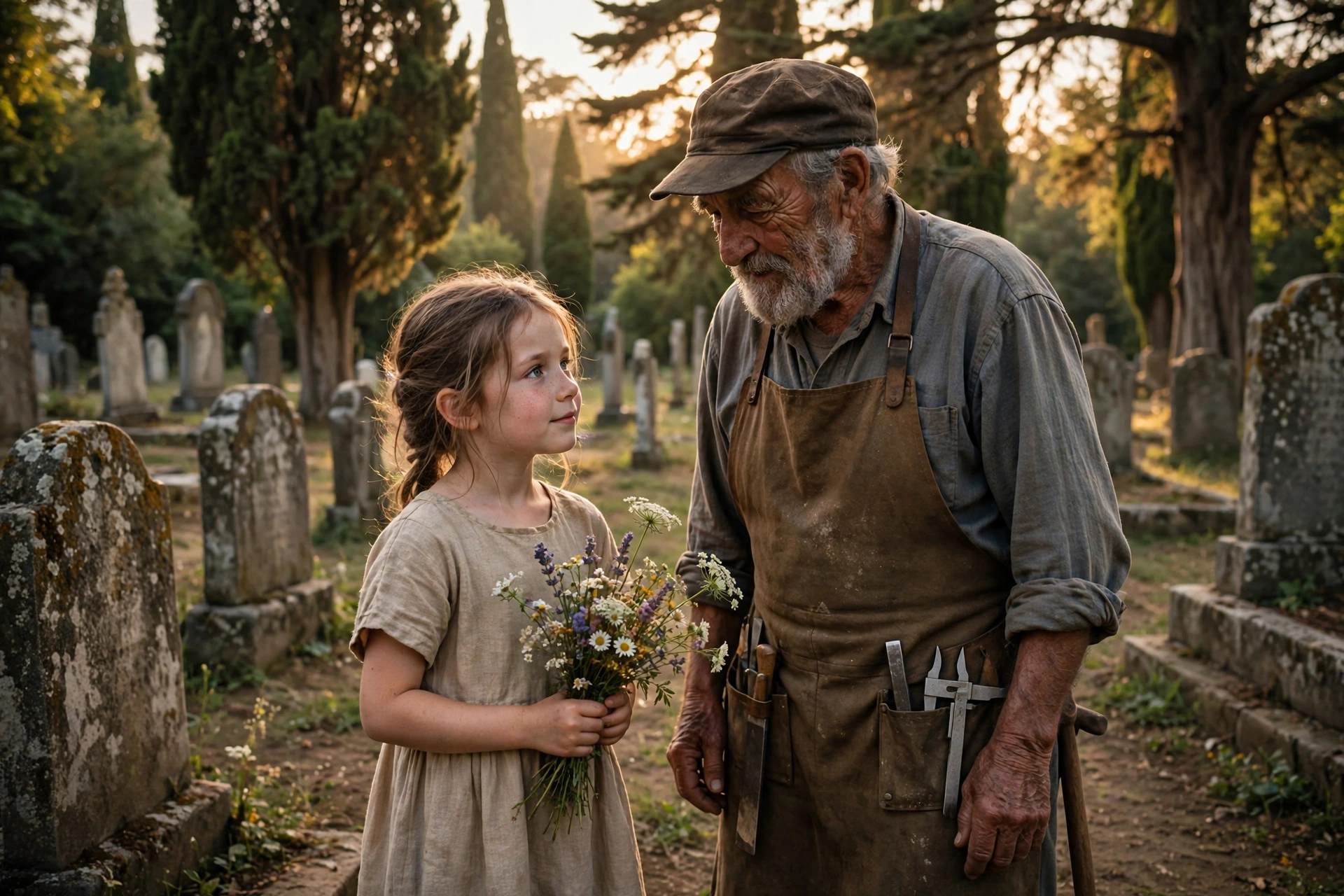
One day Amara asked if she could try carving. Ilyas hesitated, for stone does not forgive mistakes, but he saw the earnestness in her face and remembered how his own father had first placed a chisel in his small hands. He guided her hands gently, showed her how to hold the tool, how to strike softly and steadily, how to listen to the stone. Her first letter was crooked and her second too deep, but her third letter, an A, came out clean and true. She stared at it as if she had performed a small miracle, and Ilyas laughed, a deep warm laugh that startled the crows from the cypress trees. "See?" he said. "The stone remembers your hand now. That is how it works. We leave a little of ourselves in everything we do with care."
Word of the old man and the girl spread slowly through the town, the way all true stories do, in quiet conversations at market stalls and kitchen tables. A teacher came up the hill, then a shopkeeper, then an old woman who had not visited the cemetery in twenty years. Each stood for a while among the newly carved stones, reading names they had never known. They began to bring flowers and clear weeds, and schoolchildren cleaned twenty stones in a single afternoon until the letters shone in the sunlight.
But just as the hill was coming back to life, trouble arrived. The town council announced a plan to build a new road straight through the oldest part of the cemetery, where most of the unmarked graves lay. The land, they said, was unused. No one visited it. There were no records proving who was buried there, and so there was nothing to protect. The road would bring trade and progress, and the town needed progress more than an overgrown field of forgotten dead. When Ilyas heard the news, he felt as though the ground had opened beneath his feet. He was an old man with no money and no influence. For one terrible night he sat in his workshop staring at his ledger, wondering if forty years of work would be wiped away by bulldozers in a single week.
It was Amara who gave him the answer. The next morning she arrived with a determined look and said, "Uncle Ilyas, if the council says there are no records, then we must show them yours. You have written down every name, every grave, every story. That is a record. That is proof. And we have the stones themselves." Together they carried the ledger down to the town hall. Amara, who had never spoken to an important person in her life, stood before the council and told them about the baker and the midwife and the shepherd boy. She told them about Hamza, and about the wooden marker that rotted away, and about what it meant to lose someone twice: once to death, and once to forgetting. Ilyas stood beside her, silent and steady, his ledger open in his hands like an offering.
The council listened. Perhaps they were moved by the girl's courage, or perhaps they were shamed by the sight of an old man who had spent his life doing, for free, what no one else had bothered to do at all. Whatever the reason, they changed their minds. The road would go around the hill, not through it. And more than that, they declared the old cemetery a protected place, a place of memory for the whole town, and asked Ilyas to be its keeper for as long as he lived.
The following Sunday, something happened that Ilyas had never seen in all his forty years on the hill. People came in crowds: families with children, old men with walking sticks, young couples holding hands, shopkeepers who had once shaken their heads at him. They carried flowers and candles, and walked slowly among the stones, reading the names aloud, stopping to wonder about the lives behind them. Some wept, some smiled, and all stayed until the sun began to set, turning the stones gold. Amara found Ilyas sitting on his low wall, watching it all, his eyes wet. She took his rough, scarred hand in her small one. "Uncle," she whispered, "do you see? They remember now. You made them remember." Ilyas shook his head gently, smiling through his tears. "No, child. I only carved the names. You are the one who made them remember. A stone can hold a name, but only a living heart can keep it alive."
Years passed, as years always do. Ilyas grew older still, and his hands, which had carved thousands of letters, finally grew too stiff to hold the chisel steady. But he did not grieve for that, because by then Amara was no longer a small girl with wildflowers. She was a young woman, and she had learned the trade properly, letter by letter, stone by stone, just as he had taught her. She took up his tools, wrapped in the same faded cloth, and climbed the hill every morning, just as he had done. And when people asked her why she bothered carving names for people nobody remembered, she would smile and say, "Then at least someone will know their names."
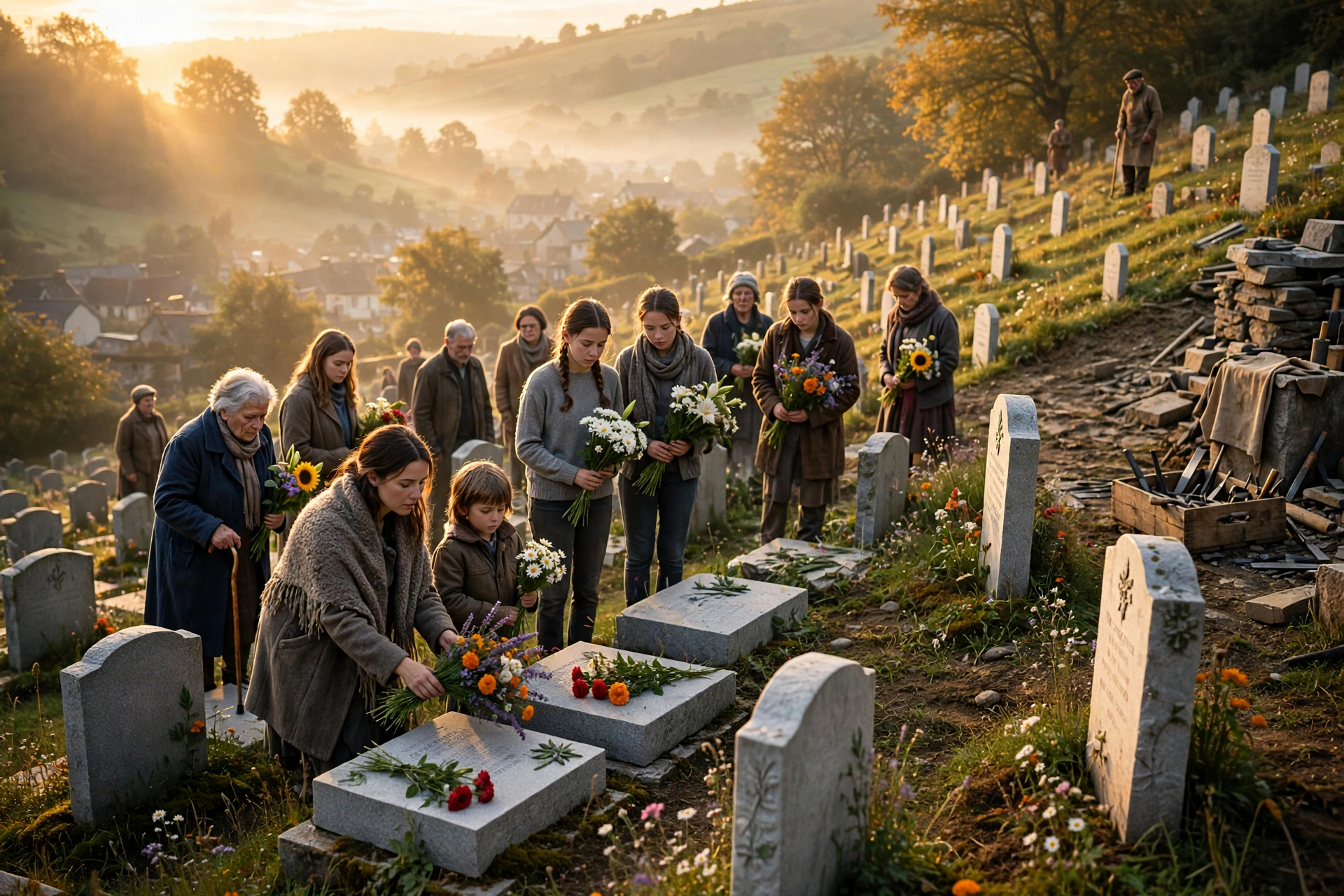
And so the hill was never forgotten again. The stones stood in neat rows, wildflowers grew thick between them, and children came to read the names and invent stories about the baker and the midwife and the shepherd boy. Ilyas, sitting in the sunshine with his ledger on his knee, listened to their voices and felt a peace he had not known since he was a young man. Now he understood that no one who is loved, and no one who is remembered with kindness, is ever truly lost. Kindness is not always loud or grand. Sometimes it is as quiet as a chisel on stone, as patient as an old man on a hill, as small as a girl carrying wildflowers. And yet that quiet kindness is enough to save a person from being forgotten, and to remind a town that every life, no matter how ordinary, was once precious, and is still worthy of a name.