The snow began before sunset, and by the time the last light left the mountains, the village of Baran had disappeared into it. The paths between the stone houses vanished first, then the pine trees at the edge of the valley, then even the small mosque on the hill, until there was nothing left but white wind and the warm squares of lamplight in a few windows. In the smallest house at the end of the lane, seventy-two-year-old Amna sat beside her fire, her worn leather bag packed by the door, and told herself that tonight she would not go out.
She had made this promise to herself a hundred times before, and she had broken it a hundred times. But tonight felt different. Tonight was the last night of winter, according to the old calendar her mother had kept, and Amna had decided that when spring came, she would finally stop. Her knees ached when she climbed the steep lanes. Her eyes tired in lamplight. Her hands, which had once been so steady, sometimes trembled now when she poured tea. She had delivered more than four hundred babies in Baran and in the villages beyond the pass, and she thought that was enough for one lifetime. She had folded her clean cloths, tied her bag, and placed it by the door out of habit, not intention. She was going to stay by the fire, drink her tea, and let the winter end in peace.
Then someone knocked.
It was not a polite knock. It was the desperate, pounding knock of a man who had run a long way in the snow. Amna was on her feet before she had even decided to stand, her shawl already around her shoulders, her bag already in her hand. Some promises are made to be broken, and the promises we make to ourselves about staying warm are always the first to go.
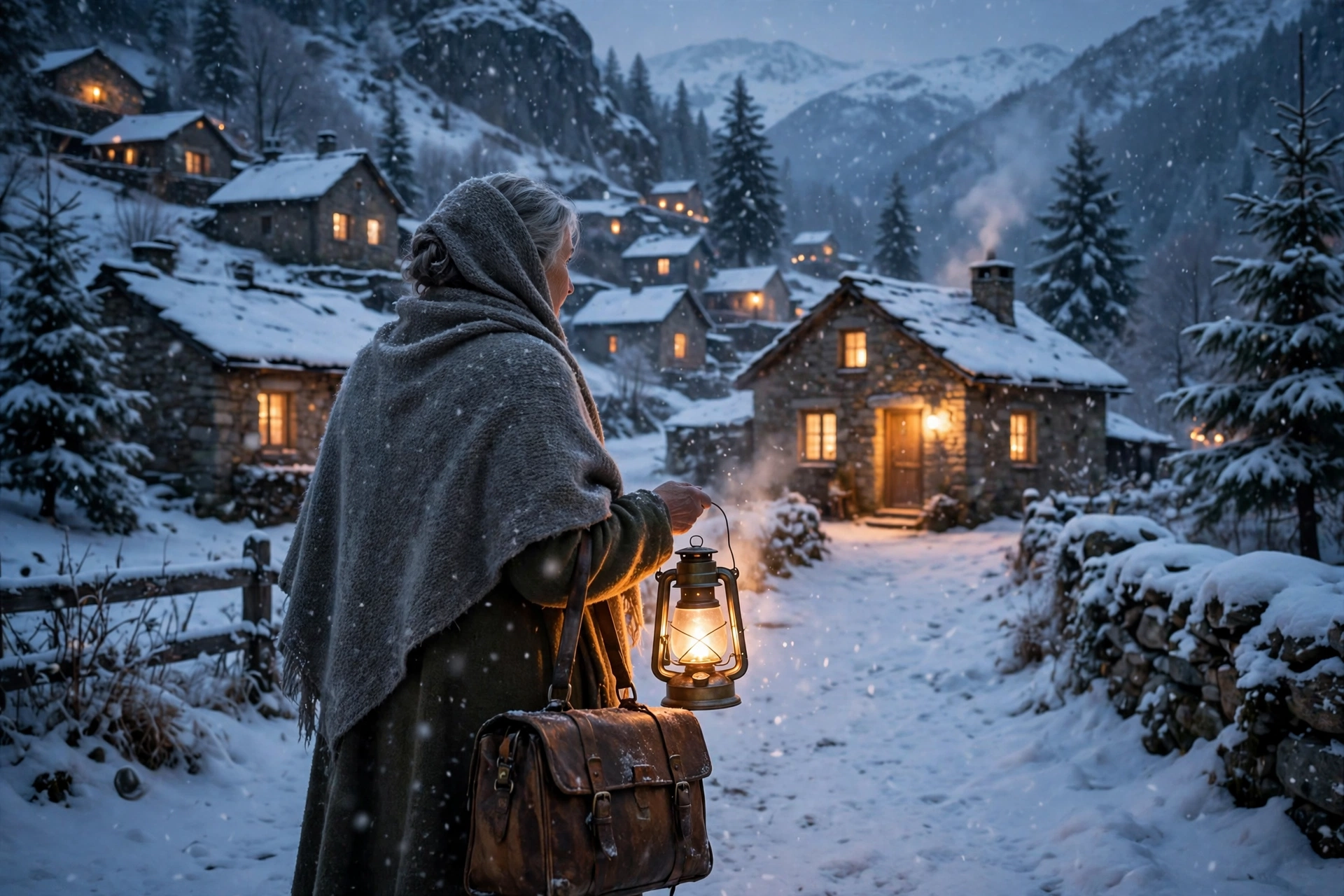
The man at her door was young, perhaps twenty-five, with snow crusted in his hair and fear plain on his face. His name was Yusuf, he said, and he was not from Baran. He and his wife Layla had been travelling to her mother's village when their old car had slid off the road two valleys away, into a ditch full of snow. They had walked for hours. Layla was eight months pregnant, and now she was in pain, and she was waiting in the abandoned shepherd's hut at the edge of the village, because she could walk no further. "Please," Yusuf said, and his voice cracked on the word. "There is no one else. The road to the town hospital is closed. They said the snow has buried it."
Amna looked at him, and then she looked at the storm beyond her doorway, and she thought of all the nights she had walked into weather like this. She thought of her own daughter, Zainab, who had died giving birth to a stillborn child twenty years ago in this very village, on a night when the doctor from the town could not reach them in time. Amna had held her daughter's hand until the end, and for a long time after that she had believed that her hands were cursed, that she should never help another mother again. But the women of Baran had come to her door anyway, one by one, and she had gone, because staying home while someone needed her felt worse than any grief.
"Wait here," she told Yusuf. She wrapped an extra blanket around her shoulders, filled a flask with hot water, tucked clean cloths and a small bundle of herbs into her bag, and lit her lantern. "Show me the way."
The walk to the shepherd's hut took nearly an hour, though in good weather it would have taken fifteen minutes. The wind pushed them sideways. Snow found its way inside Amna's collar and melted down her neck. Twice Yusuf slipped and fell, and twice Amna pulled him up with a strength that surprised them both. The lantern light swung in wild circles, showing them nothing but swirling white, and then, at last, the low dark shape of the hut.
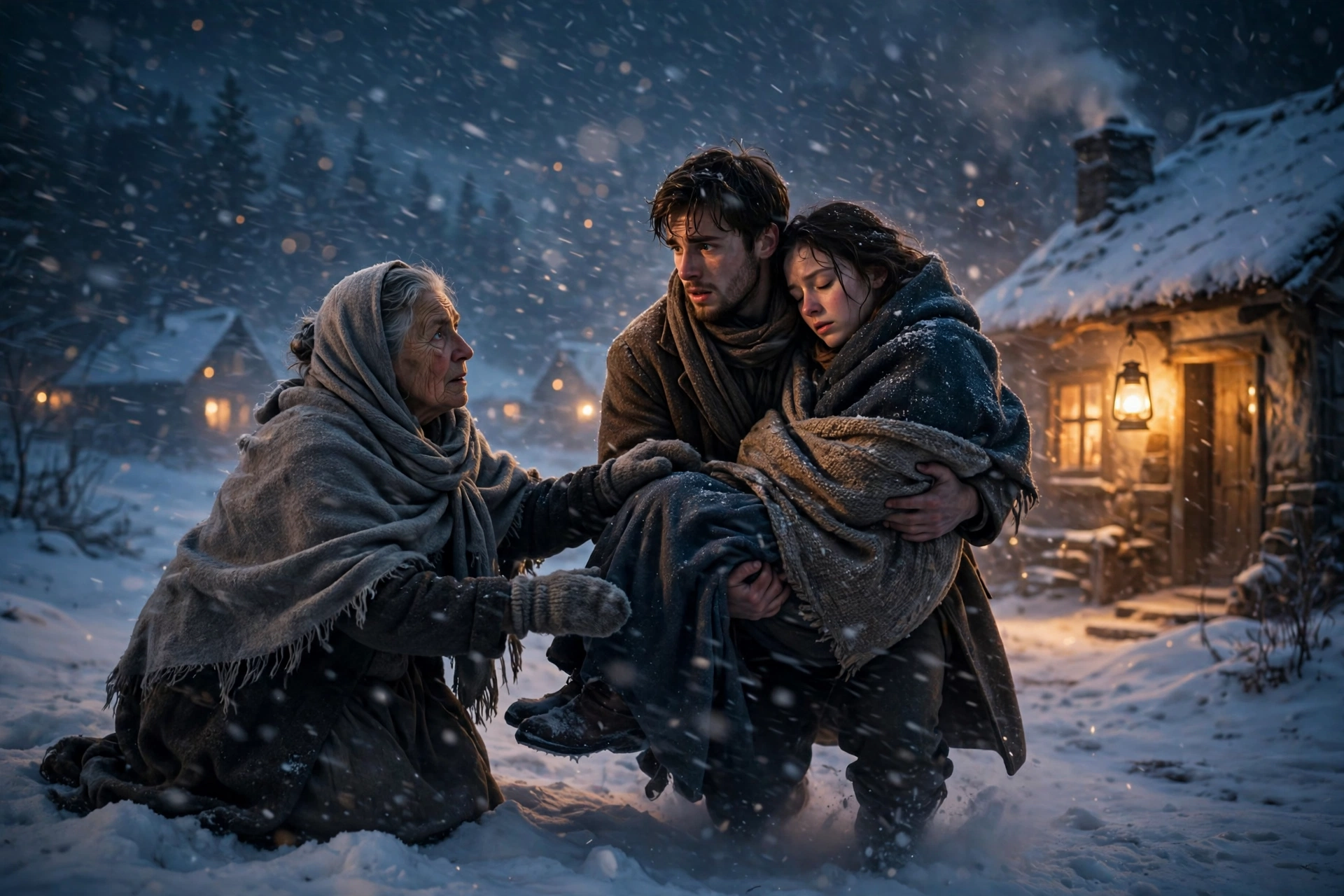 Inside, by the light of a small fire Yusuf had managed to build before he left, Layla lay on a pile of coats, her face pale and wet with sweat despite the cold, her hands gripping her belly.
Amna knelt beside her at once, and all her tiredness fell away. She spoke the way she always spoke to frightened mothers: softly, steadily, as if nothing in the world were wrong. "I am Amna," she said. "I have helped many babies come into this world, and I will stay with you until yours is safe in your arms. Breathe with me now. Slowly. That is it. You are doing beautifully."
But as the hours passed, Amna grew quiet, and Yusuf saw the worry she was trying to hide. The baby was coming too early, and it was not lying in the right way. Layla was growing weaker. The hut was cold, the fire was dying, and there was no doctor, no hospital, no medicine beyond what Amna carried in her bag. Outside, the storm screamed against the thin walls as if it wanted to come inside and take them all.
Amna did what she had done for fifty years: she kept working, kept talking, kept her hands gentle and her voice calm. She turned the baby with a patience born of long practice, whispering prayers her mother had taught her, while Yusuf held his wife's hand and wept openly and apologised for bringing her on this journey at all. Layla, between pains, whispered back to him that he must not apologise, that she had wanted to see her mother, that none of this was his fault. And then, just when Amna feared the night would end in the same grief she had known twenty years before, the baby slipped free into her waiting hands.
For one terrible second, there was silence. The baby did not cry. Amna's heart stopped. She wrapped the tiny body in a warm cloth, rubbed its back gently, blew softly against its face, and whispered, "Come on, little one. Come on. The world is waiting for you." And then, like a small miracle breaking through the storm, the baby drew a breath and cried — a thin, furious, wonderful cry that filled the hut and drowned out the wind.
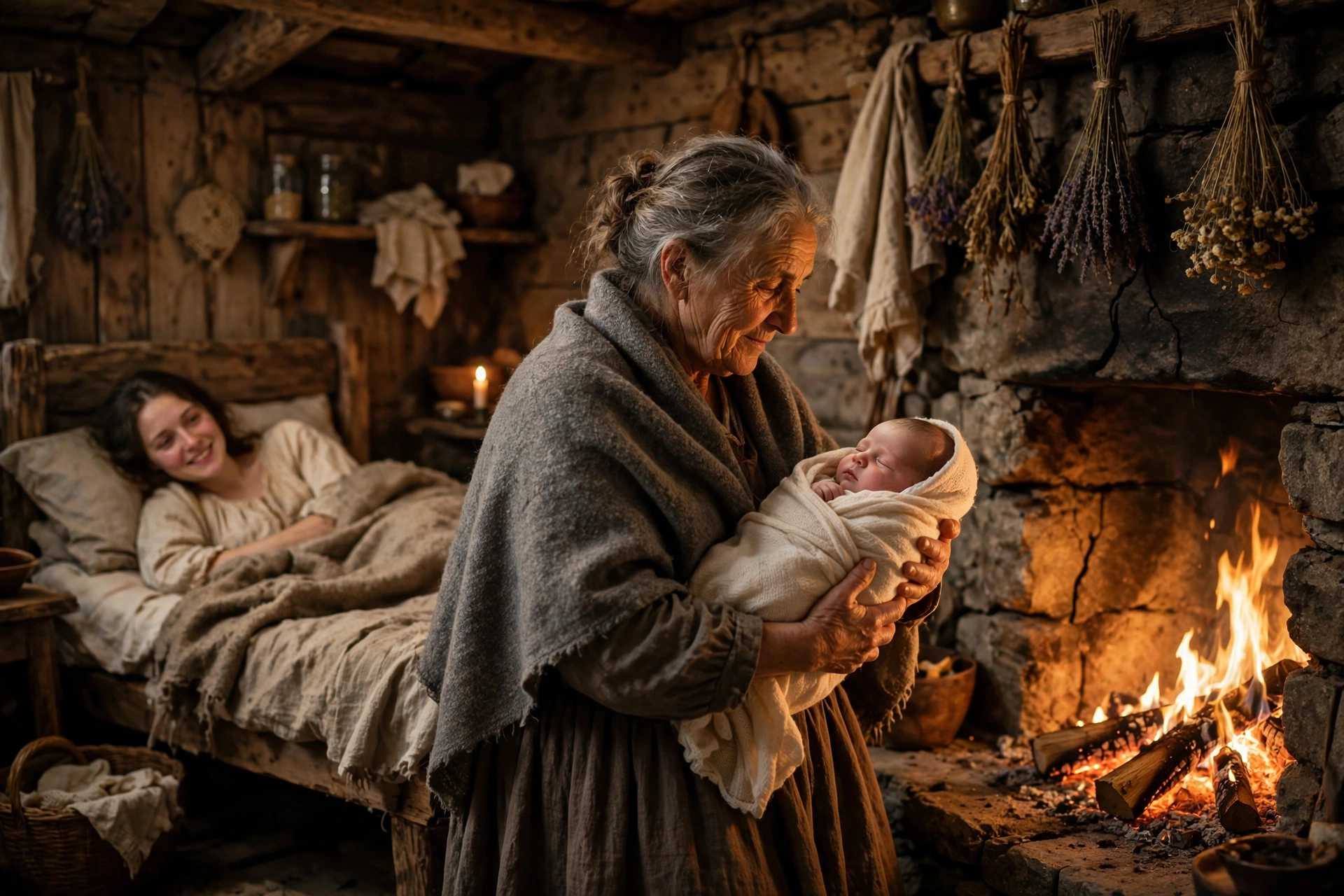
Layla laughed through her tears. Yusuf fell to his knees and pressed his forehead to his wife's hand. Amna sat back on her heels, holding the baby close to keep it warm, and felt tears running down her own face, hot against her cold skin. She had not cried at a birth in many years. But this one felt like a door opening in a house she had thought was closed forever. The baby was a girl, small and perfect, with a shock of dark hair and fists curled tight as if she were already determined to hold on to life.
"She is strong," Amna said, placing the baby in Layla's arms. "Like her mother. And like her father, who ran through a blizzard to find help for them both."
They could not travel further that night, so Amna stayed. She built up the fire, boiled water, and made a thin soup from what little they had. She showed Layla how to hold the baby so she could feed, and she stayed awake long after Yusuf and Layla had fallen asleep, watching the rise and fall of the baby's tiny chest, listening to the storm slowly lose its anger outside. Somewhere near dawn, the wind dropped, and a strange stillness settled over the valley, the kind of stillness that comes after a long struggle, when the world seems to be holding its breath in wonder.
When morning came, the sky was the clearest blue Amna had ever seen. The snow glittered on every rooftop. And when Amna stepped out of the hut to fetch fresh snow to melt for water, she found the whole village waiting. Word had travelled, as word always does in Baran, from one house to the next through the night. Old men in thick coats stood with baskets of bread and pots of stew. Women carried blankets and warm milk. Children peered around their mothers' legs, whispering about the baby born in the storm. Nobody had been asked to come. They had simply come, because that is what neighbours do when a new life arrives in the middle of a hard night.
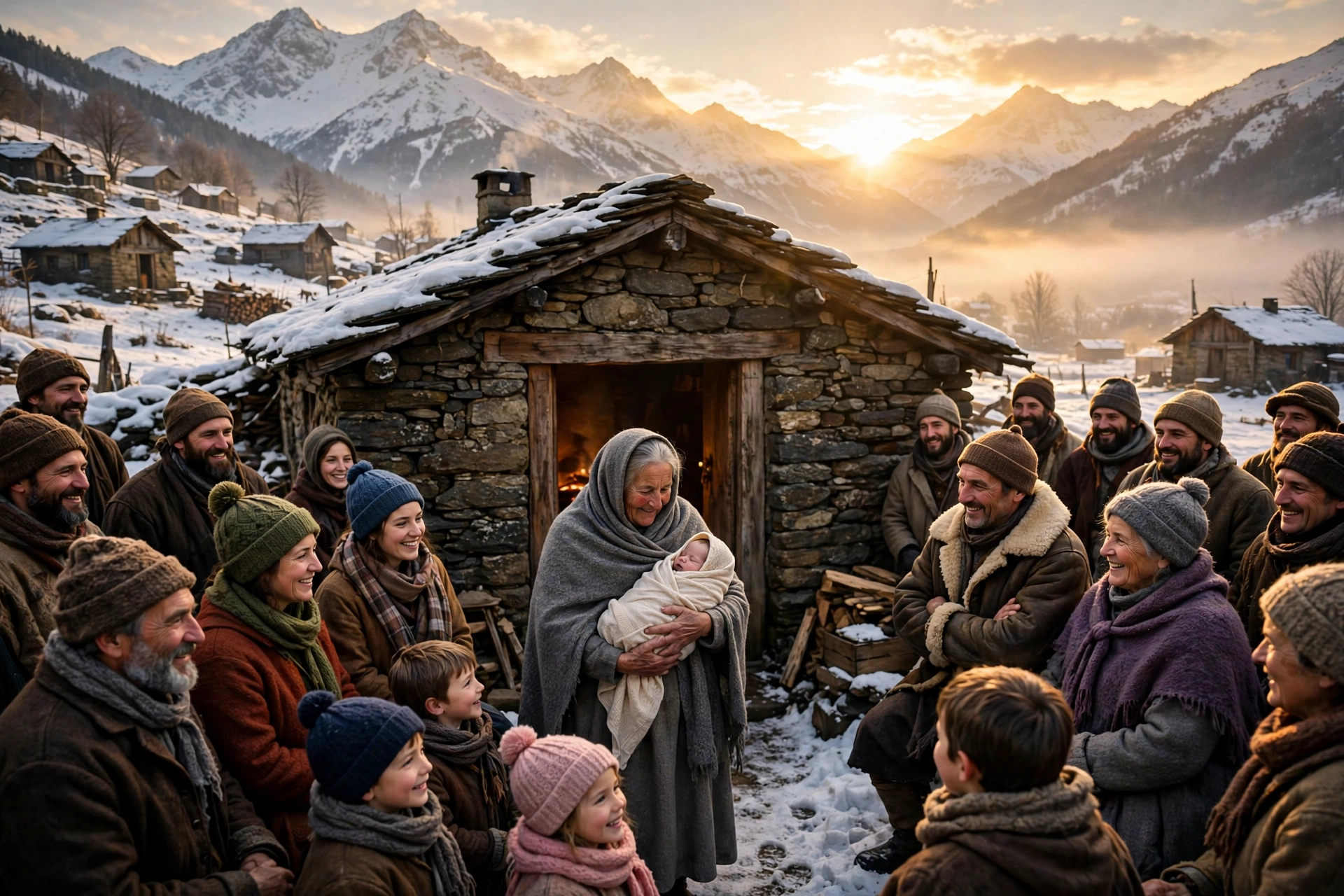
Yusuf wept again when he saw them, and Layla, holding her daughter at the door of the hut, wept too. One by one, the villagers introduced themselves. The baker, whose own three children Amna had delivered, pressed a warm loaf into Yusuf's hands. An old woman named Fatima, who had once told Amna she should have stopped years ago, tucked a hand-knitted shawl around Layla's shoulders and said, "For the baby, when she is bigger. And for you, for being so brave." A little girl, no more than seven, stepped forward shyly and offered the baby a wooden bird her grandfather had carved, because, she explained very seriously, "every baby needs something to play with."
Amna stood among them, her lantern still in her hand though the sun was now shining, and felt something shift inside her chest. She had planned to stop when spring came. She had told herself her work was done. But looking at Layla and the baby, and at the village gathered in the snow with their bread and blankets and wooden birds, she understood something she had been too tired to see: her work had never been only about delivering babies. It had been about showing up. About walking out into the storm when someone knocked. About being the person who stays awake through the longest night so that others can rest. That was not a job you retired from. It was simply who she was.
Layla named the baby Bahar, which means spring. "Because she was born on the last night of winter," Layla said, "and because she brought the spring with her." And from that day on, whenever anyone in Baran spoke of that winter, they did not speak of the storm or the closed roads or the cold. They spoke of the night the midwife walked through the blizzard, and the morning the whole village came out to welcome a child they had never met, simply because she was new, and small, and theirs to look after.
Amna did not stop that spring. She slowed down, it is true. She took a young girl from the village, Sara, as her apprentice, and taught her everything she knew: how to speak softly to a frightened mother, how to keep your hands steady when your heart is racing, how to stay when staying is the hardest thing. And when, a year later, Amna finally did put her bag by the door for the last time, she did so knowing that Sara would pick it up when the next knock came, and that the lantern would keep burning long after her own hands could no longer carry it.
For hope, Amna learned, is not something we wait for, like the spring waiting behind the winter. Hope is something we carry to one another, one small, stubborn act at a time: a knock answered, a hand held, a lantern lit in a storm. And as long as there are people willing to walk out into the cold for a stranger, the winter can never truly win.