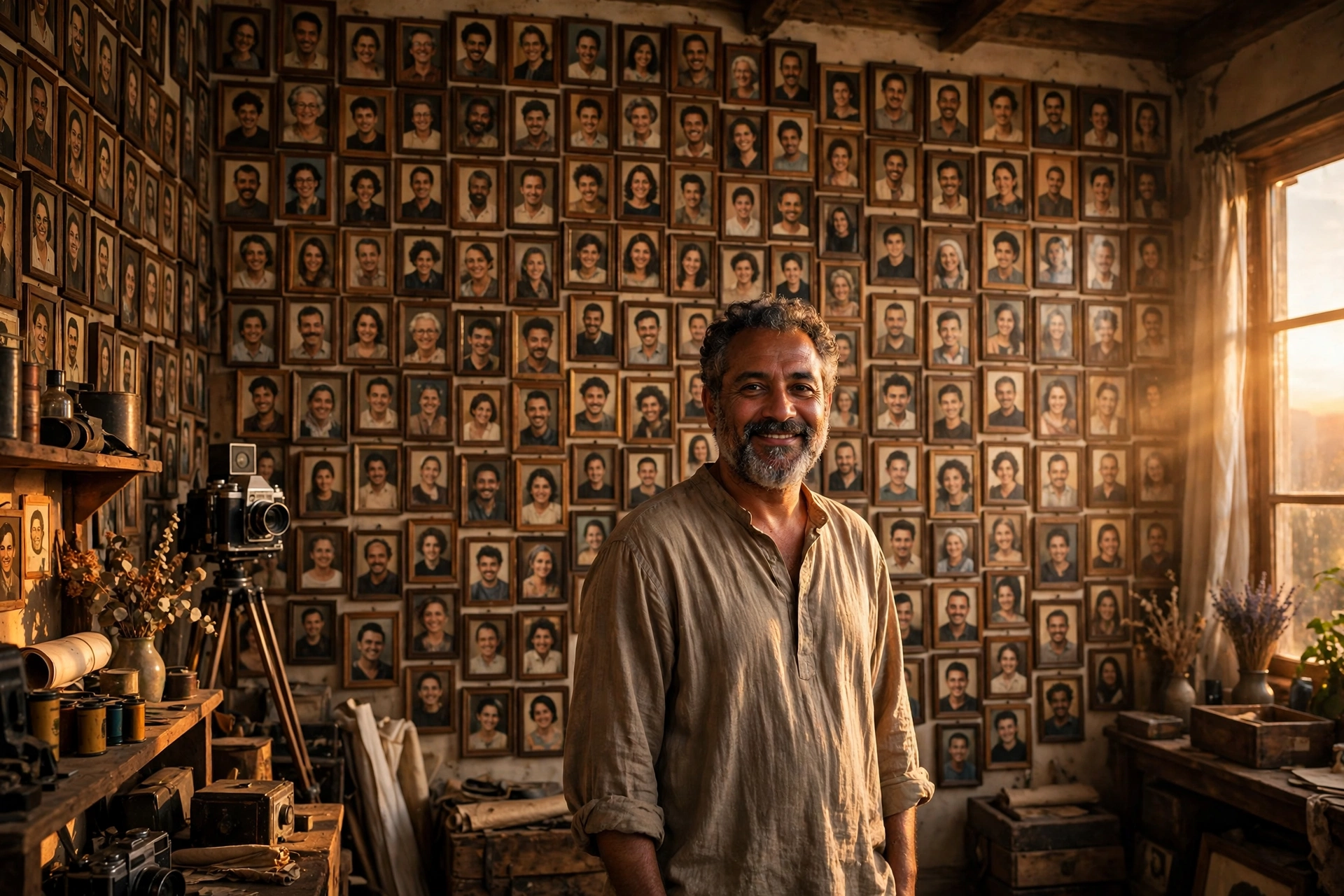
The first thing anyone noticed about Imran's studio was the smell of old chemicals and dust, and the second thing was the wall. The wall was covered with framed photographs, hundreds of them, and not a single one had ever been paid for.
Imran was forty-six, thin as a reed, with grey creeping into his beard. His studio sat at the far end of the old bazaar, past the spice sellers and the cloth merchants, in a narrow shop with a crooked wooden sign that read: "Imran Photo Studio." The sign had been painted twenty years ago, and the paint was peeling now, but Imran had never bothered to repaint it. He said the sign did not matter. What mattered was inside.
Inside, there was one old film camera on a tripod, a chair with a torn cushion, a faded blue curtain that served as a backdrop, and a wooden shelf full of glass jars holding negatives. The light in the studio was warm in the mornings, golden and soft, falling through the dusty window onto the floorboards, and Imran often said that light was the only thing in the shop he had never had to pay for.
He had not always given his photographs away. Once, he had charged proper prices for weddings and engagements. But one winter, a woman came carrying a baby wrapped in a thin shawl. Her husband had died three months earlier, and she had no photograph of him at all, and she wanted her child to know what his father looked like one day. When Imran told her the price, her face fell, and she turned to leave. Something inside him shifted, quietly, like a door opening in a dark room. He took the photograph for free, printed it, framed it in a simple wooden frame, and gave it to her. She cried, and she held the frame to her chest as if it were made of gold. That night, Imran made a decision that would change the rest of his life. From that day on, his portraits would be free for anyone who could not afford them. People laughed at him, but Imran only smiled. He ate less, it was true. But his wall kept growing.
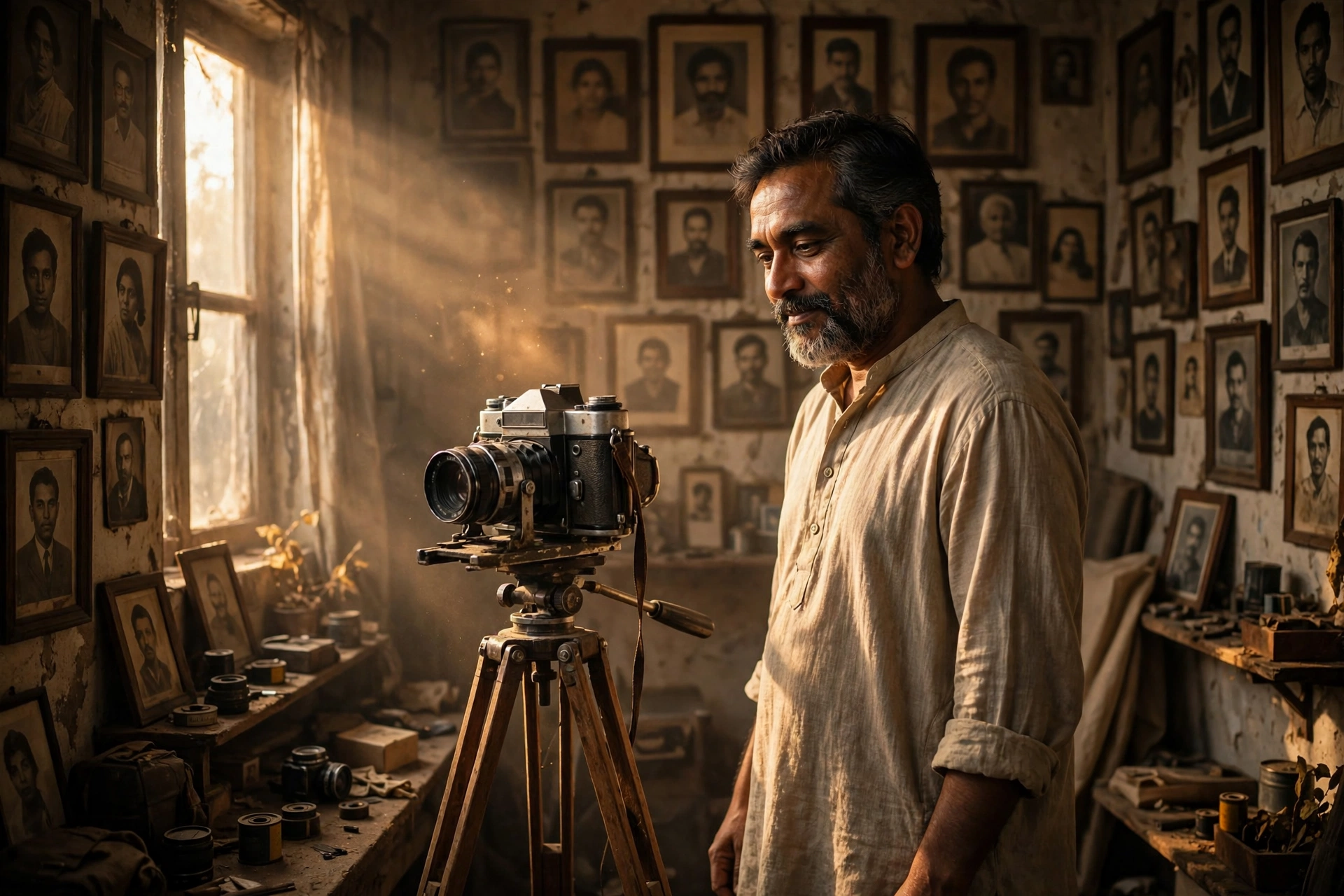
Every morning, people came. A rickshaw driver who wanted a picture to send to his mother in the village. An old woman who had never owned a photograph of herself in eighty years. A young girl in a school uniform, holding her little brother's hand, wanting a picture because it was the first day of school and her father was away working in another city. Imran photographed them all with the same care he had once given to rich weddings. He told them to look at the small bird he kept painted on the wall behind the camera. Then he developed the photographs himself, framed each one in wood he cut and polished with his own hands, and gave them away, never asking for anything in return. Sometimes people left a few coins on his table when he was not looking, or a bag of oranges, or a loaf of bread. Imran accepted these gifts with the same quiet grace, and he never counted them.
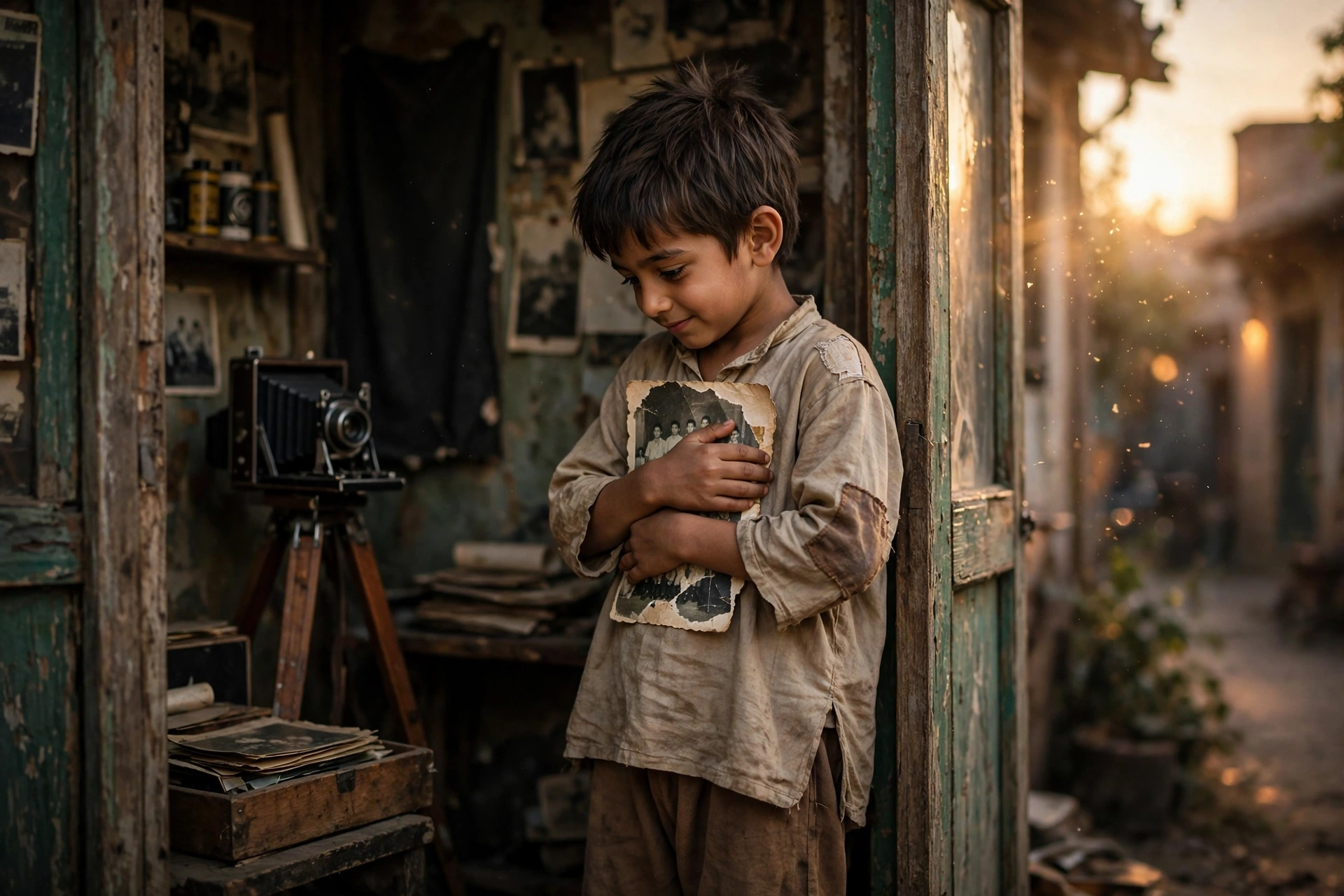
It was a Tuesday evening in November, and the light outside was fading into a soft purple dusk. The bazaar was closing, shopkeepers pulling down their shutters, the smell of fried bread and smoke drifting through the lanes. Imran was wiping down his camera lens, getting ready to close, when he heard small footsteps at his door. He looked up, and there stood a boy, no more than nine years old, thin and dusty, wearing a shirt that was too big for him and trousers that had been mended at the knees. The boy held something in his hands, pressed close to his chest.
"Come in, beta," Imran said gently. "What can I do for you?"
The boy stepped inside, slowly, and held out what he was carrying. It was a torn school photograph, creased and faded, showing a group of children standing in rows. In the front row, a small boy smiled with a missing front tooth. Imran recognised him at once. It was the same boy, younger by two years.
"This is me," the boy said, his voice barely above a whisper. "I have this one. But I want..." He stopped, and his eyes filled with tears. "I want a photograph of my father. He died when I was very small. I don't remember his face. My mother says he was tall and he laughed a lot, but I don't remember. We have no picture of him. Not one."
Imran felt his heart tighten, and he knelt down so that his eyes were level with the boy's.
"What is your name?" he asked.
"Aariz," the boy said.
"And your father's name, Aariz?"
"Rafiq," the boy said. "Rafiq, the mason. He built houses. My mother says he built the big house at the end of Mill Road."
Imran nodded slowly. He did not promise anything. He had learned, over many years, that a promise you cannot keep is worse than silence. But he took the boy's hand and said, "Come back tomorrow after school. I will see what I can do."
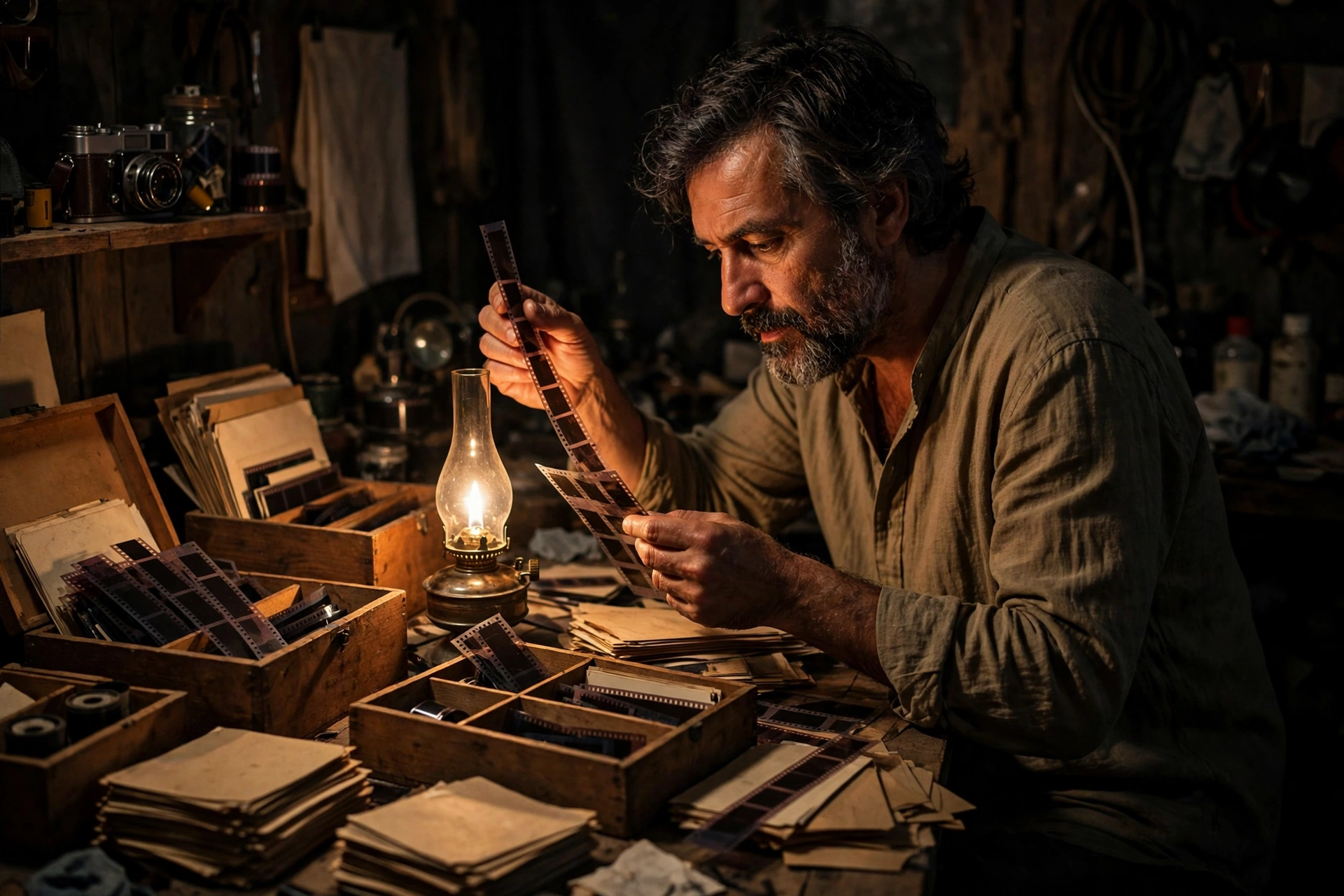
That night, Imran did not go home. He lit the small lamp on his table and pulled out the wooden boxes from beneath his shelf. Inside those boxes were thousands of negatives, wrapped in paper, labelled in his neat handwriting by year and by place. He had kept every negative he had ever taken. Most photographers threw old negatives away. Imran never had. "A photograph," he often said, "is a person. You do not throw a person away."
He remembered something then. Years ago, when the big house at the end of Mill Road was being built, the owner had hired him to photograph the workers, a group portrait to hang in the new house. There had been twenty men standing in front of the half-built walls, masons and labourers, their shirts dusty, their faces bright with pride. If Rafiq had been a mason on that site, he might be in that photograph. Imran searched through the boxes, holding each strip of film up to the lamp, squinting at the tiny faces. Twice he thought he had found the right negative, and twice his heart sank when he looked closer and saw it was another man. His eyes burned from the lamplight, and his back ached. But he kept searching, because somewhere in those boxes, if God was kind, there was a face a small boy had been waiting nine years to see.
It was nearly dawn when he found it.
There, in the middle row of the group, stood a tall man with a broad smile and a white cap pushed back on his head. On the back of the paper sleeve, in Imran's own handwriting, it said: "Mill Road house, workers, 2018." Imran's hands trembled as he held the negative up to the light. He did not know for certain it was Rafiq. But the man was tall, and he was laughing, and the year was right. He enlarged the photograph, cropped it carefully so the man stood alone, and printed it. Then he framed it in the finest frame he had, a dark wooden frame with a thin gold edge, the one he had been saving for years for something special, and he polished the glass until it shone.
When Aariz came after school the next day, his mother came with him, a thin woman in a plain shawl, her hands rough from washing clothes in other people's houses. She stood behind her son, one hand on his shoulder, and looked at Imran with the guarded hope of someone who has been disappointed many times before.
Imran did not say a word. He simply lifted the framed photograph from his table and turned it towards them.
For a moment, there was silence. Then the mother's hand flew to her mouth, and a sound escaped her that was half a sob and half a laugh. "Rafiq," she whispered. "That is him. That is my Rafiq."
Aariz stared at the photograph the way a thirsty traveller stares at water. His father's face smiled back at him from behind the glass, tall and laughing, alive in a way the boy had only ever imagined. Slowly, Aariz reached out with one finger and touched the glass, gently, as if the man inside might feel it.
"That is my father," he said, and his voice broke. "That is my father."
And then he cried, not the loud crying of a child who has fallen and scraped his knee, but the quiet, shaking tears of a boy who had carried a hole in his heart for nine years and had just watched it fill. His mother knelt beside him and wrapped her arms around him, and she cried too, and Imran stood behind his camera and wiped his own eyes with the back of his hand, pretending the chemicals had made them water.
Aariz carried the photograph home and hung it on the wall of their small one-room house, in the place of honour above the bed. Every night before sleeping, he said goodnight to his father. His mother told him stories she had not told in years. The house, which had been quiet for so long, began to fill with words again.
And Aariz, who had always been a quiet boy at school, began to change. He stood a little taller. He answered questions in class. When a new boy joined the school, a boy who sat alone at lunch every day, Aariz was the one who went and sat beside him. When the teacher asked the class to write about the person they admired most, Aariz wrote about a photographer in the old bazaar who had given him his father back.
The teacher read the essay aloud, and the story spread. It spread through the school, and then through the neighbourhood, and then through the whole bazaar. People who had never heard of Imran's little studio began to come, not to ask for free photographs, but to leave things: a new sign, painted in bright colours. A better chair, from the carpenter whose wedding Imran had photographed twenty years earlier. A sack of rice from the grain seller. And one morning, Imran arrived to find a line of people waiting outside his shop, each holding a photograph they had received from him years ago, and each of them had come to have a new one taken, together, as a family of strangers bound by one man's kindness.
Imran photographed them all that day, more than a hundred people standing shoulder to shoulder in the warm morning light, and he framed the print and hung it in the centre of his wall, where it remains to this day. If you walk to the far end of the old bazaar, you will find the little shop with the crooked sign, its door always open, its wall still growing. And if you ask Imran what his photographs are worth, he will smile his quiet smile and say the same thing he has said for twenty years: "They are worth exactly what they cost. Nothing. And everything."
For a photograph is never just paper and light. It is proof that someone was here, that someone mattered, that someone was loved.
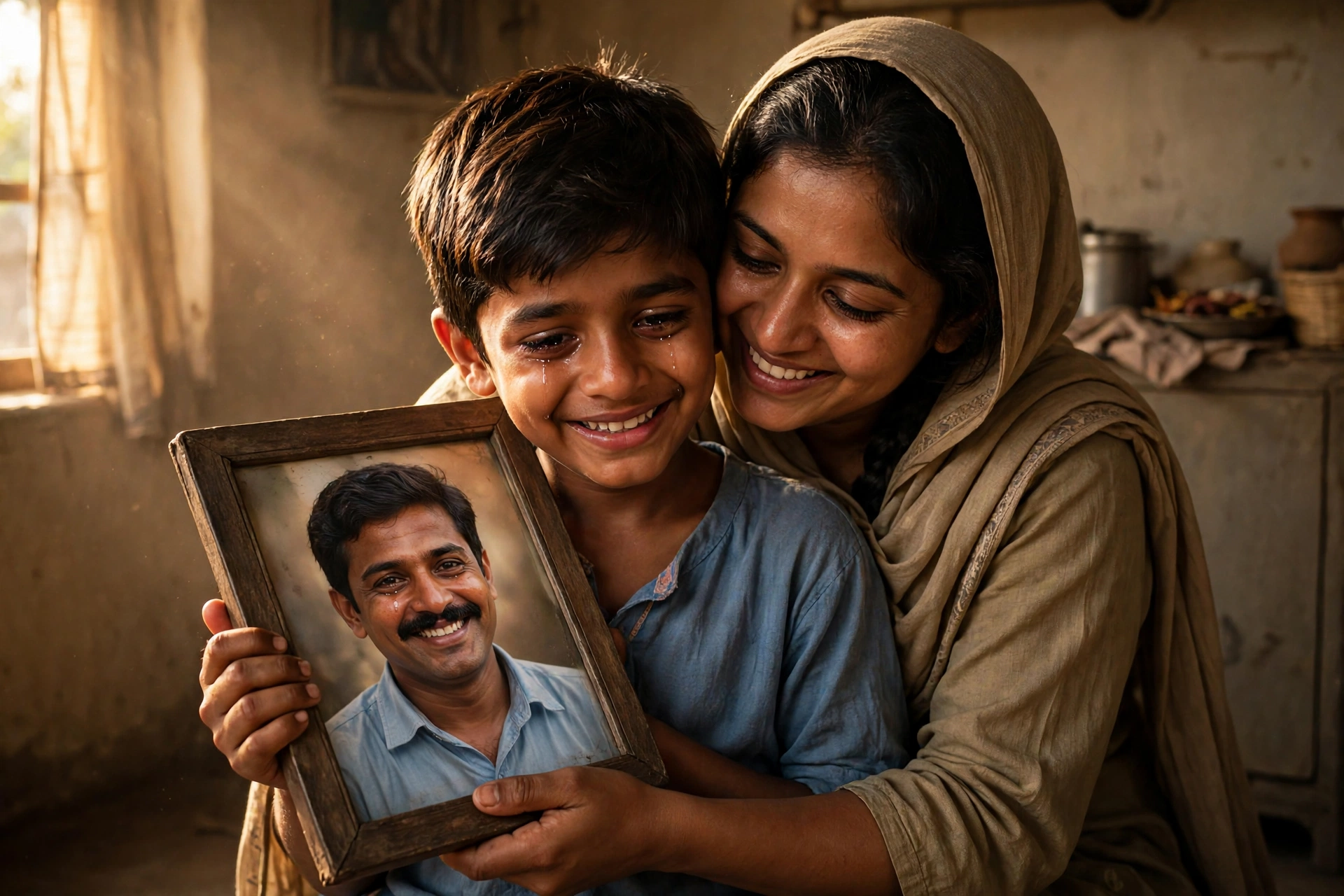
Today, Aariz still keeps his father's photograph on the wall, beside the torn school photograph he once carried into the studio, and he spends his free hours helping there, sweeping the floor and polishing the frames. Whenever anyone asks him why, he gives the same answer: "Because one day, a man I had never met stayed awake all night, looking for a face he had never seen, for a boy he had never known. That is the kind of person I want to be."