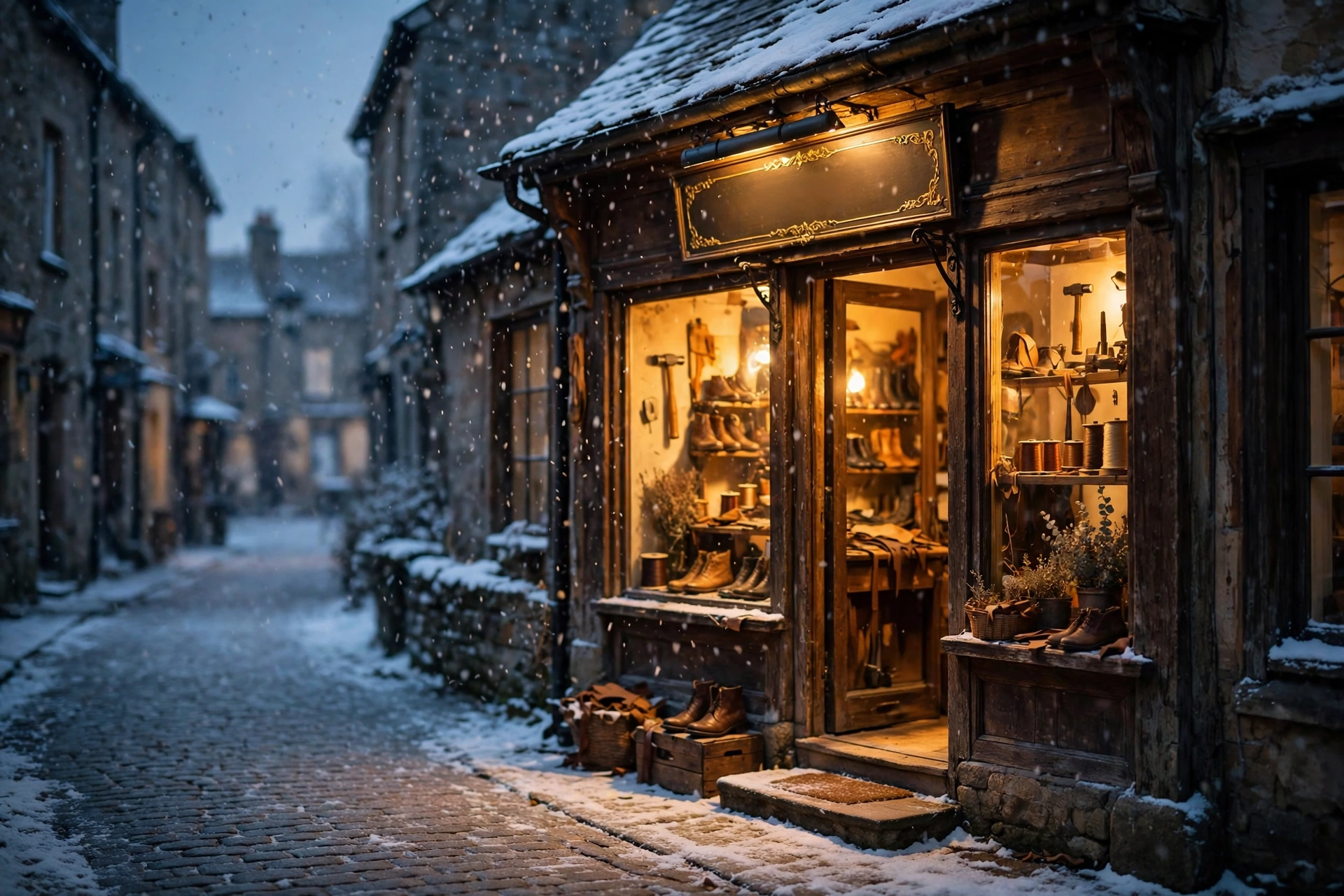
The winter of 1978 arrived in the small town of Murree Road like an uninvited guest, settling into the cracks of every wall and the bones of every old man. On Winter Lane, where the houses leaned against each other for warmth, a small cobbler's shop stood with its door always open, even when the wind cut through it like a blade. Inside, surrounded by the smell of leather and glue, sat Rahim, seventy years old, his hands gnarled as the roots of an old tree, his eyes still sharp enough to thread a needle in the dark.
Rahim had been mending shoes on Winter Lane for fifty years. He had fixed the boots of soldiers, the sandals of schoolteachers, the polished shoes of wedding grooms, and the torn slippers of beggars. But somewhere along the way, without ever announcing it, he had stopped charging the poor. The rich paid his prices without argument, and the poor paid nothing at all. Nobody knew when the rule had begun, not even Rahim himself. It had simply grown into him, the way a tree grows around a fence post.
"Uncle, my shoe is broken again," a small voice said one December morning, and Rahim looked up to see a boy of about nine standing in his doorway. The boy's shoes were not so much shoes as they were a memory of shoes — soles flapping, toes poking through, laces replaced with string. His coat was two sizes too big, and his cheeks were red from the cold.
"What is your name, son?" Rahim asked, pulling his stool closer and patting the chair beside his workbench.
"Bilal," the boy said. "My mother says shoes are a luxury. She says feet are free."
Rahim laughed, a sound like dry leaves rustling. "Your mother is a wise woman. But even free feet need a roof, don't they?" He took the boy's shoe and turned it over in his hands. The sole had come away completely, and the upper was split along the side. Most cobblers would have thrown it away. Rahim set it on his bench and reached for his strongest thread.
Bilal watched, fascinated, as the old man's fingers moved. The needle dipped and rose, dipped and rose, and slowly the shoe began to look like a shoe again. "Why are you fixing it?" Bilal asked suddenly. "My mother has no money to pay you."
"Then it is lucky for you," Rahim said without looking up, "that I am not fixing it for money. I am fixing it because a boy with broken shoes cannot run, and a boy who cannot run cannot chase his dreams."
Bilal frowned, trying to understand. "What are your dreams, uncle?"
Rahim paused, the needle hovering. "Once," he said quietly, "I dreamed of having a big shop in the city, with ten workers and a sign in gold letters. I dreamed of being rich." He smiled. "Then one day, a man came in with shoes so worn that his feet were bleeding, and I fixed them for nothing because he had nothing. And when he walked out of my shop, he walked like a man again. That day I understood something: a big shop gives you money, but a small shop gives you people. I chose people."
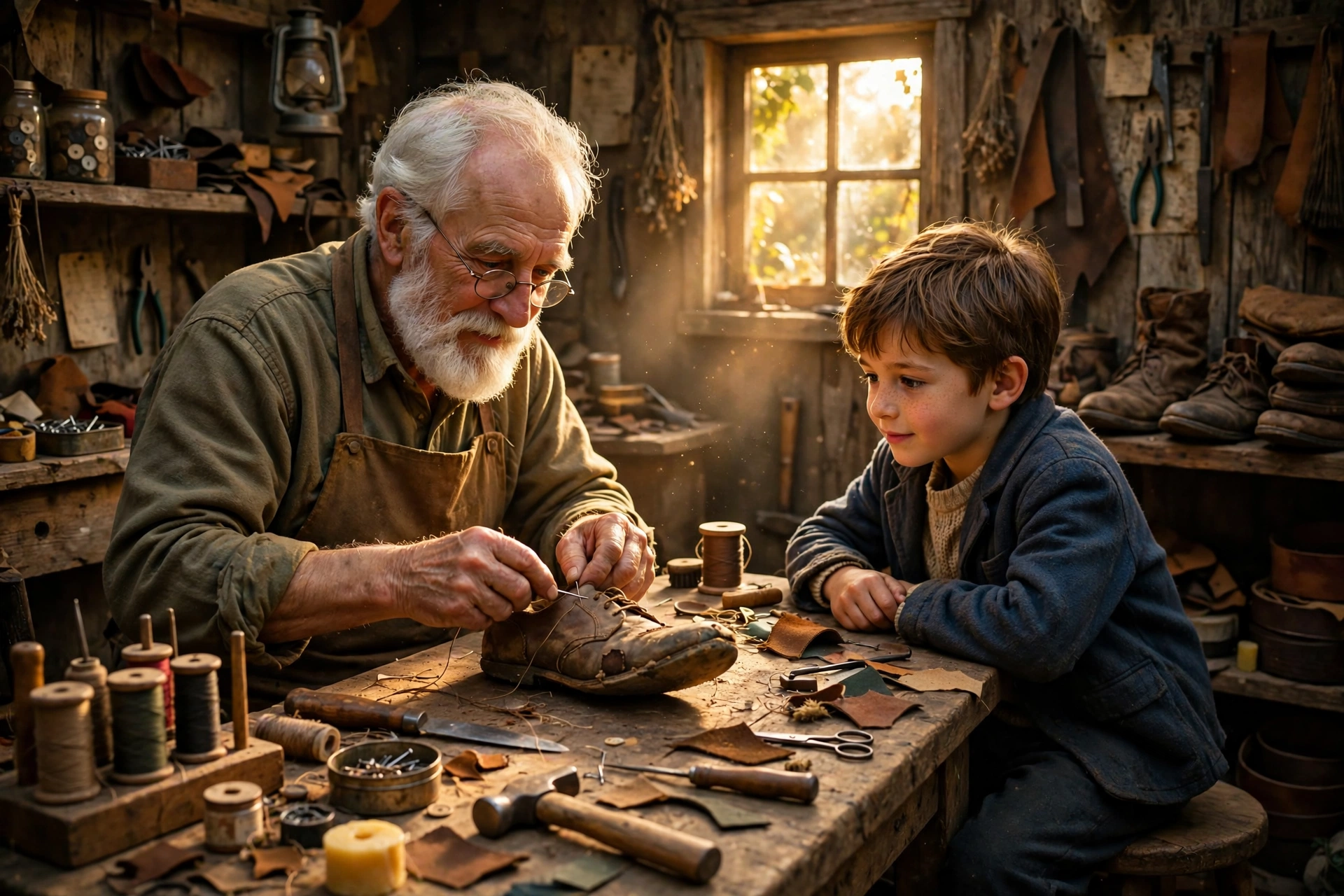
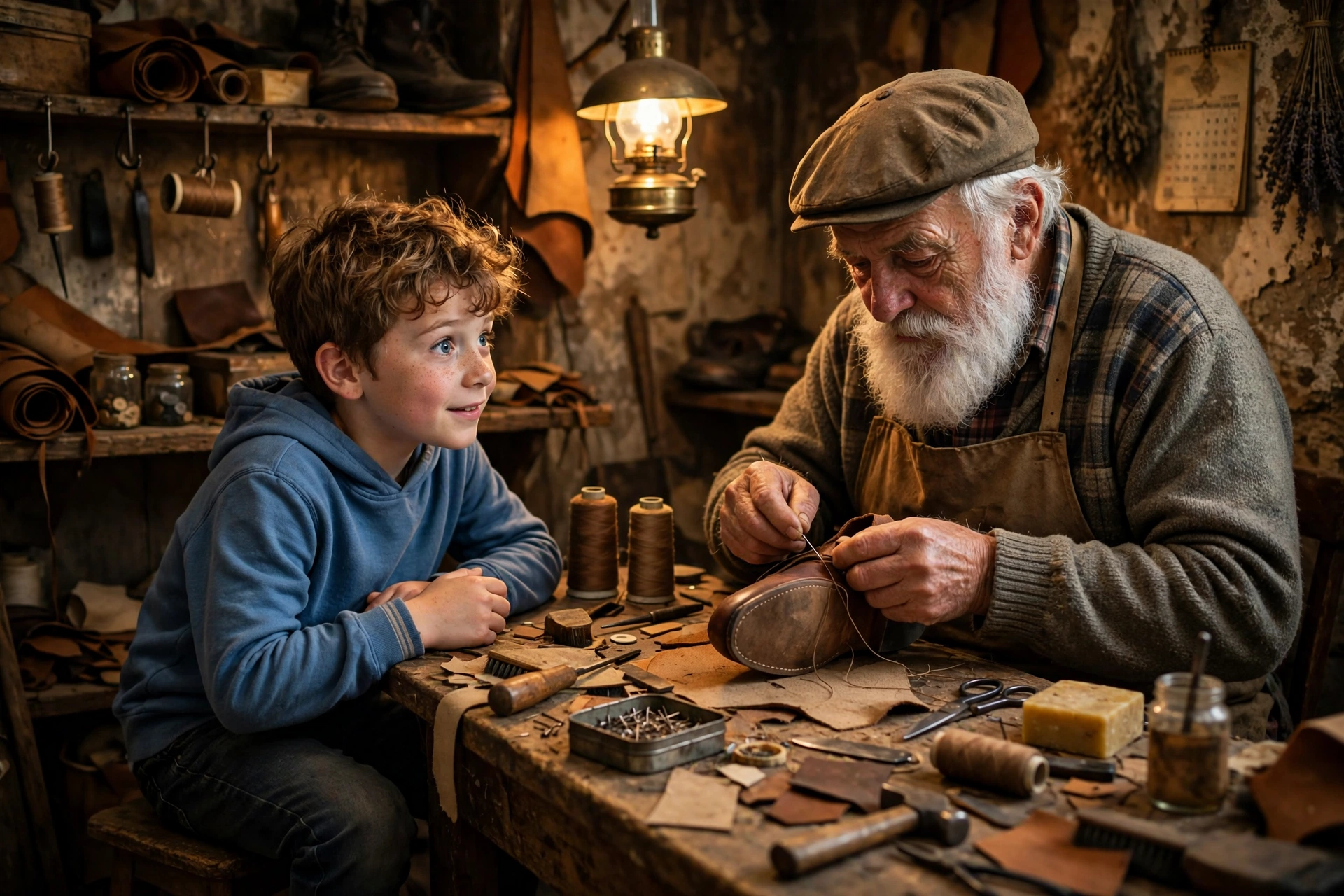
Bilal came back the next week, and the week after that, and soon he was coming every day after school, sitting on the little stool beside Rahim's bench, watching the needle dip and rise. He swept the floor. He sorted the nails. He learned the names of the tools — the awl, the last, the hammer with the worn handle. Rahim taught him everything without ever calling it a lesson. He taught him that a stitch done in a hurry would always come undone, that the cheapest glue was the most expensive mistake, and that a man's work was his word made visible.
"Uncle," Bilal said one afternoon, "when I grow up, I will be rich, and I will buy you a big shop."
Rahim chuckled. "And what will you do with your riches, Bilal?"
"I will buy shoes for every child on Winter Lane," the boy declared, puffing out his chest. "And I will buy my mother a house with a garden."
"Then you will be richer than any man I know," Rahim said, "even before you have a single rupee."
The years passed the way winters do on Winter Lane — slowly, then all at once. Bilal grew tall and strong. He studied hard, won a scholarship, and left for the city to become an engineer. On the day he left, he came to the shop one last time. Rahim pressed a small leather pouch into his hands. Inside was a pair of handmade leather shoes, stitched with the care of fifty years, polished until they shone like dark honey.
"These are for the road ahead," Rahim said, his voice thick. "Walk in them with honesty, and they will never wear out."
Bilal hugged the old man so hard that Rahim's bones creaked. "I will come back, uncle. I promise."
"Promises are like stitches," Rahim said, waving him off with a smile that did not quite reach his eyes. "They only hold if you keep them tight."
But life, as it often does, loosened the stitch. Bilal's studies swallowed him. Then his job. Then his marriage, his children, his own life in a distant city where the winters were mild and the streets had no name like Winter Lane. He wrote letters at first, then fewer, then none. Rahim kept every letter in a tin box under his bench, reading them on slow evenings until the ink faded and the paper grew soft as cloth.
The shop grew quieter. Rahim's hands grew slower. His eyes, once sharp enough to thread a needle in the dark, now needed spectacles and a lamp held close. The rich customers still came, but fewer of them. The poor still came, and he still charged them nothing, though his own cupboard grew emptier with each passing season. Some nights he ate only bread and tea, and he told himself it was enough, because a man who has people has everything. But on the coldest nights, when the wind found the cracks in his walls, he wondered if Bilal had forgotten him entirely.
Then came the winter of 2003, the hardest winter anyone on Winter Lane could remember. Snow piled against the doors, and the pipes froze, and Rahim fell ill. For the first time in fifty years, the cobbler's shop did not open. The door stayed shut. The neighbours brought him soup and medicine, but the old man grew weaker, and the doctor shook his head and said the words nobody wanted to hear: his heart was tired, and his lungs were full of the cold he had breathed for seventy years.
On the third day of his illness, when Rahim lay in his small bed behind the shop listening to the wind, there was a knock at the door. It was not the soft knock of a neighbour. It was firm, certain, the knock of a man who had come a long way and would not be turned back.
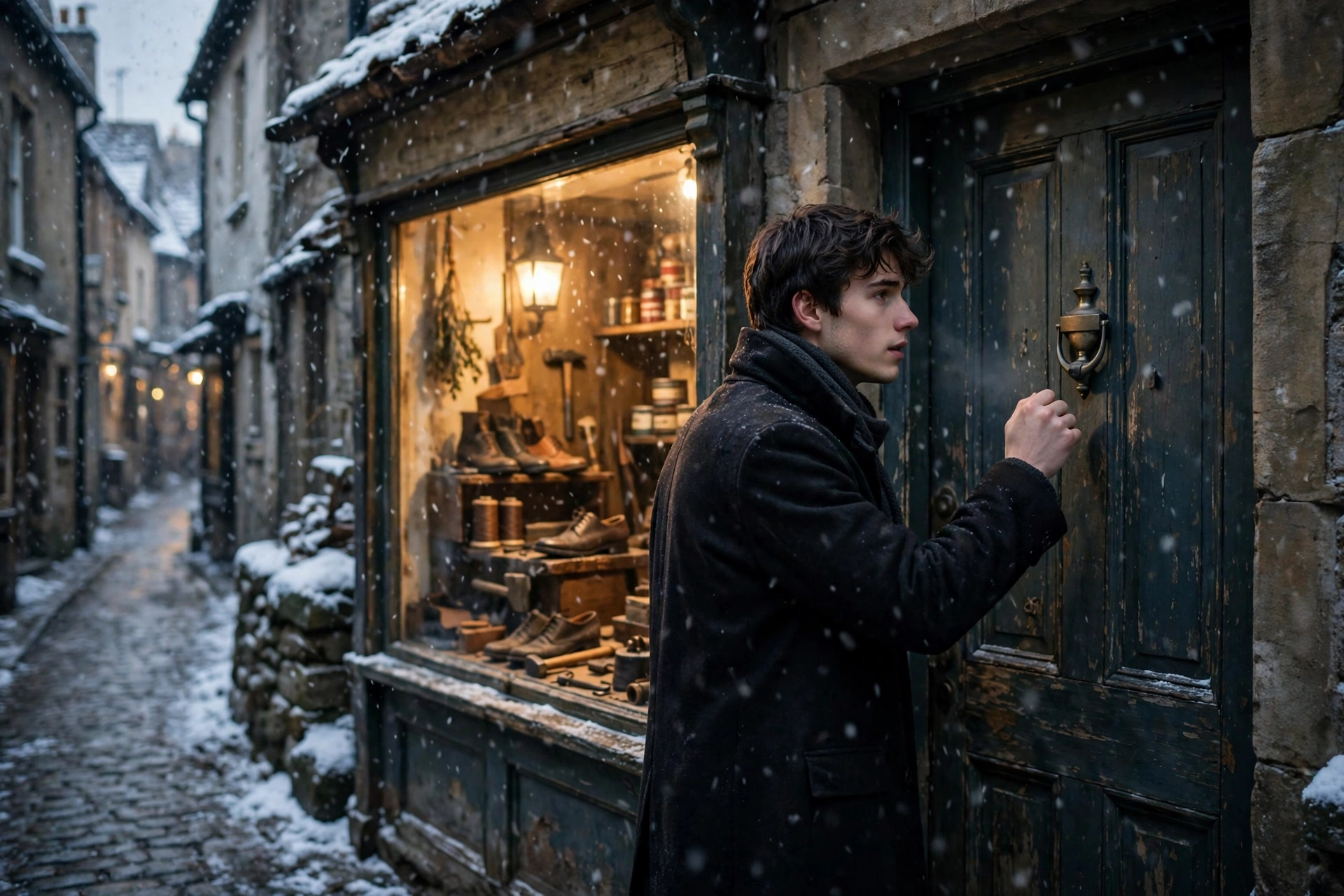
"Come in," Rahim whispered, and the door opened, letting in a gust of cold air and a tall man in a fine dark coat, snow dusting his shoulders. The man stood in the doorway for a moment, looking around the little shop as if he were looking at a holy place. Then he crossed the room in three strides and knelt beside the bed.
"Uncle," he said, and his voice broke on the single word.
Rahim squinted at him. The face was older, broader, framed by a neat beard, but the eyes were the same — the eyes of the boy who had sat on the stool beside his bench and watched the needle dip and rise. "Bilal?" he breathed.
"I came as soon as I heard," Bilal said, taking the old man's hand in both of his. "A neighbour wrote to me. I took the first train. I am sorry it took me so long."
"Sorry?" Rahim tried to laugh, but it turned into a cough. "You came. That is all that matters. Promises are like stitches, my boy. Yours held."
Bilal stayed. He hired the best doctor in the city. He brought warm blankets, proper food, medicine from the finest pharmacy. He sat beside Rahim's bed through the long nights, telling him about his life — the engineering degree, the job, the wife, the two children, the house with a garden, just as he had promised his mother all those years ago. And every day, when Rahim was strong enough to listen, Bilal told him the most important part.
"I never forgot, uncle," he said one evening, holding up his own foot. On it was a pair of old leather shoes, worn and creased but still holding together, polished with care. "These are the shoes you made me. I have worn them on the most important days of my life — my graduation, my wedding, the day my daughter was born. I had them repaired a hundred times, but I never threw them away. They reminded me of who I was and where I came from."
Rahim's eyes filled with tears. "They were only shoes, Bilal."
"No, uncle," Bilal said softly. "They were a promise. And now I have come to keep mine."
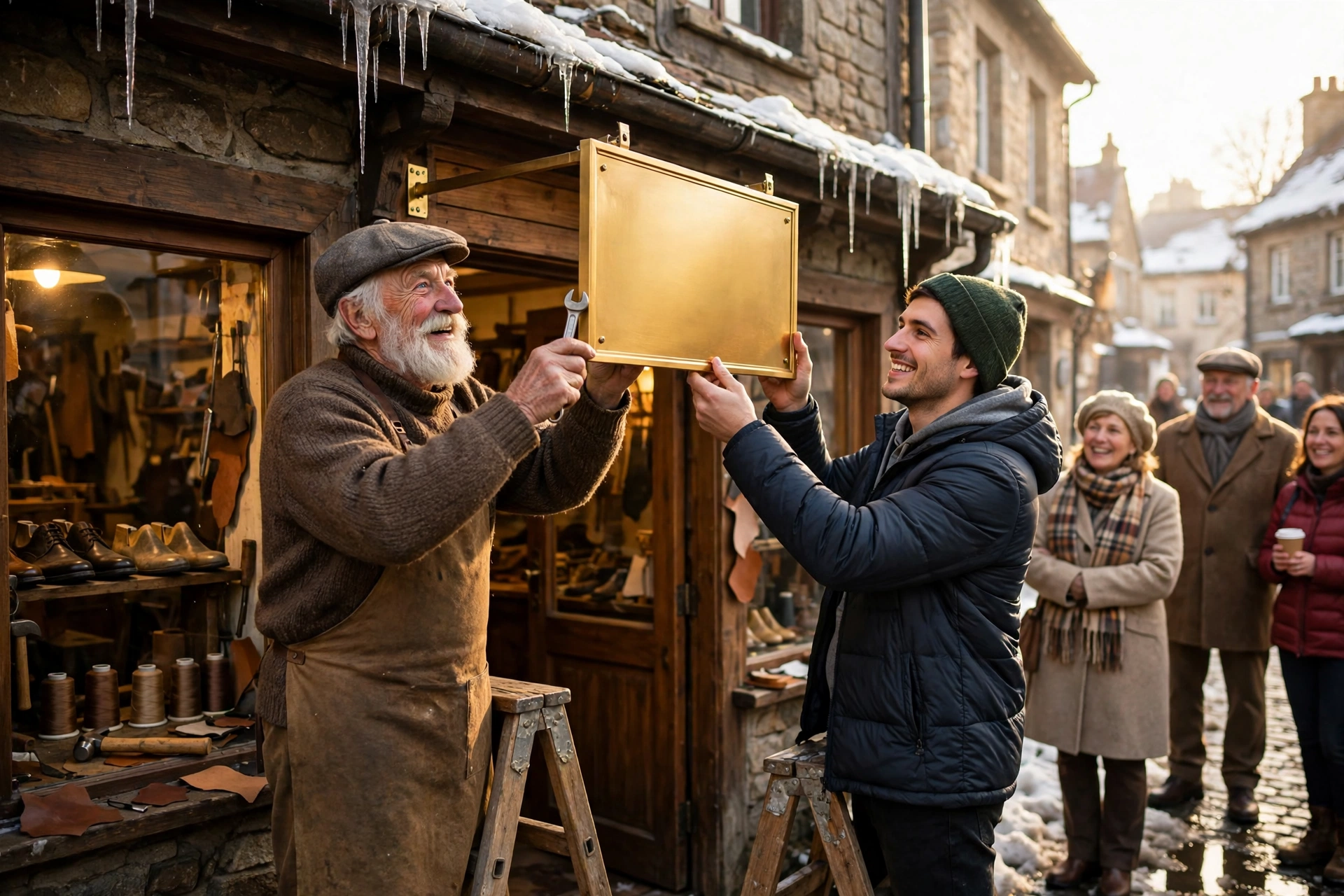
As the old man grew stronger, Bilal set about his work with the same determination he had once brought to his studies. He repaired the shop's roof. He replaced the broken window. He bought new tools, new leather, new thread. And on a bright morning in February, when the snow finally began to melt, he did something that made the whole of Winter Lane stop and stare: he hung a new sign above the shop door. It was painted in gold letters, and it read, in both Urdu and English: RAHIM & BILAL — SHOES FOR EVERYONE.
"You said you once dreamed of a big shop with a sign in gold letters," Bilal said, grinning. "So here it is. And from today, no child on Winter Lane will ever walk in broken shoes again. We will mend them all — for free, for everyone who needs it. That will be our shop's rule, written on the wall, so that no one ever forgets."
Rahim stood in the doorway of his shop, leaning on Bilal's arm, and looked at the sign until his eyes blurred. Fifty years of mending shoes, fifty years of charging the rich and freeing the poor, and now, at the end of it all, his dream had come back to him wearing gold letters and the face of a boy he had once taught to sweep a floor.
The shop flourished. Bilal came every weekend from the city, and on weekdays his eldest son, a bright boy of nine with his father's eyes, sat on the little stool beside Rahim's bench, watching the needle dip and rise. Rahim taught him the names of the tools — the awl, the last, the hammer with the worn handle — and he taught him, without ever calling it a lesson, that a stitch done in a hurry would always come undone, and that a man's work was his word made visible.
One spring afternoon, the boy looked up from the bench and asked, "Grandfather Rahim, why do you fix shoes for free?"
Rahim smiled, and the smile reached his eyes this time, all the way. "Because, my son," he said, "a pair of shoes can carry a man across the world. And sometimes, the man comes back and carries you."
Years later, long after Rahim had gone to his rest, the shop on Winter Lane was still open, its door always open, even in the coldest wind. Above it, the gold-lettered sign still read RAHIM & BILAL — SHOES FOR EVERYONE. And inside, a boy sat on a little stool beside a workbench, watching a needle dip and rise, learning that the smallest kindness, stitched carefully and given freely, is the one thing in this world that never wears out.
For the shoes we mend for others are never truly lost. They walk out into the world carrying our kindness with them, and one day, when the road is long and our own steps grow tired, they walk back to us — carrying everything we gave, and more, on the soles of their feet.