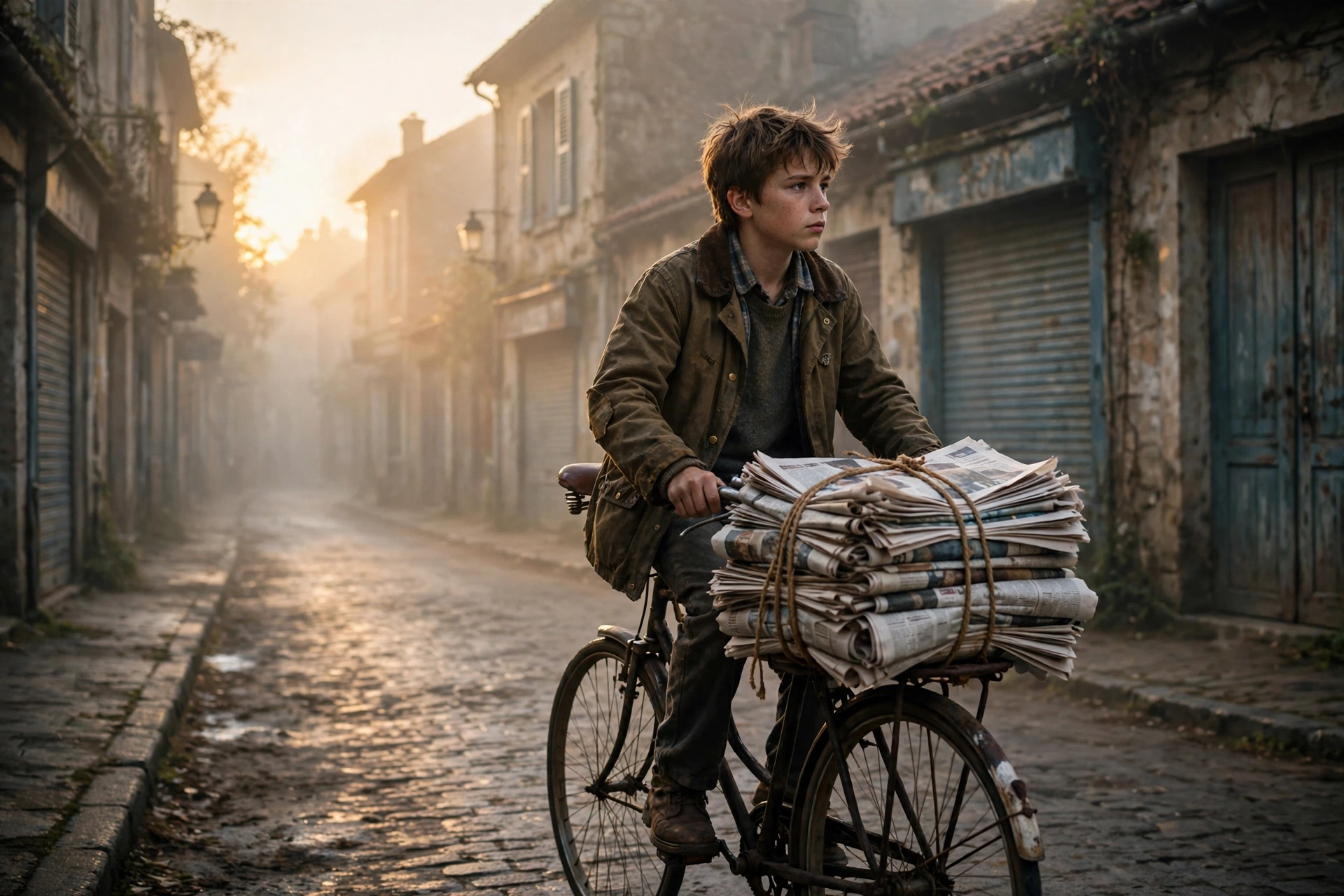
Long before the sun touched the rooftops, when Dawn Street was still dark and cold and silent, a thin boy named Ayaan pushed his old bicycle out of a narrow doorway and began his day. He was thirteen, small for his age, and his jacket was two sizes too big, handed down from an older cousin. The bicycle squeaked with every turn of the wheels. Its front basket was tied on with rope, and inside it sat a heavy bundle of newspapers, still smelling of fresh ink. Ayaan did not mind the cold or the early hour. For him, the quiet of the morning was the best part of the day, when the street belonged only to him, the stray cats, and the first pale light over the roofs.
Ayaan had not always delivered newspapers. Until last winter, his father had worked at the printing press, coming home late with ink on his hands. Then one rainy night, his father slipped on the wet steps outside the press and broke his leg so badly that the doctors said he must rest for many months. His mother took in sewing, working late into the night by a dim lamp. Ayaan watched her one evening, saw how tired her eyes were, and made a decision without telling anyone. The next morning, he walked to the newspaper office and asked for the Dawn Street route. The manager looked at his thin shoulders and almost said no. Then Ayaan said, quite simply, "I can be on time, every day." And he was.
At first, the route was only a job. Ayaan learned the houses in order: the blue door where the milkman left his bottles, the tall house with the broken gate, the corner shop that opened late, and the small grey house at the very end where an old woman named Haleema lived alone. He learned which customers wanted their paper folded neatly behind the gate, and which ones wanted it on the windowsill, safe from the rain. He was proud of his speed and his neatness. But slowly, without quite noticing when it began, he started to learn something else about Dawn Street: how lonely it was.
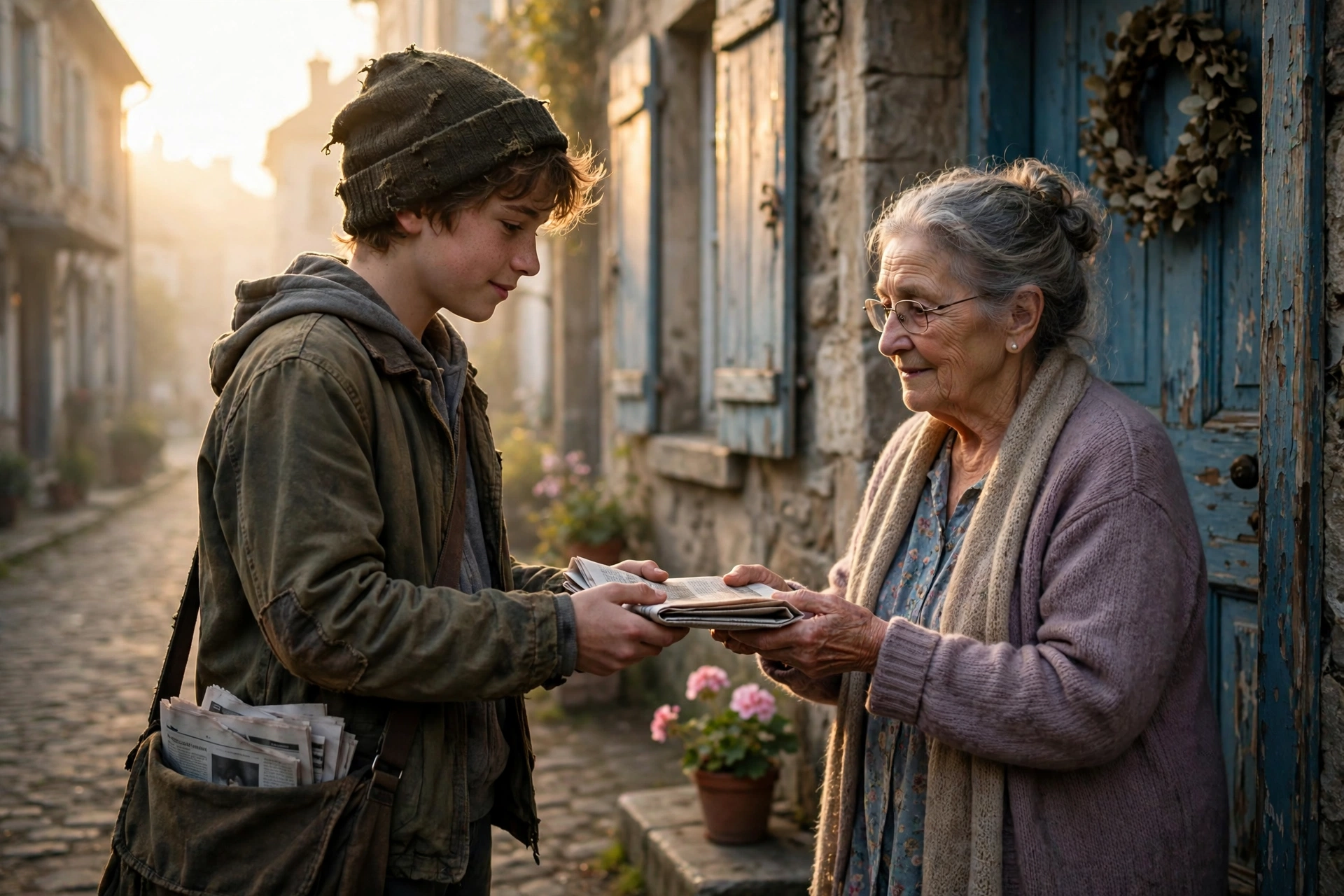
Haleema was the first person he truly noticed. Every morning, her door opened just a crack as he approached, and a thin, wrinkled hand reached out for the paper. She never came fully outside. One morning, curious, Ayaan called out, "Good morning, Auntie Haleema!" There was a long silence. Then a soft voice answered, "Good morning, beta." That was all. But as he rode away, Ayaan could not shake the feeling that those two words had been waiting all night to be spoken. Later, from the corner shopkeeper, he learned that Haleema's husband had died three years earlier, her children lived far away, and she spent most of her days alone in a house that had once been full of noise and laughter.
Further down the street lived Mr. Yousuf, a retired schoolteacher. He was always up early, sitting by his window with a cup of tea gone cold, staring out at the road. He took his newspaper with a polite nod and a tired smile, but Ayaan noticed that he read very slowly, and sometimes he did not read at all. He just held the paper in his lap, as if the company of it mattered more than the news. And there was Sana, a young mother whose husband worked in another town and came home only once a month. She would take the paper with a baby on her hip and a smile that never quite reached her eyes, then close the door quickly, as if she were afraid the quiet would follow her inside.
One cold morning in February, Ayaan arrived at Haleema's house to find the door did not open at all. His heart beat fast. He knocked gently. "Auntie Haleema? It is Ayaan, with your paper." Nothing. He knocked again, a little louder, and at last he heard slow footsteps. Haleema stood there in her shawl, her eyes red, as if she had not slept. "I am sorry, beta," she whispered. "These days, I forget what day it is." Ayaan placed the paper carefully in her hands. "It is Tuesday, Auntie," he said gently. "And it is a fine morning." She smiled, a real smile that changed her whole face. As he rode away, Ayaan felt something shift inside him. He was not just delivering newspapers anymore.
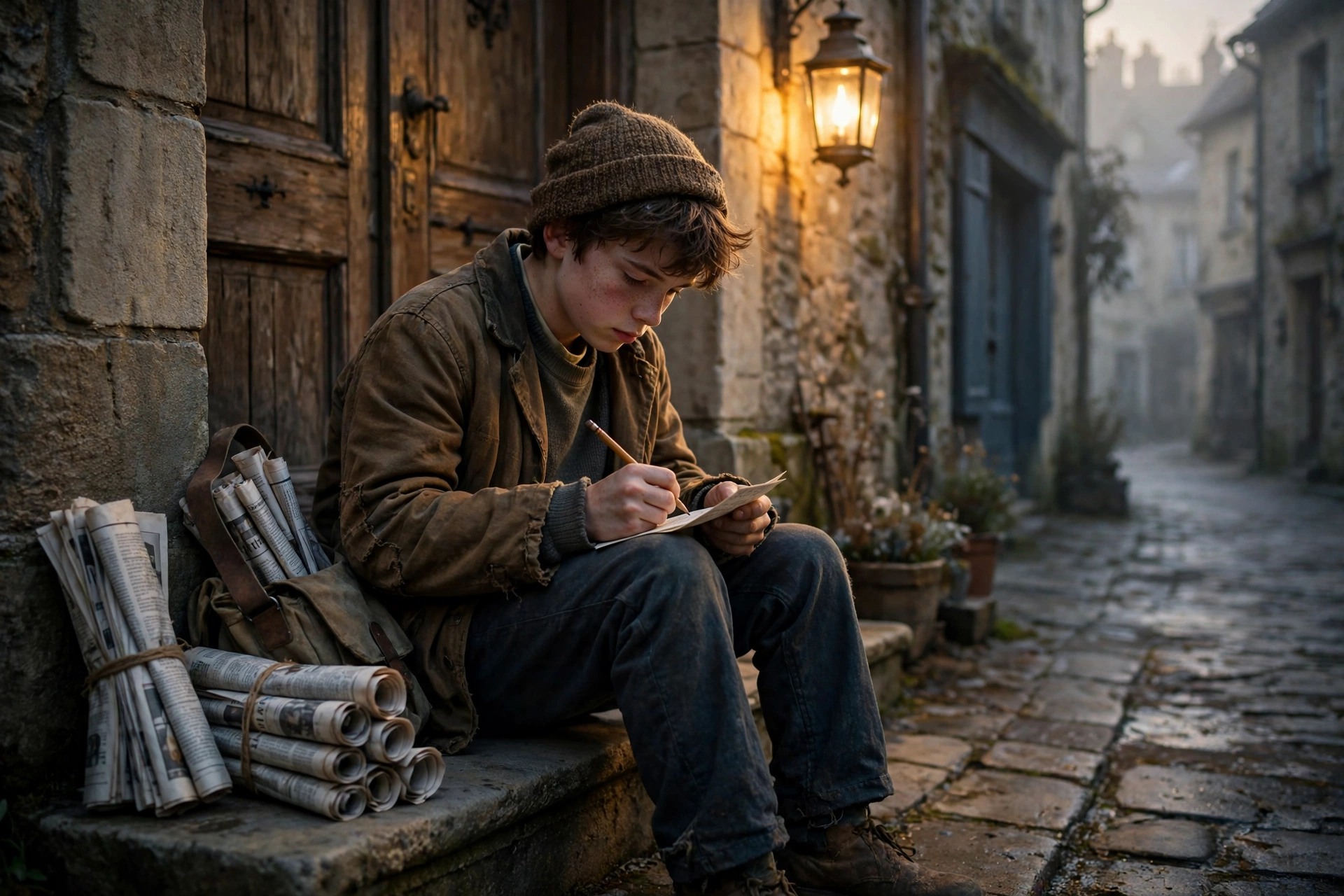
That evening, sitting at the kitchen table while his mother sewed, Ayaan took a small notebook and a pencil and wrote something. It was only one line: "You are remembered today." He stared at it, unsure whether it was silly. Then he tore out the page, folded it small, and tucked it inside Haleema's newspaper the next morning. He did not wait to see her reaction. But the following day, when he reached her house, the door opened wider than before. "Ayaan, did you write that note?" Haleema asked. He nodded, his face hot. She took his hand in both of hers. "My son used to leave me notes," she said quietly. "I had forgotten what it felt like." Then she pressed a boiled sweet into his palm, and Ayaan rode on with his heart thumping.
After that, the notes became a habit. Ayaan did not write the same thing every day. He wrote whatever seemed true for that person on that morning. For Mr. Yousuf, he wrote, "A good teacher is never forgotten." For Sana, he wrote, "You are doing a brave job, and your little one is lucky." For the shopkeeper, who worked from dawn until midnight, he wrote, "Thank you for keeping our street awake." He wrote them late at night, in his small, careful handwriting, by the light of the same lamp his mother sewed by. Sometimes he struggled to find the right words, but he never missed a morning. The notes cost him nothing but a few minutes of sleep, and yet, slowly, Dawn Street began to change.
Mr. Yousuf began waiting at his gate instead of his window. He asked Ayaan about school and the books he liked, and one morning he handed him an old book of poems. Ayaan read it on his route, stopping under a streetlight to finish a page, and the next day he told the old teacher his favourite poem, word for word. Soon their morning talks grew longer, and the cold tea by the window was replaced by a fresh cup that Mr. Yousuf made for both of them.
Sana began leaving the door open a little longer. One morning she gave Ayaan a warm piece of bread, fresh from the pan, saying, "For the road, beta. You ride so early." Another morning she asked him to read the headlines to her while she settled the baby, and she laughed at a funny headline about a cat that had wandered into a cricket match. It was a small laugh, but it sounded like the first real laugh Ayaan had ever heard from her house. Haleema, meanwhile, began sweeping her doorstep each morning before he arrived, and soon she kept a small pot of tea ready, scolding him fondly if he tried to rush away.
The change spread quietly, the way morning light spreads, without any announcement. The shopkeeper began greeting Mr. Yousuf by name. Sana and Haleema, who had lived on the same street for years without ever speaking beyond a nod, began sharing vegetables from the market. One evening Haleema knocked on Sana's door with a bowl of soup, saying she had made too much, though everyone knew she had made it on purpose. The street, which had been a row of closed doors, began to feel like a row of neighbours again. Nobody talked about the notes. Nobody needed to.
Then came the morning that tested everything. It was a morning of heavy rain, the kind that turns the street into a river and soaks a person to the skin in minutes. Ayaan's bicycle chain snapped halfway down Dawn Street. He tried to fix it with cold, wet fingers, but the chain would not hold, and the newspapers in his basket were getting wet. For a moment he stood in the rain, feeling helpless, wondering whether to carry the bundle on foot and be late for school. Then he heard a voice. "Ayaan!" It was Mr. Yousuf, standing at his gate with an umbrella, waving him over. "Bring the papers inside, quickly, before they are ruined!"
What happened next, Ayaan would remember for the rest of his life. Mr. Yousuf spread the newspapers on his table to dry. Haleema arrived with a towel and a dry shirt that had once belonged to her son. Sana came with hot tea and bread, the baby wrapped snugly against the rain. The shopkeeper arrived with tools and fixed the bicycle chain, waving away Ayaan's thanks. They sat together in Mr. Yousuf's warm front room, drinking tea and reading the headlines aloud like a family. Ayaan looked around at these people who had once been strangers behind closed doors, and his throat tightened. He had not realised that, all along, they had been quietly becoming his family too.
Spring came, and with it, good news. Ayaan's father, after months of rest, could walk again with a stick, and the doctors said he could return to light work at the press. His mother told him, gently, that he could give up the newspaper route and go back to sleeping like other boys his age. Ayaan thought about it all night. He thought about warm beds and slow mornings. But when dawn came, he was already at the door, his jacket on, his bicycle ready. His mother looked at him and smiled, because she already knew his answer. "You are not doing it for the money anymore, are you?" she asked. Ayaan shook his head. "No, Ammi," he said. "I am doing it for them. And for me too."
Word of Ayaan's notes eventually reached the newspaper office. The manager, a stern man who rarely smiled, called Ayaan in one afternoon. Ayaan's stomach twisted, afraid he was in trouble for putting things inside the papers. Instead, the manager slid letters across the desk: from Haleema, from Mr. Yousuf, from Sana, from half the street, thanking the newspaper for "the boy who brings the morning." The manager cleared his throat, which was his way of hiding that he was moved. "You have done something no headline ever did," he said. "Keep the route for as long as you want it."
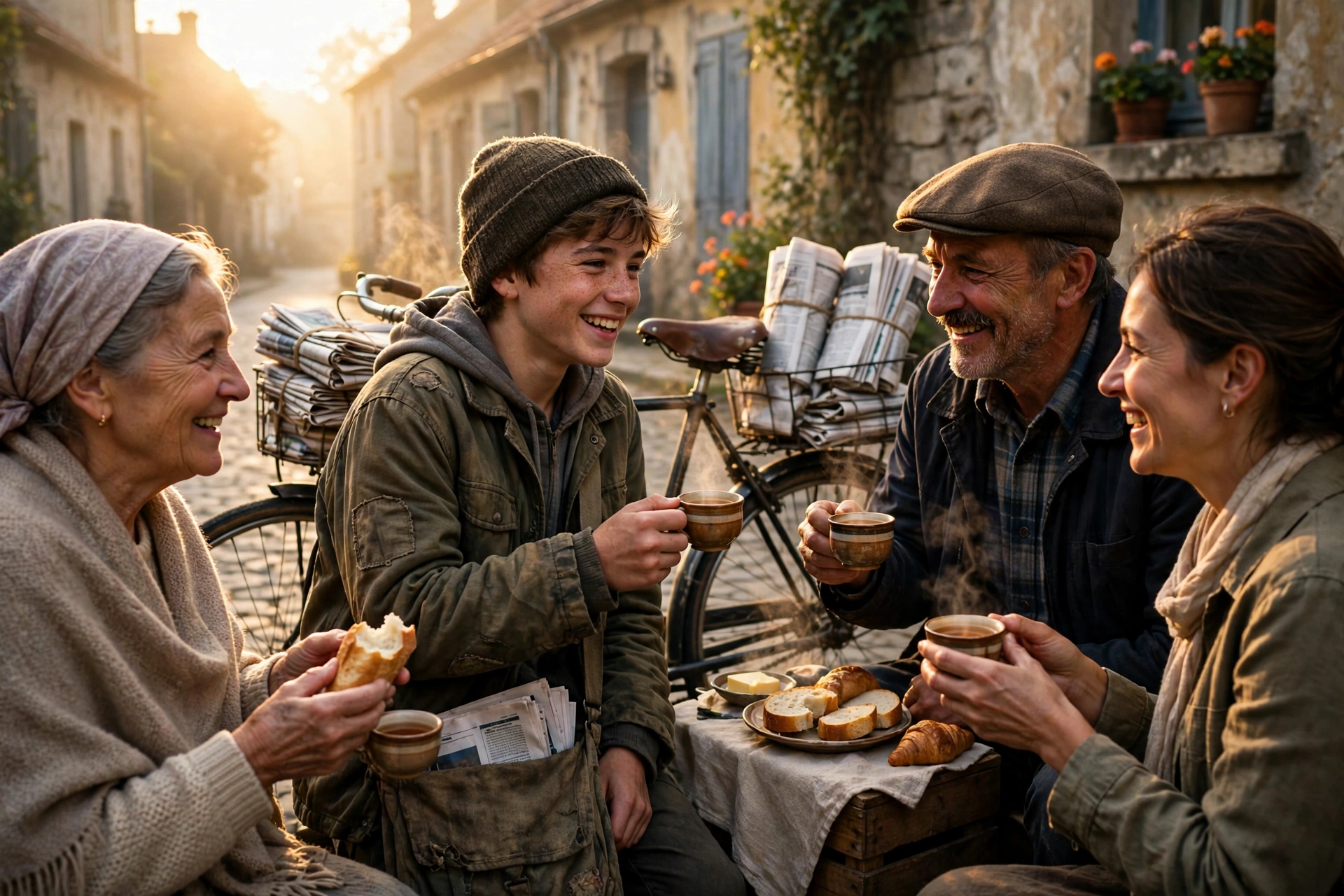
On the last morning of spring, something wonderful happened on Dawn Street. As Ayaan rode down the road, he found every doorstep decorated with a small flower. At the end of the street, all his neighbours were waiting for him: Haleema in her best shawl, Mr. Yousuf leaning on his walking stick, Sana holding her baby, the shopkeeper with a tray of sweets. They had made him breakfast, right there on the street, with a table and chairs borrowed from every house. As the sun rose, golden and warm, Haleema stood up and said, in a voice that trembled only a little, "This boy brought us newspapers. But what he really brought us was each other."
Ayaan still delivers newspapers on Dawn Street. He is a little taller now, and his jacket finally fits him, though his bicycle still squeaks. Every morning, before the sun rises, he tucks a small folded note inside someone's paper, because he has learned a truth that no book at school ever taught him: a kind word, given faithfully and without expecting anything back, is never a small thing. It can open a door that has been closed for years. It can turn strangers into neighbours, and neighbours into family. And sometimes, the smallest delivery of the day is the one that changes a whole street forever.