Nobody ever remembered the man who took them up and down. That was the first thing Rafi had learned in forty years of working the lift at City General Hospital, and by now he had made his peace with it. People came to the hospital with their minds full of other things — a sick mother, a broken leg, a test result they were afraid to hear — and they stepped into his little brass cage, stared at the floor numbers as if willing them to move faster, and stepped out again without ever really seeing him.
The lift itself was older than most of the doctors in the building. It had a sliding brass gate that rattled when it closed, a wooden bench along one wall for patients who could not stand, and a brass panel with round buttons worn smooth by decades of worried fingers. It moved slowly, with a gentle sigh, as if it too understood that the people inside it were in no state to be hurried. Rafi knew every sound it made — the spot on the third floor where it shuddered slightly, and the way the gate stuck on rainy days. He had started here at twenty-eight, newly married; now his hair was white, and the hospital had announced the old lift would be replaced with a modern automatic one. The new lift would not need a liftman. Rafi would retire at the end of the week.
Word of his retirement travelled through the corridors the way all hospital news travels — quietly, from nurse to ward boy to patient, until it reached people Rafi had carried a hundred times without ever learning their names.
That Monday was also the morning he met Meera.
She was seven years old, small for her age, with two tight braids and a pink dress that she kept smoothing down with both hands, as if neatness could protect her. Her mother held her hand so tightly that both their knuckles were white. They stood at the lift doors on the ground floor, and when the brass gate slid open, Meera stopped dead and shook her head.
"I don't want to go in," she whispered. "It's a box. What if it stops?"
Her mother bent down, her voice fraying at the edges. "Sweetheart, we have to. The doctor is on the fourth floor."
Rafi looked at the child, and he saw what he had seen a thousand times before: not stubbornness, but fear wearing a brave face. He did not hurry her. He never hurried anyone. He stepped out of the lift, crouched down so that his eyes were level with hers, and smiled the slow, unhurried smile that had calmed more people than he could count.
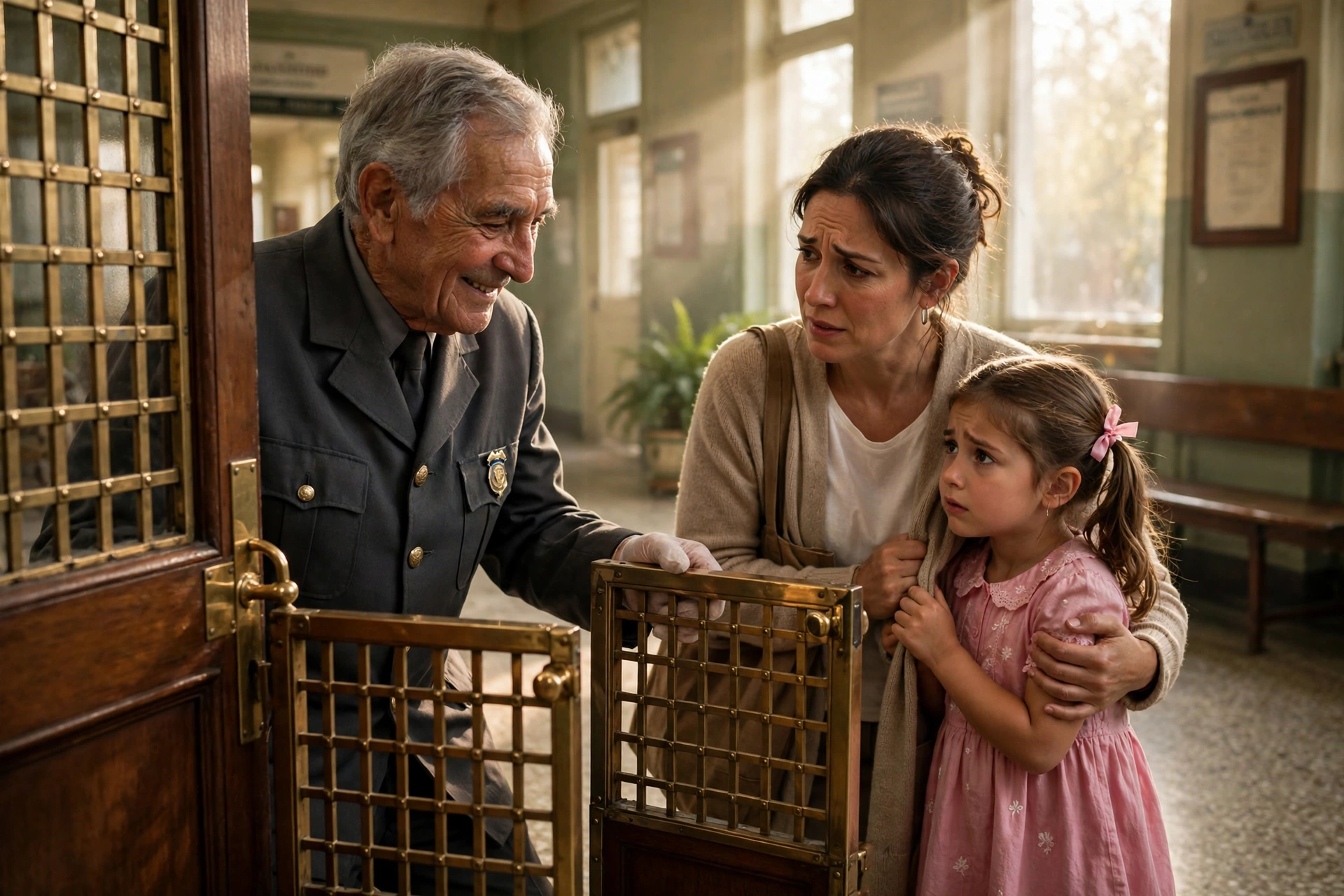
"Do you know a secret about this lift?" he asked her.
Meera shook her head, just barely.
"This lift is afraid of the dark too," Rafi said, very seriously. "That is why it has so many lights inside. And do you know what it does when it gets scared? It sings." He tapped the brass panel. "Listen. When we go up, it hums a little song. You have to listen very carefully, or you will miss it."
Meera's eyes widened. "A lift that sings?"
"Only for brave passengers," Rafi said. "Are you a brave passenger?"
She thought about this with great seriousness, then nodded once. She took one step forward, then another, and climbed into the lift holding her mother's hand and Rafi's sleeve at the same time. As the gate rattled shut and the old lift began its slow, sighing climb, Rafi hummed — very softly, almost under his breath — a tune his own mother had hummed to him when he was small. Meera listened, her shoulders slowly coming down from around her ears, and by the third floor she was humming too, off-key and utterly fearless.
On the fourth floor, before they stepped out, Meera turned back. "It did sing," she said, wonderingly.
"Only for you," Rafi said.
She was going for an operation the next day — something to do with her heart, her mother explained quietly while Meera examined the brass buttons — and they would be back and forth all week. "She's been terrified of everything since we got the date," her mother said, and her voice broke a little. "Thank you. You have no idea what you just did."
Rafi waved the thanks away, embarrassed, as he always was. But after the gate closed, he stood for a moment thinking about the little girl's humming, and about how fear, in a hospital, is often heavier than any illness.
Over the next few days, Rafi carried Meera and her mother up and down many times — to tests, to the ward, to the little garden on the roof where patients were allowed to sit in the sun. Each time, Meera asked for the singing lift, and each time she hummed along, a little louder. On Wednesday, she brought him a drawing: a yellow box with round windows and a smiling man inside it, with musical notes floating out of the top. He folded it carefully and put it in his pocket, next to his heart.
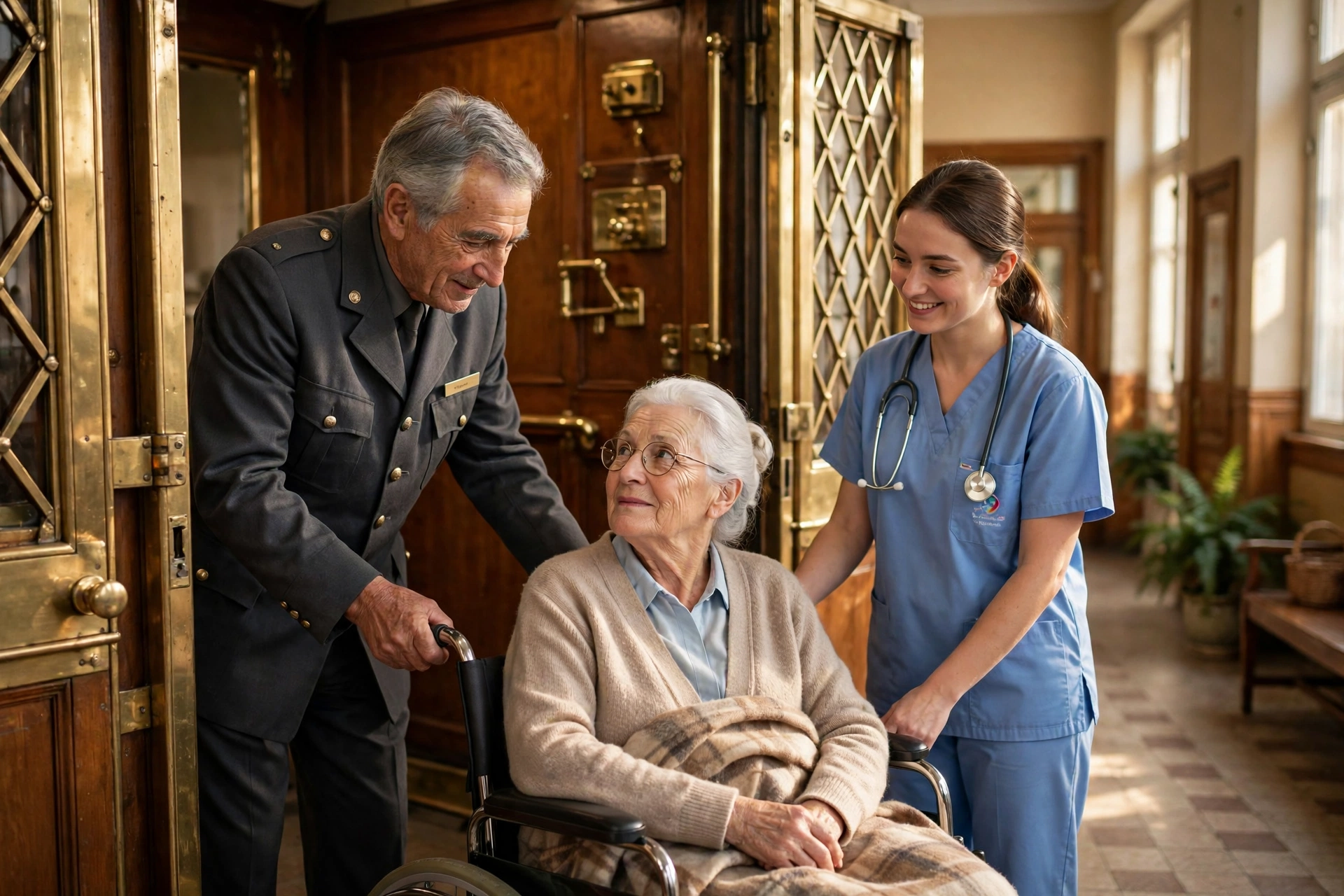
It was also in those days that the hospital began, quietly, to say goodbye to him. Mr. Thomas, an elderly man in a wheelchair who had been coming for treatment for two years, gripped Rafi's hand and said, "You are the only person in this building who ever asked me how I slept." A nurse named Nadia told him she had once cried in his lift after losing a patient, and that he had simply stood beside her in silence until she was ready to go on. A young father, whose premature twins were in the ward upstairs, said Rafi had taught him a breathing trick in the lift on the worst night of his life, and that he still used it.
Rafi was stunned. He had not known any of this. He had thought he was invisible. All these years, he had believed that nobody remembered the man who took them up and down — and all this time, people had been carrying him with them, the way he had carried them, floor by floor, in his small brass cage.
On Thursday evening, after the last visitors had gone, Rafi sat alone in the lift with his notebook. It was a small, worn thing, its pages soft with age, and in it he had written, over the years, one line for every person who had ever made him smile or think: "The woman who always said thank you twice." "The boy who counted the floors out loud." "The mother who sang to her baby all the way to the fifth floor." He had never shown it to anyone. Turning its pages, he realised he was not just leaving a job. He was leaving a thousand small stories, and he would never know how most of them ended.
On Friday morning, Meera's operation day, her mother came to the lift alone, her face pale. "She asked for you," she said. "She said she won't go up unless the lift sings."
Rafi went with them to the ward and stood beside Meera's bed, humming her song softly while the nurses prepared her. She reached out and held his finger, the way small children hold on to something solid when the world feels uncertain, and she whispered, "Will the lift sing for me when I come back?"
Rafi swallowed hard. "Every time," he said. "Even when I am not here. You just have to listen."
Then they wheeled her away, and Rafi sat beside her mother in silence until a nurse came to say the operation had begun.
The hours passed with unbearable slowness. And then, late in the afternoon, the doors on the ground floor opened, and Meera's mother stood there, smiling through tears, and said the words Rafi had been praying to hear: "She's fine. The doctor says she's fine. She's asking for the singing lift."
Rafi laughed then — a real, startled laugh that surprised even him — and he took them up to the fourth floor with the lift humming louder than it ever had, and Meera, groggy and bandaged and impossibly brave, hummed along, off-key, from her bed as they wheeled her past.
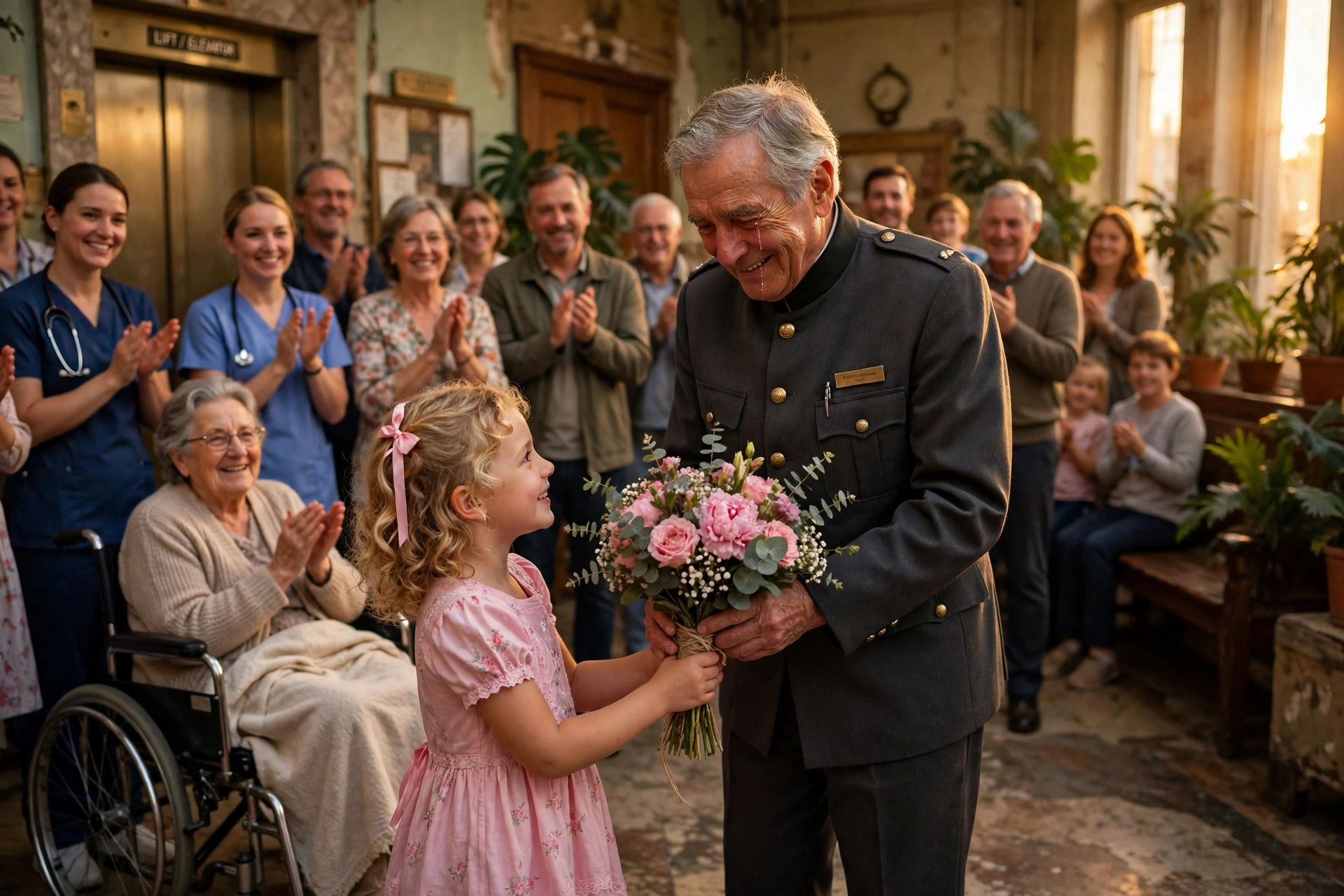
That evening was Rafi's last shift. He had expected to slip away quietly, the way he had done everything else in his life. He polished the brass panel one final time, straightened his uniform, and stood by the gate, ready to close it for the last time. But when he pulled the lever, the lift did not move. Instead, footsteps and voices filled the corridors, and people — dozens of them — poured into the lobby. Nurses and doctors, ward boys and cleaners, patients in wheelchairs and parents holding children's hands. Mr. Thomas was there, and Nadia, and the young father of the twins, and Meera's mother, carrying a small bunch of flowers that Meera herself had picked from the roof garden, because Meera was still resting upstairs but had insisted the flowers go.
They had not come to say goodbye to a liftman. They had come to thank a man who, for forty years, had made the hardest journeys in their lives a little less frightening. Nadia read out a card they had all signed, and her voice shook as she read it: "To Rafi, who carried us all." And then, one by one, people told him what he had meant to them. And Rafi, who had never liked being the centre of attention, stood in the middle of it all with tears running down his face, holding Meera's flowers, understanding at last that he had never been invisible at all.
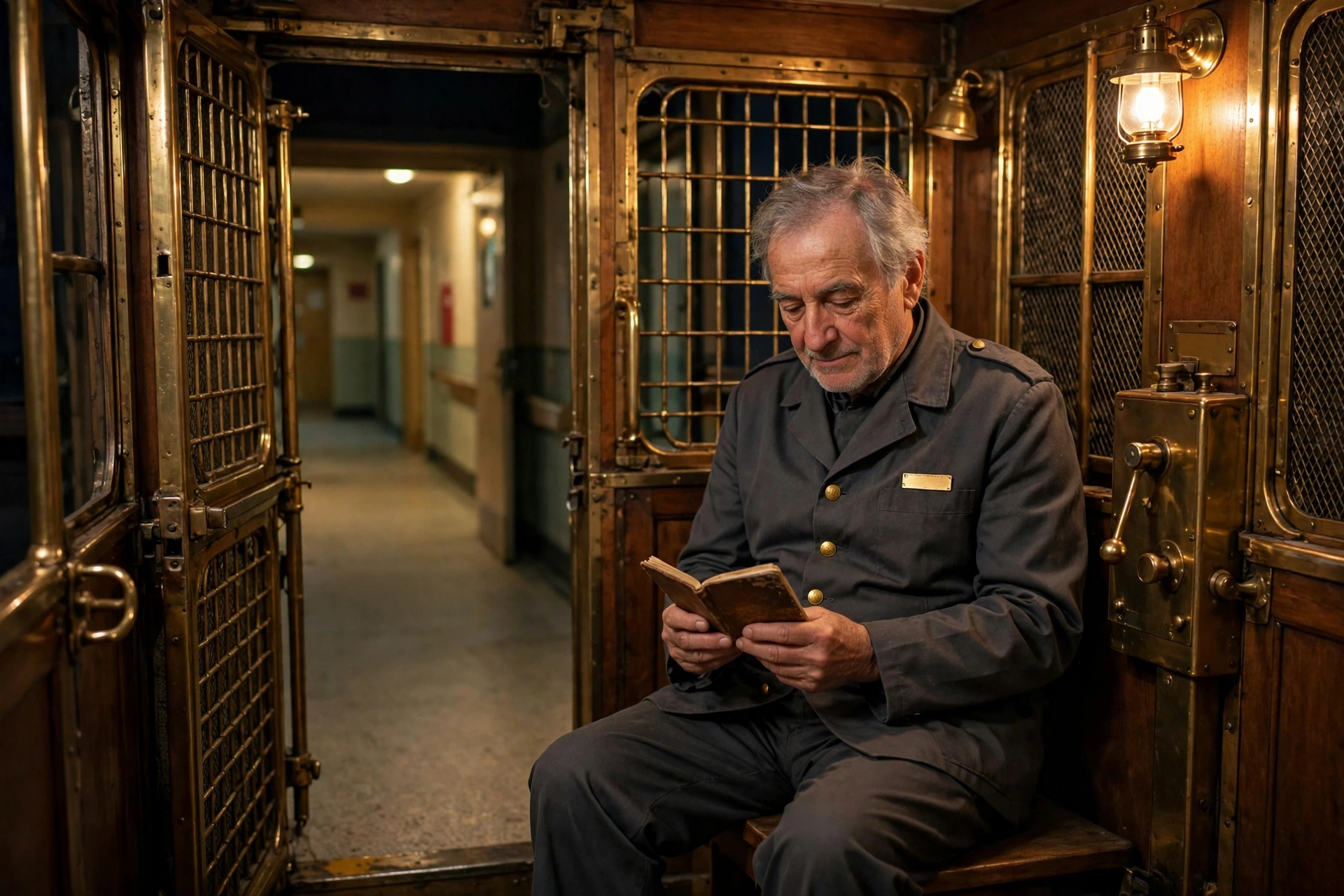
Before he left that night, Rafi did one last thing. He took his worn notebook from his pocket and placed it on the wooden bench inside the lift, with a short note on the first page: "For whoever comes next. Every person in this lift is carrying something heavy. Be gentle with them. — Rafi." He hoped that whoever found it would understand what he had taken forty years to learn: that a job is never just a job when people are frightened, and that kindness is something you do every day, in small, unnoticed ways, for people who may never remember your name — but who will always remember how you made them feel.
The new lift arrived the following month, shining and automatic, with no brass gate and no bench and no one inside it to hum. But the hospital kept one thing from the old days. On the wall beside the new lift, they placed a small brass plaque, engraved with the words from the card: "To Rafi, who carried us all." And beneath it, in smaller letters, a line the staff had added themselves: "He taught us that the kindest thing you can do for a frightened person is simply to stay beside them until they are brave enough to go on."
Meera recovered fully, and in time she grew strong enough to run up the stairs two at a time, which she did with great pride whenever she came back for her check-ups. But whenever she visited, she always stopped beside the plaque first, and pressed her hand against it, and whispered, very softly, so that only the lift could hear: "Thank you for singing."
And if you ever visit City General Hospital and step into that shining new lift, you might notice something strange. It moves a little more slowly than other lifts, as if it remembers. And sometimes, if you listen very carefully on the way up, you might just hear the faintest hum — a tune an old liftman once sang for a brave little girl — reminding you that no kindness, however small, is ever truly forgotten.