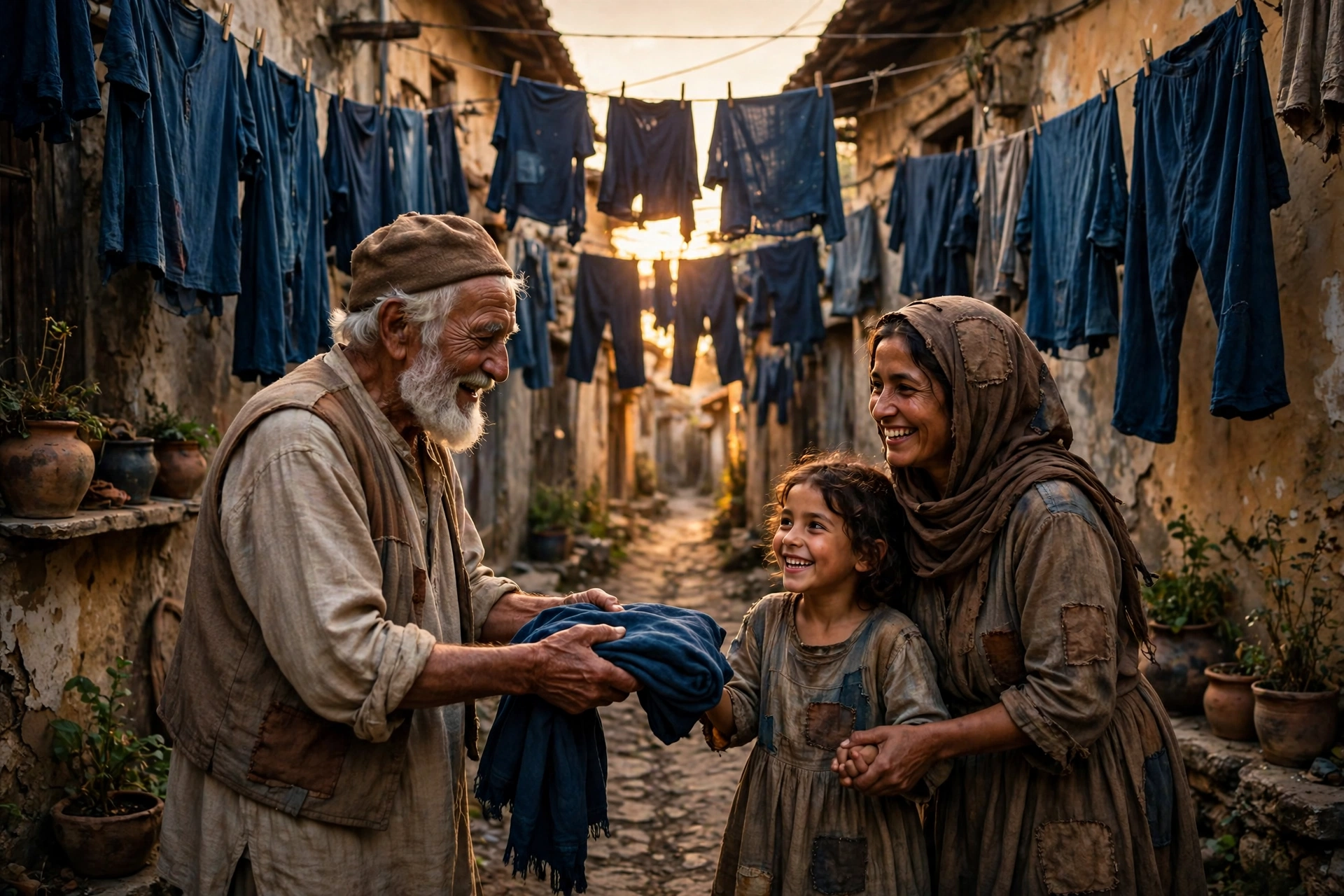
If you walked down Indigo Lane on a summer evening, you would know it before you saw it. The air smelled of wet cloth and woodsmoke, and the washing lines strung between the houses sagged under shirts and shawls and bedsheets, all of them the colour of the sky just after sunset. That blue belonged to one man. For fifty years, Yusuf had been the dyer of Indigo Lane, and his hands had been stained blue for so long that the children of the lane believed he had been born that way.
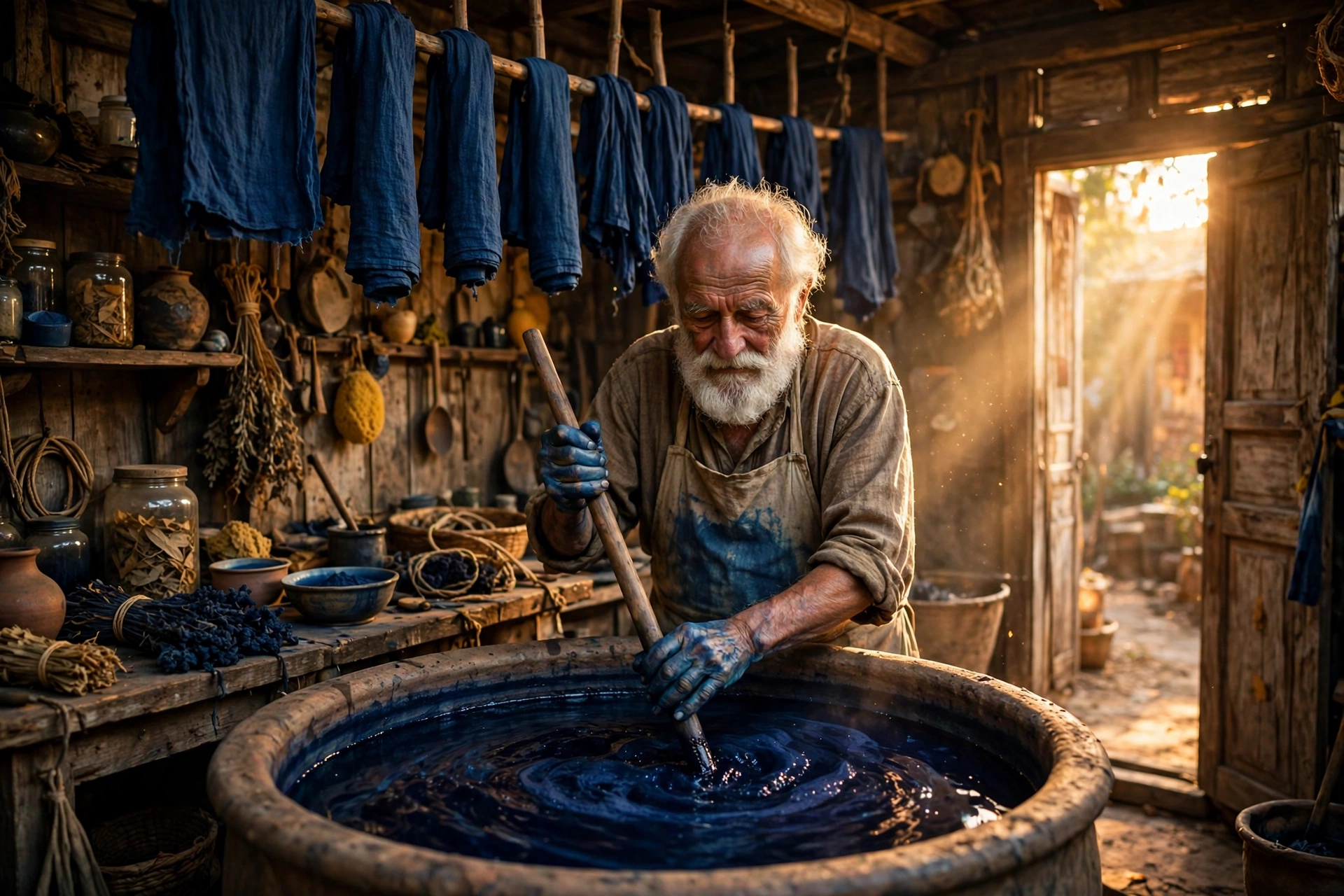
Yusuf's shop was a small, low building at the bend of the lane, its walls darkened by decades of steam. Inside, three great clay vats stood in a row like patient old friends. The dye in them was a living thing. In the morning it looked almost black, and by afternoon, as the cloth was lifted out and the air touched it, it bloomed into the richest blue you ever saw. Yusuf would plunge his bare arms into the vats up to the elbow, and when he pulled them out, they dripped blue, and he would smile the way a man smiles at an old song.
He had learned the trade from his father, and his father from his father before him. He charged what people could pay, and when they could not pay at all, he wrote their names in a small notebook and never once asked for the money again. The notebook was thick with names, and nobody in the lane had ever seen him open it to collect a debt.
But in the last few years, something had quietly gone out of Yusuf. His wife, Zainab, had died three winters ago, and since then the shop had felt larger and emptier. He still came at dawn and still lit the fire under the vats, but he worked in silence now, and he went home at dusk to a house where nobody waited for him. His son, Imran, had moved to the city long ago and called once a month. Yusuf told himself he was content. But in truth, he had begun to feel like one of his own old vats — still standing, still useful, but slowly going cold.
It was on a Thursday in late spring that the little girl came.
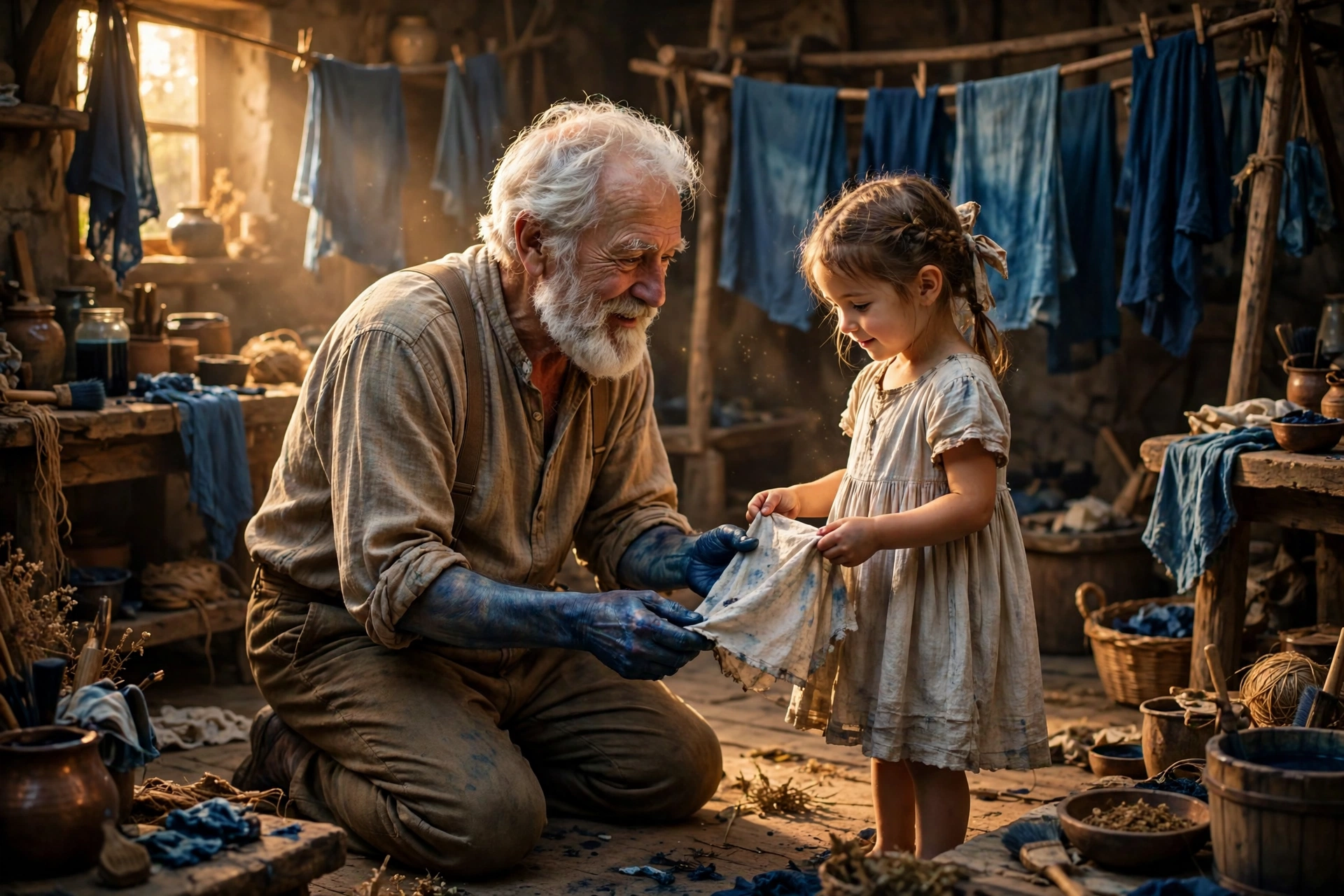
She could not have been more than eight. She stood in the doorway of the shop holding a dress in both arms, the way you might hold something precious and easily broken. The dress had once been white, but years of washing had turned it the colour of old paper, and one sleeve was coming loose at the seam.
"Uncle," she said, very politely, "can you make this blue? Like the sky?"
Yusuf set down the cloth he was wringing and looked at her. "What is your name, child?"
"Maryam," she said. "My mother says I cannot have a new dress for Eid. She says we must be patient this year. But if this one could be blue, like the sky at evening, then it would feel new. Could you do it?"
Yusuf took the dress gently. He could see that it had been mended more than once, and he could guess, without asking, what kind of year Maryam's mother was having. He knew her mother, Amina — a widow who cleaned houses in the next street and raised two children on wages that never quite stretched far enough.
"Come back tomorrow after school," he told her, "and we will see."
That night, Yusuf did something he had not done in a long time. He stayed late in the shop. He mended the loose sleeve himself with careful stitches, the way Zainab used to mend his own shirts. He washed the dress twice, and then he lowered it into the finest vat he had, the one he kept for wedding clothes, and watched the white cloth drink in the colour. When he lifted it out and the air kissed it blue, he felt something stir in his chest that he had thought was gone for good.
The next afternoon, Maryam came running down the lane, and when Yusuf held up the dress, she gasped. It was not just blue. It was the deep, glowing blue of a summer evening, the exact colour she had dreamed of. She pressed it against her cheek and spun around once in the doorway, and then she threw her arms around Yusuf's waist and hugged him so hard that he nearly lost his balance. "For Eid," he told her mother, "the colour is free." That evening, as he closed the shop, he realised he was humming. He had not hummed since Zainab died.
Word travels fast in a lane where everyone hangs their washing where everyone else can see it. By the following Friday, three more mothers had come to the shop with faded clothes and shy requests, and by the end of the month, Yusuf had made a decision. He nailed a small wooden board beside his door, and on it he painted, in his own careful hand, the words: "Every Friday, one garment dyed free for any family that cannot pay."
Every Friday morning, a small queue formed outside his shop — mothers with children's uniforms, old men with worn shawls, a young bride with a faded dupatta she wanted made beautiful for her wedding. Yusuf dyed them all, and he did it with the same care he gave to paying customers. He mended loose seams while the dye set, and he folded each garment neatly and handed it back as if it were a gift, not a favour. And slowly, without quite noticing it, his shop filled with voices again. People stayed to talk. Someone brought him tea. Someone else brought him a plate of sweets. The shop that had been so quiet became, once more, the warmest room in the lane.
One Friday, as he was handing a freshly dyed shawl to an old woman, Yusuf noticed a man standing at the back of the queue, half-hidden behind the others. He was tall, with tired eyes and a city haircut, and he was holding a small boy by the hand. Yusuf's heart stopped. It was Imran. And the boy beside him was his grandson, a child Yusuf had only ever seen in photographs.
"I came to see the shop," Imran said quietly, when the others had gone. "Someone in the city told me about a dyer who dyes clothes free on Fridays. They said the whole lane talks about him. I did not know it was you, Abba."
Yusuf looked at his son, and for a moment he could not speak. Then he knelt down and held out his blue-stained hands to the little boy. "Do you want to see how white cloth becomes the colour of the sky?" he asked. The boy nodded, wide-eyed, and Yusuf lifted him up to watch the vat. As the cloth rose out of the dye and bloomed blue in the air, the boy laughed out loud, and Imran laughed too, and Yusuf felt the last cold place inside him finally grow warm.
Imran stayed for the weekend, and then for the week after that. He helped his father in the shop, and on the last evening before he went back to the city, he said something Yusuf would never forget. "Abba, I used to think you only dyed cloth," he said. "Now I understand. You dye people's days. You make them brighter."
But life, as Yusuf knew well, does not leave a good thing untested.
That winter, the rains came harder than anyone could remember. For three days the water rose in the lane, brown and relentless, until it burst through the door of Yusuf's shop and swallowed the vats. The dye ran out into the street in rivers of blue. The wooden beams sagged. The roof came down in the back room. When the water finally went away, Yusuf stood in the ruins of fifty years of work and felt, for the first time, that he was simply too old to begin again.
He went home and sat in his empty house, staring at his blue hands, and told himself that perhaps this was simply how things ended.
He did not know that Maryam had seen him standing in the ruined shop. He did not know that she had run home and told her mother, and that her mother had told the neighbours, and that the neighbours had told the whole lane.
The next morning, Yusuf woke to the sound of hammers.
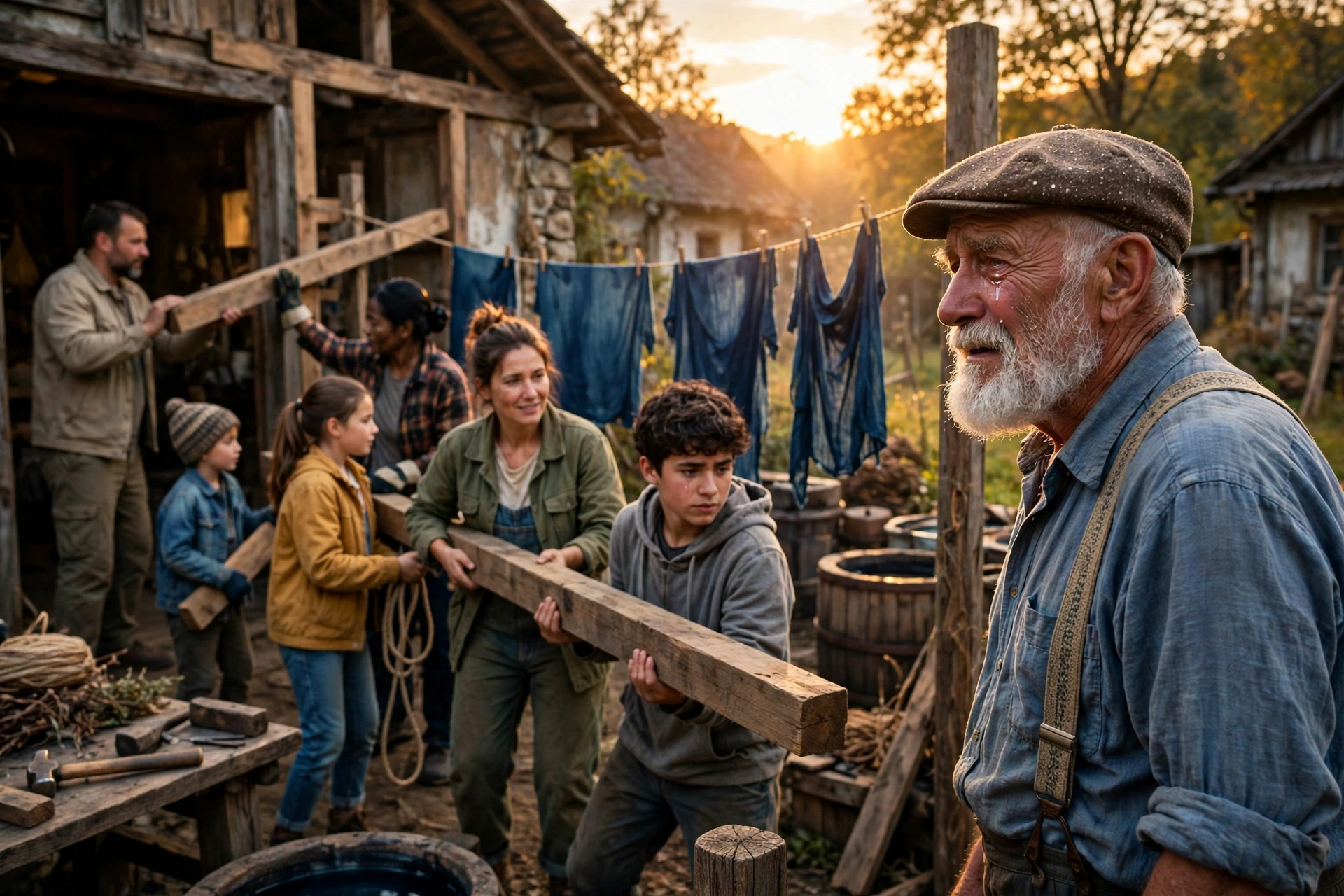
He walked to the shop in his shawl, and he stopped in the doorway and stared. The whole lane was there. The fruit seller was carrying beams. The schoolteacher was sweeping out the mud. The widow from the corner was scrubbing the vats. Maryam was standing on a stool, carefully painting the wooden board by the door, touching up the words: "Every Friday, one garment dyed free." And Imran was there too — he had driven through the night from the city the moment he heard, and he was standing on the roof, hammering, with his little boy handing him nails.
"Uncle Yusuf!" Maryam called out, running to him. "You cannot close. Who will make our clothes blue?"
The old woman whose shawl he had dyed took his hand. "You dyed for us when we could not pay," she said. "Now we build for you, because we can."
Yusuf tried to answer, but his voice would not come. He stood there in the doorway of his broken shop, surrounded by the people of his lane, and he wept — not from sorrow, but from something so large and warm that it felt like sunlight breaking through after rain.
They rebuilt the shop together. It took two weeks. The neighbours came every day after work, and the children carried water, and the schoolteacher painted the door a fresh, bright blue. When the last beam was in place and the vats were filled again, Yusuf lit the fire himself, and the whole lane gathered to watch the first cloth rise out of the dye and bloom into that deep evening blue.
That Friday, Yusuf dyed clothes free as always. But this time, the queue was longer than ever, and at the front of it stood Maryam, wearing her blue Eid dress, which she had kept perfect all these months. She handed him a small parcel, wrapped in newspaper. Inside was a white shirt — his own shirt, the one Zainab had mended for him years ago, which he had not worn since she died.
"For you, Uncle," Maryam said. "So you can be blue too."
Yusuf held the shirt to his chest, and he laughed through his tears, and the whole shop laughed with him.
In the years that followed, the shop on Indigo Lane never closed again. Imran came home more often, and eventually he moved his family back to the lane, and the little boy grew up learning the trade, his own small hands slowly turning blue. Yusuf still rose at dawn and still plunged his arms into the vats, but now he was never alone. And every Friday, without fail, he dyed one garment free for any family that could not pay, because he had learned, at last, what his father had tried to teach him all those years ago.
A dyer does not only change the colour of cloth. If he is lucky, and if he is kind, he changes the colour of people's lives.
And if you walk down Indigo Lane on a summer evening even now, you will see the washing lines sagging under shirts and shawls and bedsheets, all of them the colour of the sky just after sunset. The blue is still there. It never left. It only grew deeper, the way all good things do, when they are given away.