There was a time when nobody on Rose Lane locked their doors. Then the burglaries began, and the lane changed overnight. Iron gates appeared. New locks were fitted, then second locks, then bolts as thick as a man's thumb. At dusk, the street echoed with the sound of keys turning, and by nightfall every house on Rose Lane was shut tight, like a row of clenched fists.
Every house, that is, except one.
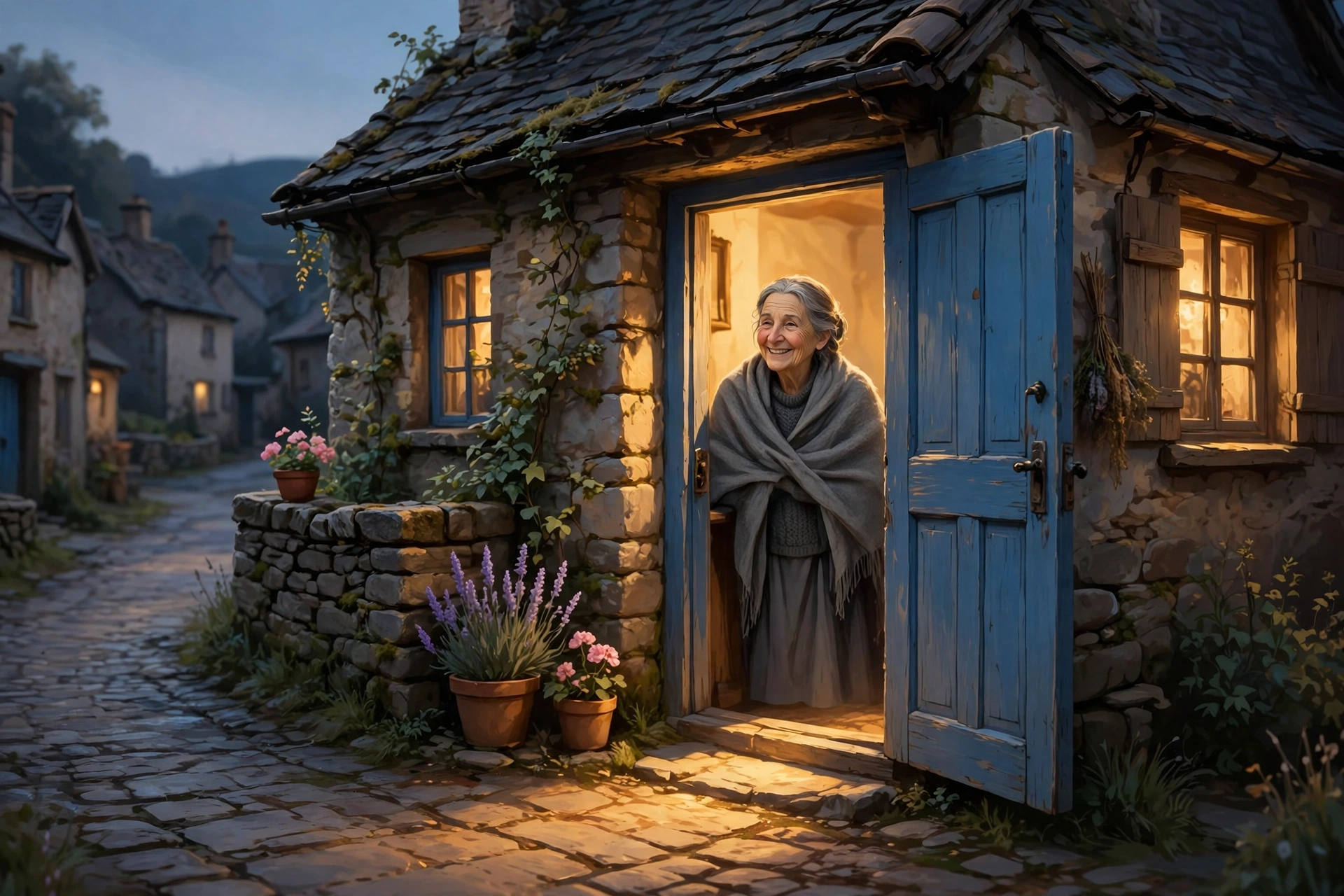
At the very end of the lane stood a small house with pale yellow walls and a blue wooden door. It belonged to Amina, a widow of seventy-three, who lived alone with a cat, a lemon tree, and a kettle that was almost always on the stove. And Amina's door was never locked. Not in the morning, not at noon, not at midnight. It was not even fully closed. On warm evenings it stood wide open, and the smell of lentil soup drifted out into the street like an invitation.
"Amma, you will be robbed," her neighbour Salma warned her, again and again. "There are bad people in this world. A woman alone cannot be so careless."
Amina would smile, the deep lines around her eyes softening. "My dear," she would say, "I have lived in this house for fifty years. My husband built this door with his own hands. He used to say a door is not meant to keep people out. It is meant to let them in."
Salma shook her head every time. The rest of the lane thought Amina was either very brave or very foolish. Most of them decided she was foolish, and they said so, quietly, behind their locked doors.
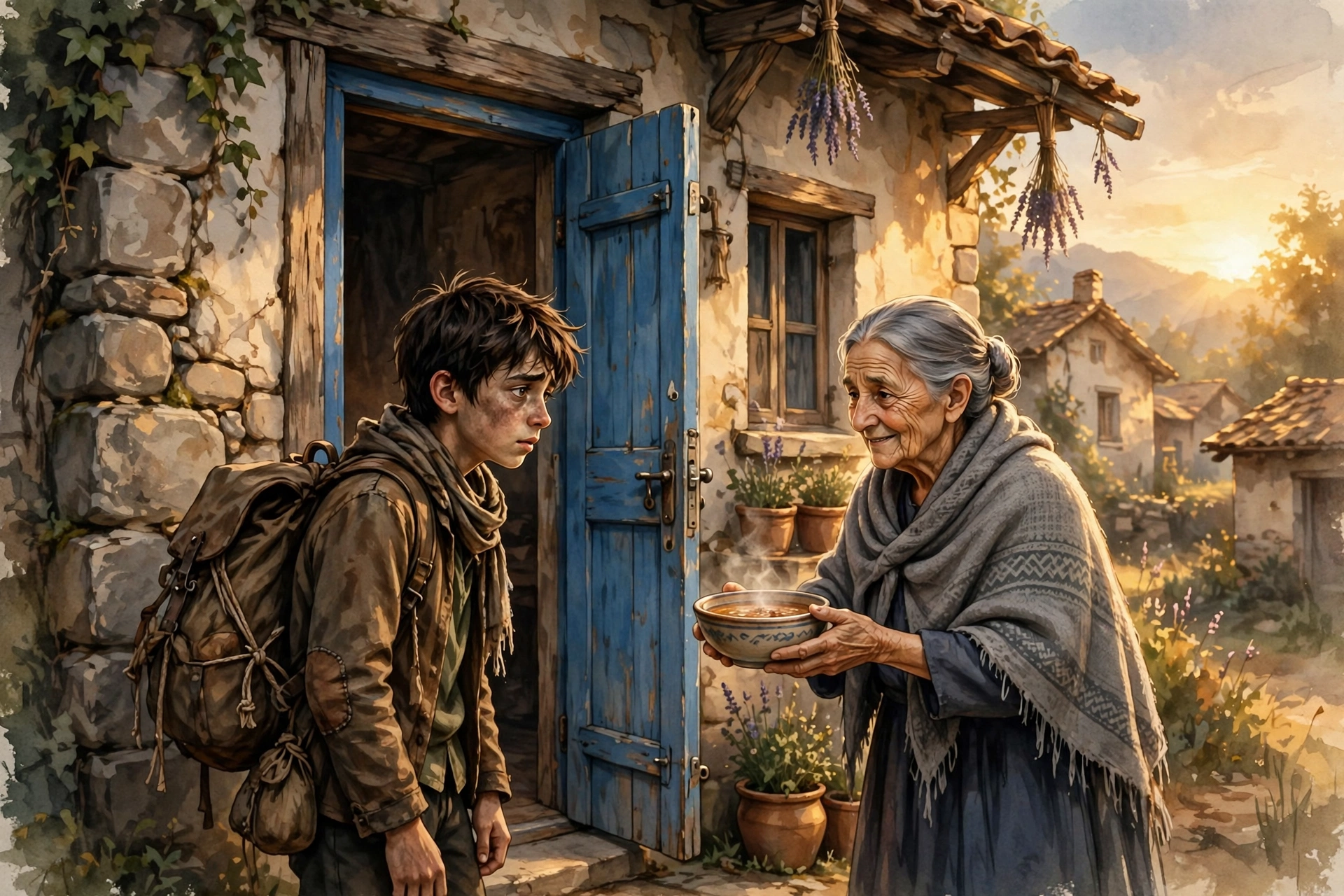
One cold evening in late autumn, when the wind was pulling leaves off the trees and throwing them down the lane, a boy appeared at Amina's gate. He could not have been more than seventeen, thin as a reed, with a torn backpack and shoes held together by string. His name was Imran, and he had walked for three days from a village far away, looking for work in the city. He had no money left. He had not eaten since the morning before. He stood outside Amina's house for a long time, staring at the open door and the warm light inside, too proud to knock and too hungry to walk on.
Amina found him there when she came out to bring in the washing. She did not ask him who he was, or where he had come from, or why a boy his age was alone on the road at night. She simply looked at his hollow cheeks and said, "Come in, son. The soup is still hot."
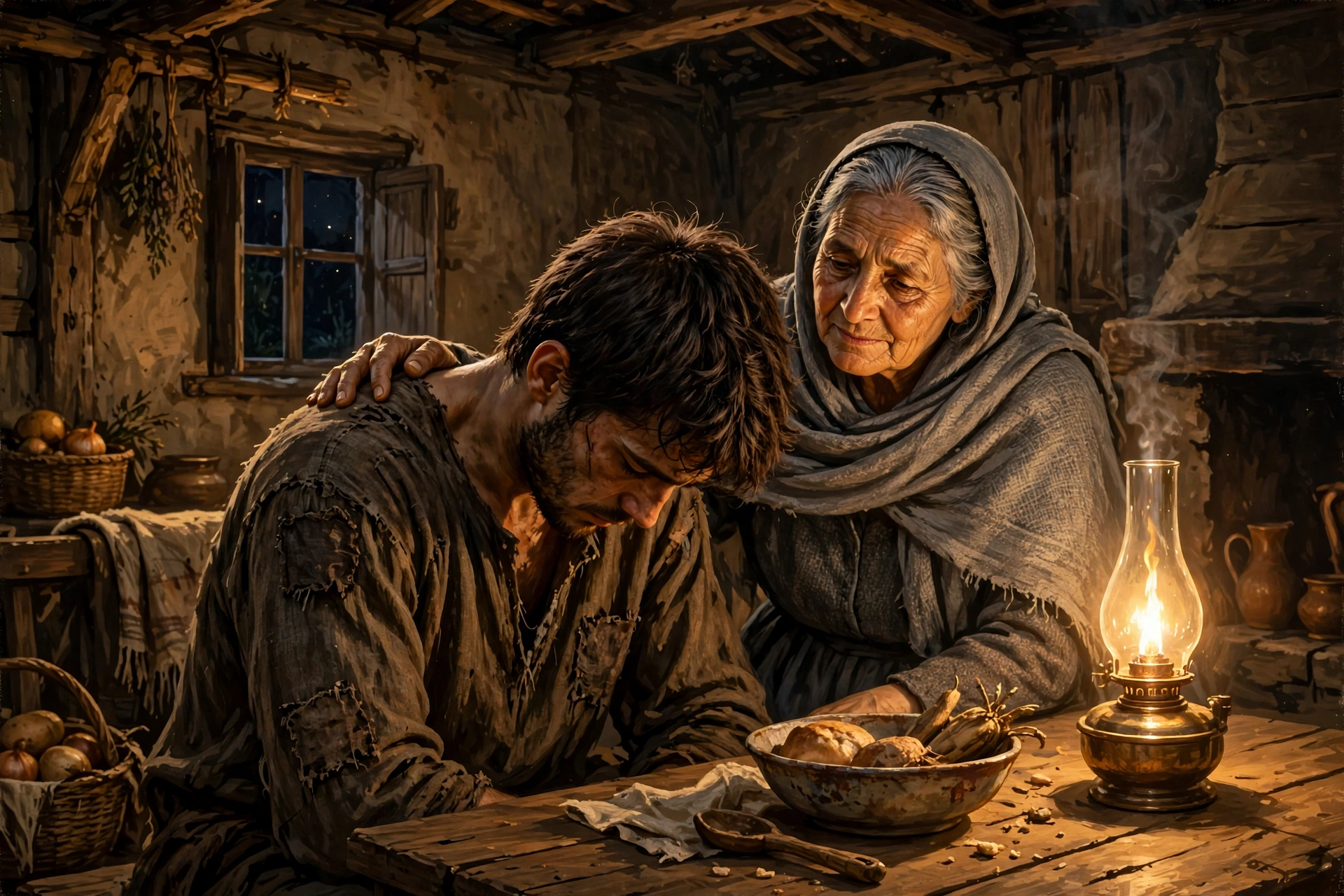
Imran ate as if he had forgotten how to stop. Amina watched him, saying nothing, refilling his bowl before he could ask. When he had finished, he tried to thank her, but the words caught in his throat, because no stranger had ever been so kind to him, and kindness, when you are not used to it, can feel almost like pain.
"You can sleep here tonight," Amina said, as if it were the most ordinary thing in the world. "There is a bed in the back room. It was my son's, a long time ago."
Imran slept that night the way only an exhausted person can sleep, deeply and without dreams. In the morning, Amina packed him bread and cheese for the road and pressed a few coins into his hand, though he tried to refuse them.
"I cannot repay you," he said.
"You do not have to," Amina replied. "Just remember this house. And one day, when someone stands outside your door, hungry and too proud to knock, you will know what to do."
Imran walked away down Rose Lane with tears in his eyes, and Amina watched him go, already forgetting him in the way kind people forget their good deeds, which is to say, completely.
Months passed. The lane locked its doors a little tighter. Then, one winter night, a man came to Amina's house who had not come for soup.
His name was Kareem, and he was a thief. He had been watching the lane for weeks, and he had noticed what everyone else had noticed: the little yellow house at the end, the door that never locked, the old woman who lived alone. To Kareem, it looked like the easiest job in the world. He waited until past midnight, when the street was dark and silent, and then he slipped through the gate and pushed the blue door open.
He froze. The house was not dark. A lamp burned low in the kitchen, and Amina sat at the table, wide awake, a cup of tea in front of her.
"I was wondering when you would come," she said calmly.
Kareem's heart hammered against his ribs. He had planned for a sleeping house, an empty room, a quick search. He had not planned for this. "I... I am not..." he stammered.
"You are cold," Amina said. "Sit down. I will make you tea."
Kareem did not know why he sat down. Perhaps it was shock. Perhaps it was the warmth of the room after the bitter night. Perhaps it was something in her voice, which held no fear at all, only a tired kind of gentleness. Amina put the kettle on and set a plate of bread and dates before him, and for a long time neither of them spoke.
At last Kareem said, in a voice so low she had to lean forward to hear it, "I came to steal from you."
"I know," Amina said.
"Then why are you feeding me?"
"Because you are hungry," she said simply. "A hungry man steals. A fed man can choose."
Kareem stared at his hands. They were rough hands, hands that had broken locks and taken things that did not belong to him, hands that had never once been held with kindness. And then, slowly, as if a dam inside him had cracked, he began to talk. He told her about losing his job at the factory, about the rent he could not pay, about his little daughter who asked him every night why there was no milk in the house. He told her about the first time he had stolen, how sick he had felt afterwards, and how each time after that it had become a little easier, until one day he barely felt anything at all.
Amina listened without interrupting, without judging, the way only someone who has suffered herself can listen. When he finished, she said, "Kareem, a man is not what he has done. A man is what he decides to do next."
That night, Kareem left Amina's house carrying nothing but a bag of food and a promise. The next morning, he walked to the home of an old shopkeeper whose watch he had stolen two weeks earlier, and he gave it back. He apologized with his head bowed and his voice shaking. The shopkeeper, astonished, forgave him. Within a month, Kareem had found work as a night watchman, honest work, guarding the very warehouses he had once thought of robbing. He never stole again. And every Friday, he brought Amina fresh bread from the bakery near his work, leaving it quietly on her step before dawn.
Word of the open door began to spread, not through the lane, where people still whispered that Amina was foolish, but through the town, among the people who needed it most. A mother with a sick child who missed the last bus home found shelter on Amina's sofa. An old man who had lost his way in the dark found tea and directions. A runaway girl, frightened and far from home, found a safe room and a woman who called her daughter until her real family could be found. None of them were asked for anything. None of them were turned away.
Then came the great storm. It was the worst storm Rose Lane had seen in twenty years. Rain hammered the roofs, the wind tore tiles from the houses, and the power went out across the whole street. One by one, the locked houses sat in darkness, their families huddled inside, listening to the wind howl. But at the end of the lane, a light glowed in the window of the little yellow house, because Amina had lit every lamp and candle she owned.
Salma was the first to knock. Her roof was leaking, and her two small children were crying with fear. Amina took them in without a second thought. Then came the family from number twelve, whose basement had flooded. Then the elderly couple from number six, who were cold and frightened in the dark. By midnight, Amina's small house was full. People sat on the floor, on the stairs, on every chair. Amina moved among them with soup and blankets, as calm as if she hosted a crowd every night.
In the candlelight, something strange happened. Neighbours who had lived on the same lane for years but had barely spoken began to talk. The man from number nine shared his dry clothes with the boy from number four. Salma, who had warned Amina so many times about her open door, held Amina's hand and wept, and said, "Forgive me. I thought your door made you unsafe. Tonight I understand. Your door is the reason we are all safe."
When morning came, the storm had passed, and the lane looked battered and broken, with fallen branches everywhere and puddles in every garden. But something in Rose Lane had changed. That week, Salma left her front gate open for the first time in years. The man from number nine began leaving a jug of water outside his house for anyone who passed by thirsty. The family from number twelve started a small shelf by their gate, where neighbours could leave food for anyone who needed it.
Amina's door, of course, stayed exactly as it had always been: unlocked, and often wide open.
Years later, long after Amina had gone to her rest, a young man arrived on Rose Lane in a fine coat, driving a car that gleamed in the sun. He stopped at the little yellow house at the end of the lane and stood at the blue door for a long time. A child playing nearby asked him what he was doing.
"I am remembering," the man said. "When I was a boy, hungry and alone, an old woman in this house fed me and gave me a bed. She told me that one day, when someone stood outside my door, I would know what to do."
The child watched as the man took a small brass plaque from his pocket and fixed it beside the blue door. On it were words, simple and true: "This house never locked its door, so that no one would ever have to knock in vain."
Imran, for that was who the young man was, now owned a small restaurant in the city, and above its door hung a sign that read, "No one eats here alone." Every evening, he set aside a table near the window for anyone who came in hungry and could not pay, and he never asked them why.
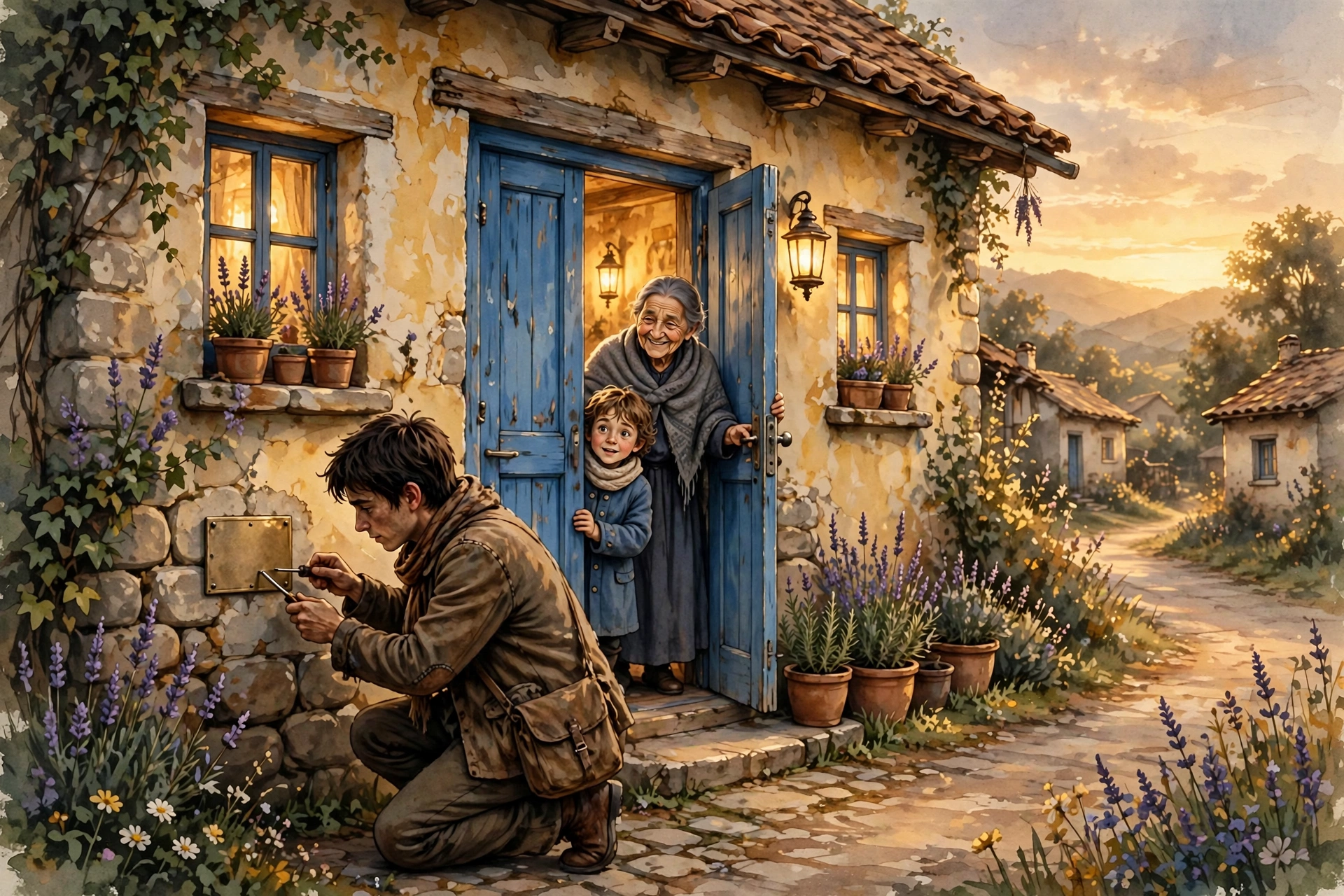
And on Rose Lane, the blue door of the little yellow house is still unlocked. People who pass by sometimes stop and touch the plaque, and parents tell their children the story of the old woman who believed that a door is not meant to keep people out. It is meant to let them in. And the children, who understand such things better than grown-ups do, nod as if it were the most obvious truth in the world, because to them, it is.