Zara had not spoken about her mother to anyone in the four months since the funeral, and on the morning she found the piece of chalk, she was not looking for anything at all.
She was walking to school early, the way she always did, because the house was too quiet at that hour and her father left for his night shift before she woke. The street was still half asleep. Shutters were down over the shops, a dog slept curled against a wall, and the milkman had left his bottles on doorsteps like small glass promises. Near the corner, where the road workers had been repairing the pavement the day before, a short stub of white chalk lay in the dust, forgotten. Zara picked it up without thinking, the way you pick up a coin or a feather, and stood there with it in her closed hand while the sun began to warm the rooftops.
She did not know why she knelt down. She only knew that the grey pavement in front of her looked like the inside of her own chest lately: flat, colourless, and walked over by everyone. She pressed the chalk to the stone and wrote, in her neatest school handwriting, the words she wished someone had said to her on the worst morning of her life.
You are not alone.
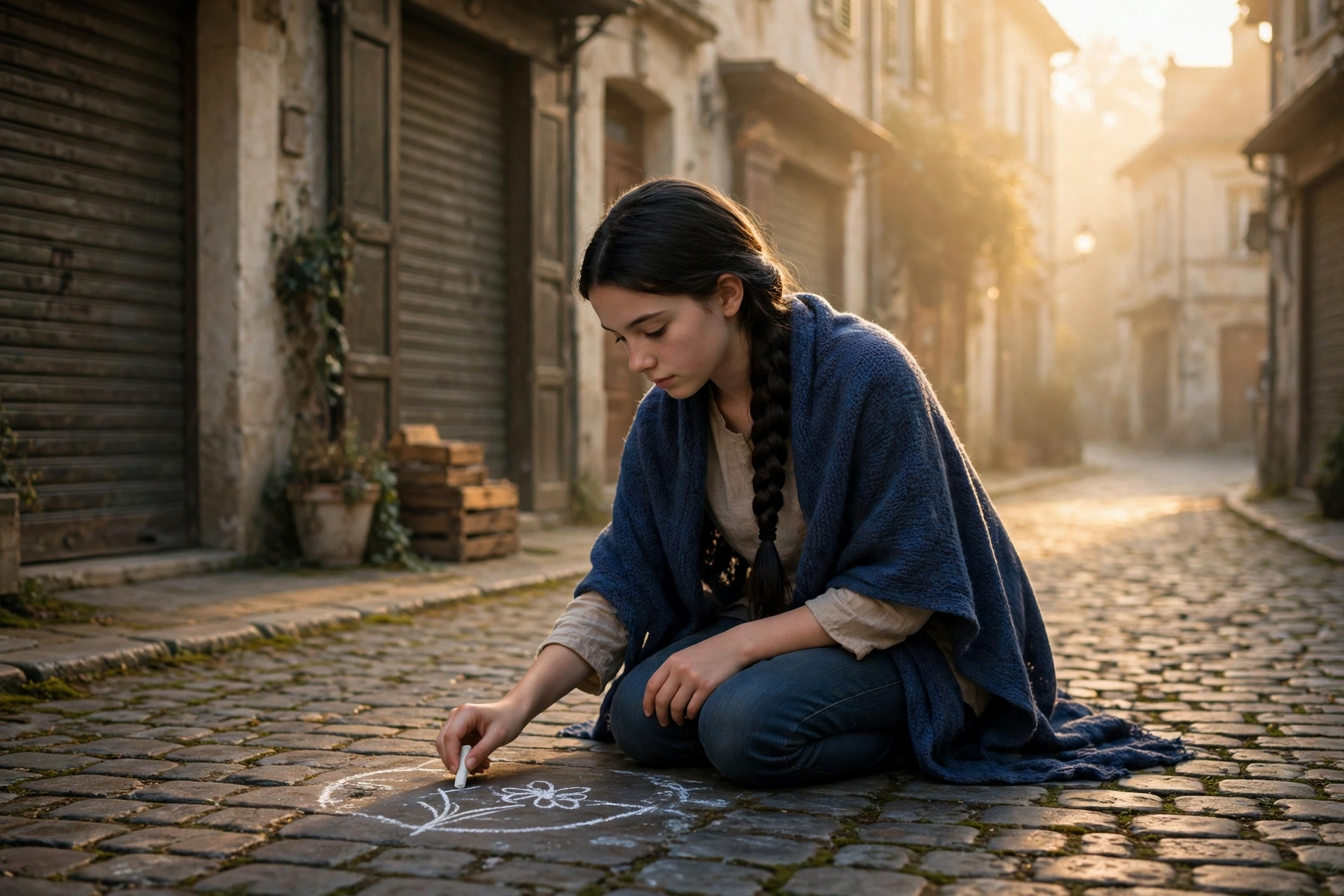
She stood up, looked at the words, and felt something small and unfamiliar loosen behind her ribs. It was not happiness. It was closer to breathing after holding your breath for a very long time. She slipped the chalk stub into her pocket and hurried to school, half afraid someone had seen her, half hoping someone had.
By lunchtime, half the school knew. A girl from her class said her older brother had seen the words on his way to work and had stopped to read them twice. Zara said nothing. She only smiled into her lunchbox, and for the first time in months, the food did not taste like nothing.
The next morning she woke before her alarm. She took the chalk stub from her pocket, where it had left a faint white mark on the cloth, and walked the same street to school. This time she wrote a little further along, outside the closed bookshop with the dusty window.
It is okay to miss someone. It means they mattered.
She did not know that Mr. Ilyas, the bookseller, was standing behind his shop door with his hand on the latch, watching. His wife had died two years before, and he had not opened the shop early in a long time. He had stopped believing that mornings could hold anything kind. That day he opened half an hour earlier than usual, swept the step he had not swept in weeks, and placed a small plant outside the door, just because the pavement in front of his shop no longer looked like a place where hope went to be forgotten.
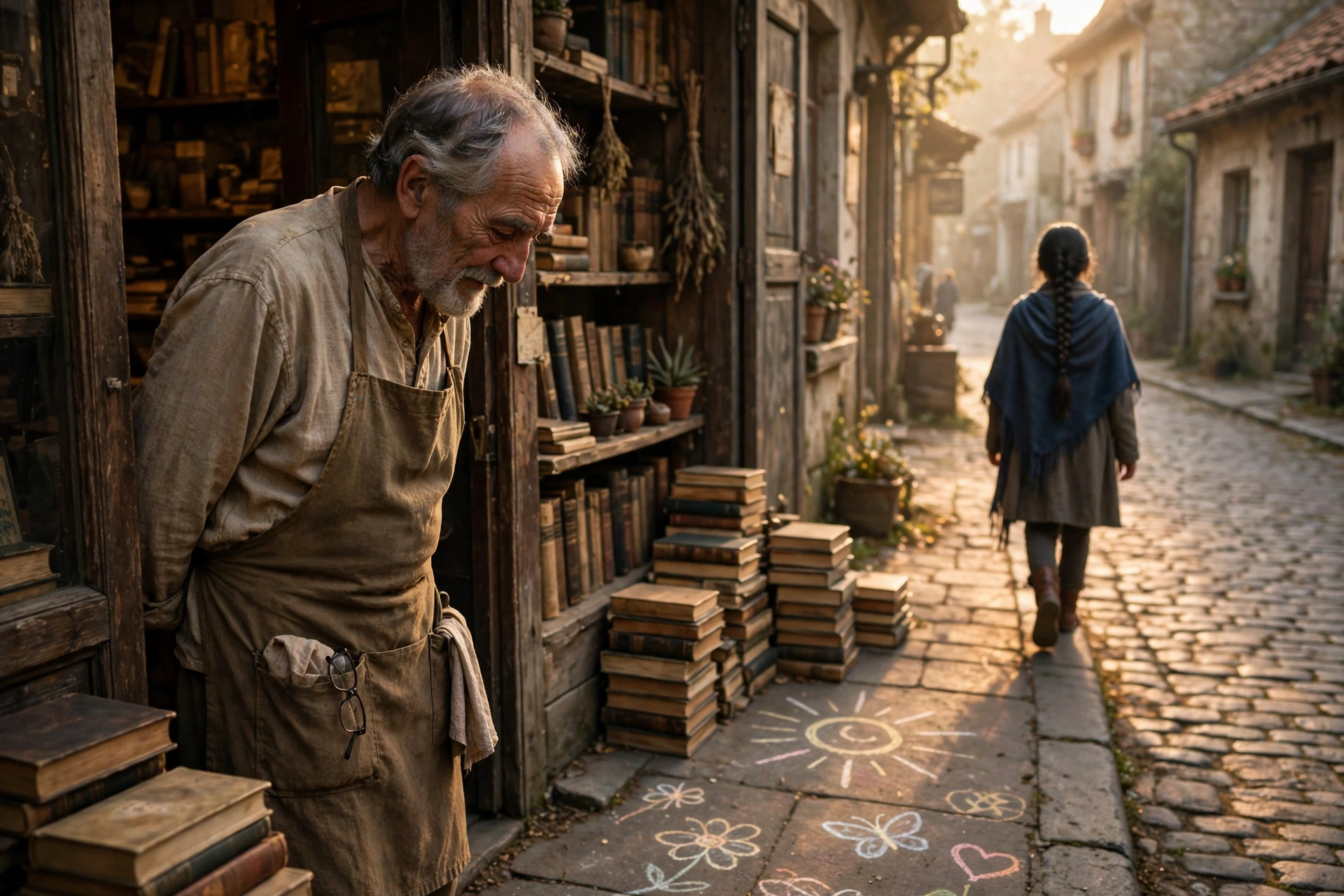
Zara kept writing. Every morning, before the street fully woke, she left a new sentence somewhere along her walk to school. Some days the words came easily. Some days she stood with the chalk in her hand for a long time, searching for the right ones, the way her mother used to search for the right spice in the kitchen drawer. She wrote about sadness and courage, about starting again, about the way grief comes in waves and the way kindness can be as small as a shared umbrella. She never signed her name. She never stayed to watch anyone read them. That was part of the magic: the words belonged to whoever found them.
People began to look for them. The woman who sold vegetables at the corner started arriving earlier, just to see what the pavement said that day. The old men at the tea stall argued gently about which sentence was the best one so far, the way other people argued about cricket. A nurse coming off a night shift at the clinic read one that said, "Rest is not laziness. You have carried enough today," and she cried quietly into her scarf, then went home and slept without guilt for the first time in weeks.
Not everyone was kind about it. Daniyal, a boy two years older than Zara, laughed at the chalk words in front of his friends one afternoon. "Who writes this baby stuff?" he said, kicking at a sentence with his shoe. Zara heard about it later and said nothing, but her hand shook a little the next morning. She almost did not write. Then she remembered the night her mother had held her hand in the hospital corridor and whispered, "Be kind anyway, my love. Especially when it is hard." So she knelt down and wrote, in letters bigger than usual: "Being kind is not weak. It is the bravest thing there is." Daniyal walked past that one on his way home and stopped. Nobody saw his face. But the next day, the boy who always sat alone at lunch found a paper boat on his desk with a marble inside, and Daniyal never told anyone it was from him.
Then came the rain. It arrived in the night, sudden and heavy, drumming on the rooftops and running down the gutters in brown streams. By morning, every one of Zara's sentences had washed away. The pavement was clean and grey and empty, as if she had never written a single word. Zara stood in the drizzle with her schoolbag getting wet and felt her throat close up. All those mornings, all those words, gone in one night, like her mother, like so many things she had loved. For a moment she wanted to turn around and go home and never pick up the chalk again.
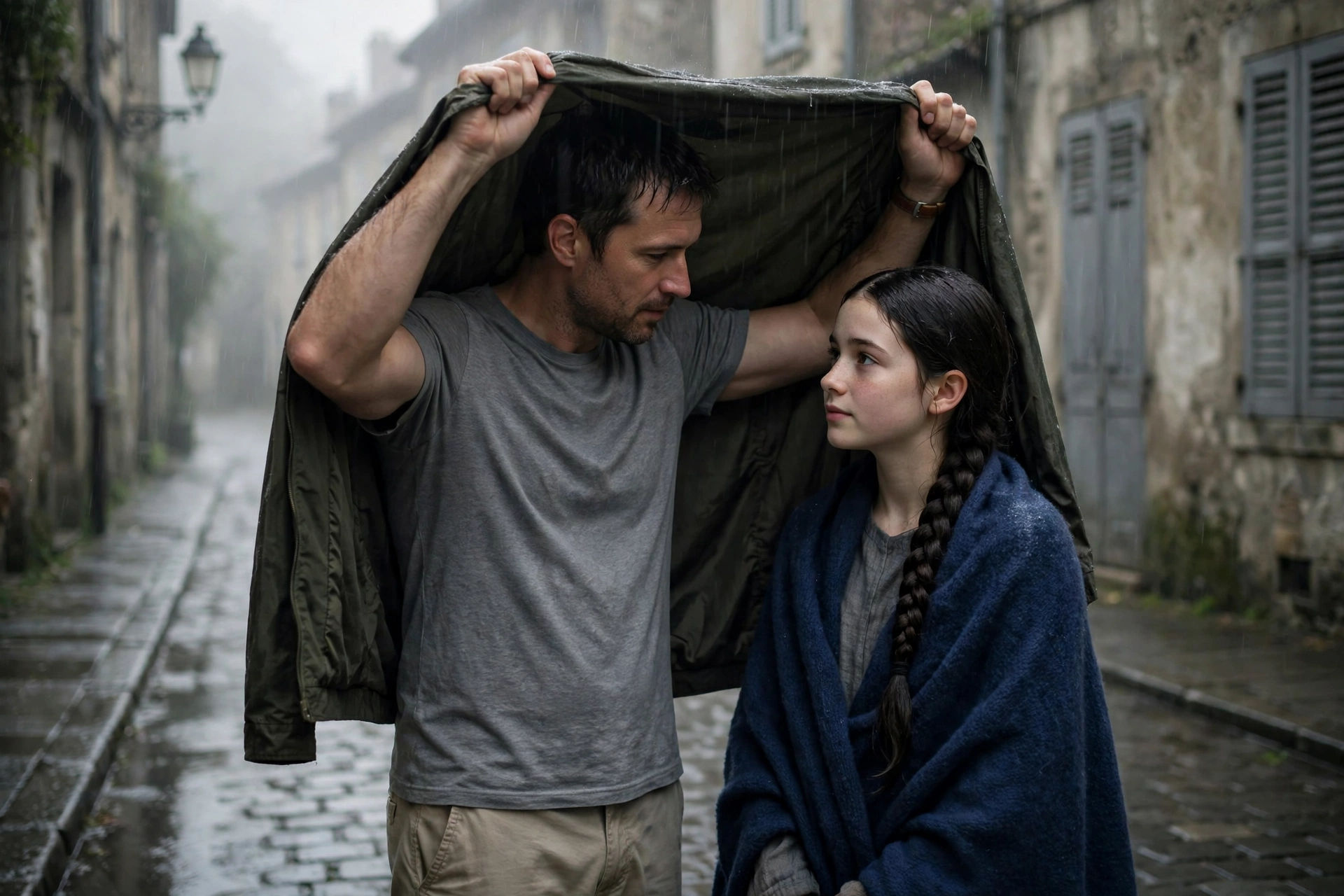
Her father found her there. He had come home from his shift early, worried when she had not left at the usual time, and he followed her footprints to the corner. He did not ask what was wrong. He simply stood beside her in the rain, his jacket over both their heads, and looked at the blank pavement. "Your mother used to say," he said softly, "that rain does not ruin a garden. It only makes you plant again." Zara looked up at him, and for the first time since the funeral, she saw that her father's eyes were wet too, and that he had been grieving all this time in his own quiet way, the way men sometimes do, without a single word.
She went to school that day with wet shoes and a strange lightness in her chest. And the next morning, before the sun was up, she was back on the pavement with a fresh piece of chalk she had bought with her pocket money, writing the same sentence she had written on the very first day, only this time in the middle of the street where everyone would see it.
You are not alone.
That morning, something changed. Mr. Ilyas was waiting outside his bookshop with a piece of chalk in his own hand. The vegetable seller had one too. The nurse from the clinic, on her way home from another long night, knelt down beside Zara and wrote, in wobbly letters, "You made it through yesterday. You can make it through today." Even Daniyal appeared at the edge of the group, hands in his pockets, pretending he had only come to watch. After a long moment, he took a piece of chalk from Zara without a word and wrote, "Sorry is a strong word too."
By the end of that week, the whole street was writing. Children drew suns and flowers around the sentences. An old woman who had never learned to write properly drew a heart instead, and everyone understood it perfectly. Shopkeepers wrote messages outside their doors. The tea stall owner wrote one on the step of his stall that made his customers laugh through their tears. The pavement, which had once been the greyest thing in the town, became the brightest, a long ribbon of white and yellow and pink words stretching from the corner to the school gate.
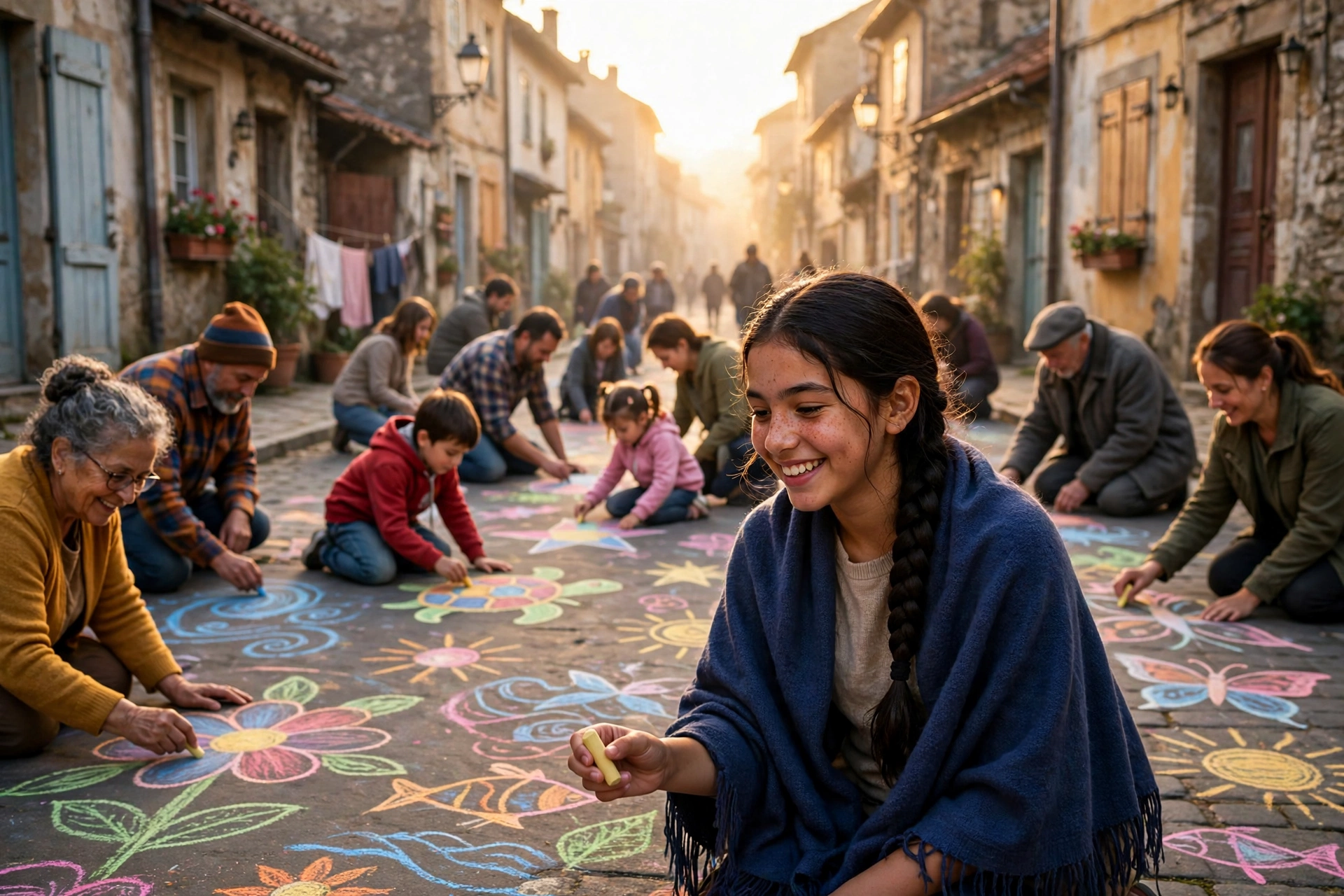
On the last day of spring term, the town held a small festival nobody had planned. People brought chairs out onto the pavement, shared food from their kitchens, and read the messages aloud to each other like poems. Zara's father stood at the back, holding a cup of tea, watching his daughter laugh with her friends, and he thought about how his wife would have loved this: not a grand monument or a loud ceremony, but a street full of ordinary people saying kind things to each other in chalk, knowing the rain would wash it all away and they would simply write it again.
Zara never did sign her name. She did not need to. Years later, when she was grown and living far away, she would return to that street on a visit and find a child she did not know kneeling on the pavement with a piece of chalk, writing carefully in large letters. She would stop, and smile, and keep walking, because some kindness does not belong to one person. It belongs to everyone who picks it up and passes it on, one small sentence at a time, until a whole town remembers how to hope again.