The men came at dawn with a bucket of red paint, and by the time the village woke up, the banyan tree was already condemned.
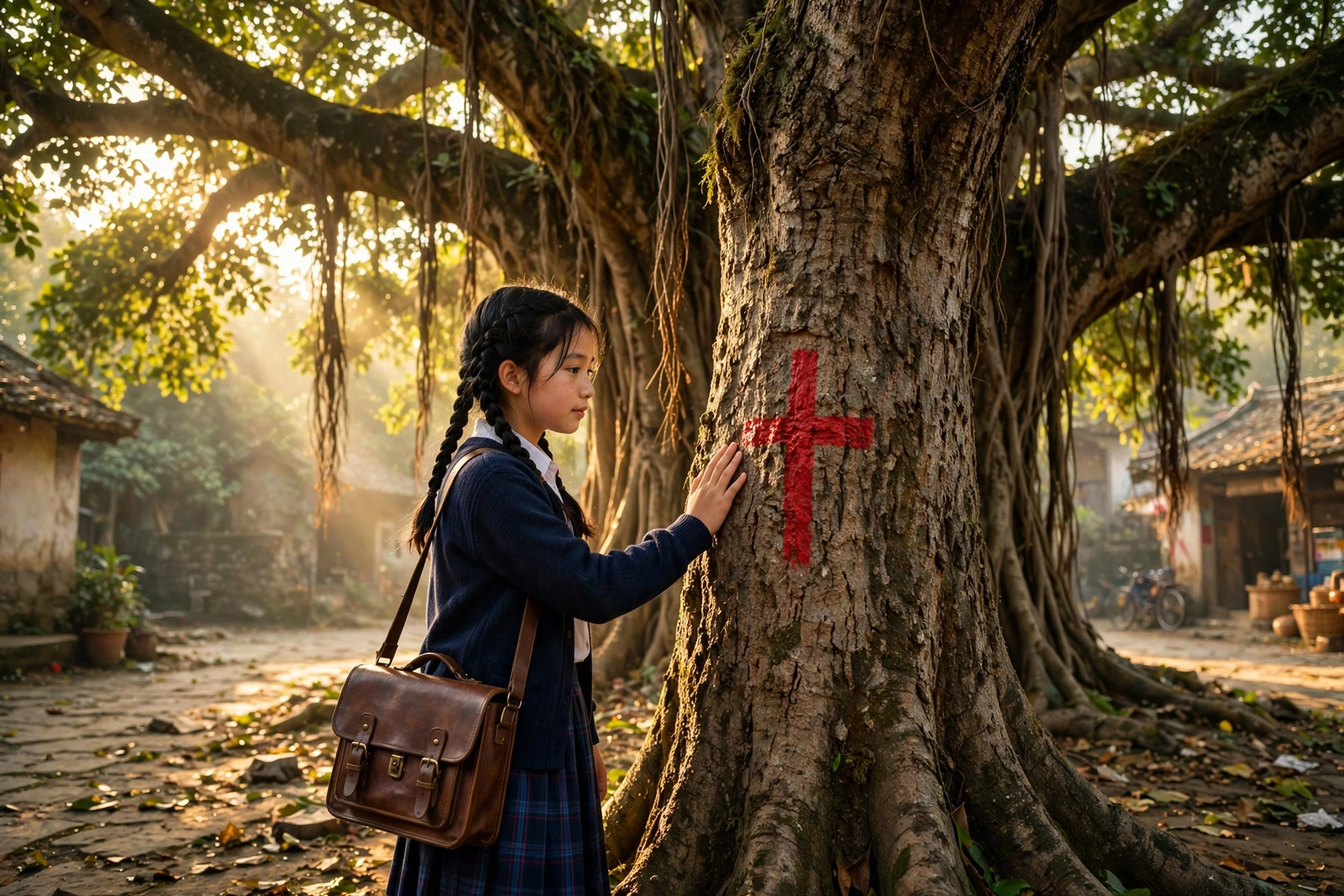
Meera saw it first. She was on her way to school, her satchel bouncing against her hip, when she noticed the two strangers standing in the square with measuring tapes and a clipboard. One of them dipped a brush into the bucket and painted a great red cross on the trunk of the old banyan, right at the height of a man's chest, as casually as if he were marking a sack of grain. The paint was bright and wet and final. Meera stopped in the middle of the road, her breath catching in her throat, because everybody in the village knew what a red cross meant. It meant the tree was going to be cut down.
The banyan was older than anyone alive. Its trunk was so wide that five children holding hands could not reach around it, and its branches spread over the whole square like a green roof, dropping long aerial roots that swayed gently in the wind. Beneath it, generations of the village had lived their lives. Women shelled peas in its shade. Old men played cards on a stone bench that had been there so long its edges had gone smooth. Children chased each other around its roots. And every evening, when the heat broke and the light turned gold, Meera's grandmother would settle herself on a woven mat beneath the lowest branch and tell stories to whoever cared to sit and listen. Meera had grown up on those stories, cross-legged in the dust, her chin in her hands, while the leaves whispered above her like a second, softer voice.
That afternoon, when school let out, Meera did not go home. She went to the tree and pressed her palm flat against the bark, beside the red cross, as if she could hold the paint back with her own hand. The trunk felt warm from the sun and rough under her fingers, the way it always had. She thought of all the things the tree had quietly witnessed: her grandmother as a young bride, arriving in the village in a red sari; her own mother, long gone now, selling guavas from a basket in this very shade; herself, learning to read by tracing letters in the dust while the old women gossiped above her. A tree like that was not wood, she thought fiercely. It was memory. It was home. And nobody had asked the village whether it could be taken away.
At supper she told her grandmother what she had seen. Her grandmother went very quiet, her spoon stopping halfway to her mouth. "They are widening the road," she said at last. "The engineer told the shopkeepers last week. The new road will run straight through the square, and the tree is in the way." She looked out of the window toward the square, though the tree could not be seen from their house, and her eyes filled with tears she did not bother to hide. "That tree was already old when I was a girl, Meera. I played under it. Your mother played under it. I thought you would grow old under it too."
Meera lay awake that night, listening to the night insects and thinking. She was twelve years old. She had no money, no position, and no one in authority had ever listened to her about anything more important than homework. But she had watched her grandmother all her life, and she knew one thing: when something mattered, you did not sit quietly and hope someone else would save it. You started, even if you started small. So before the sun was up, she tore a page from her school notebook and wrote, in her neatest handwriting, a letter to the district officer. "Respected Sir," she wrote, "our banyan tree is two hundred years old. It gives shade to the whole village. It is where we gather, where children play, and where my grandmother tells stories. Please do not cut it. We can move the road a little. We cannot grow another two hundred years." She signed it, "Meera, Class Six, daughter of this village," folded it carefully, and posted it at the little post office before school.
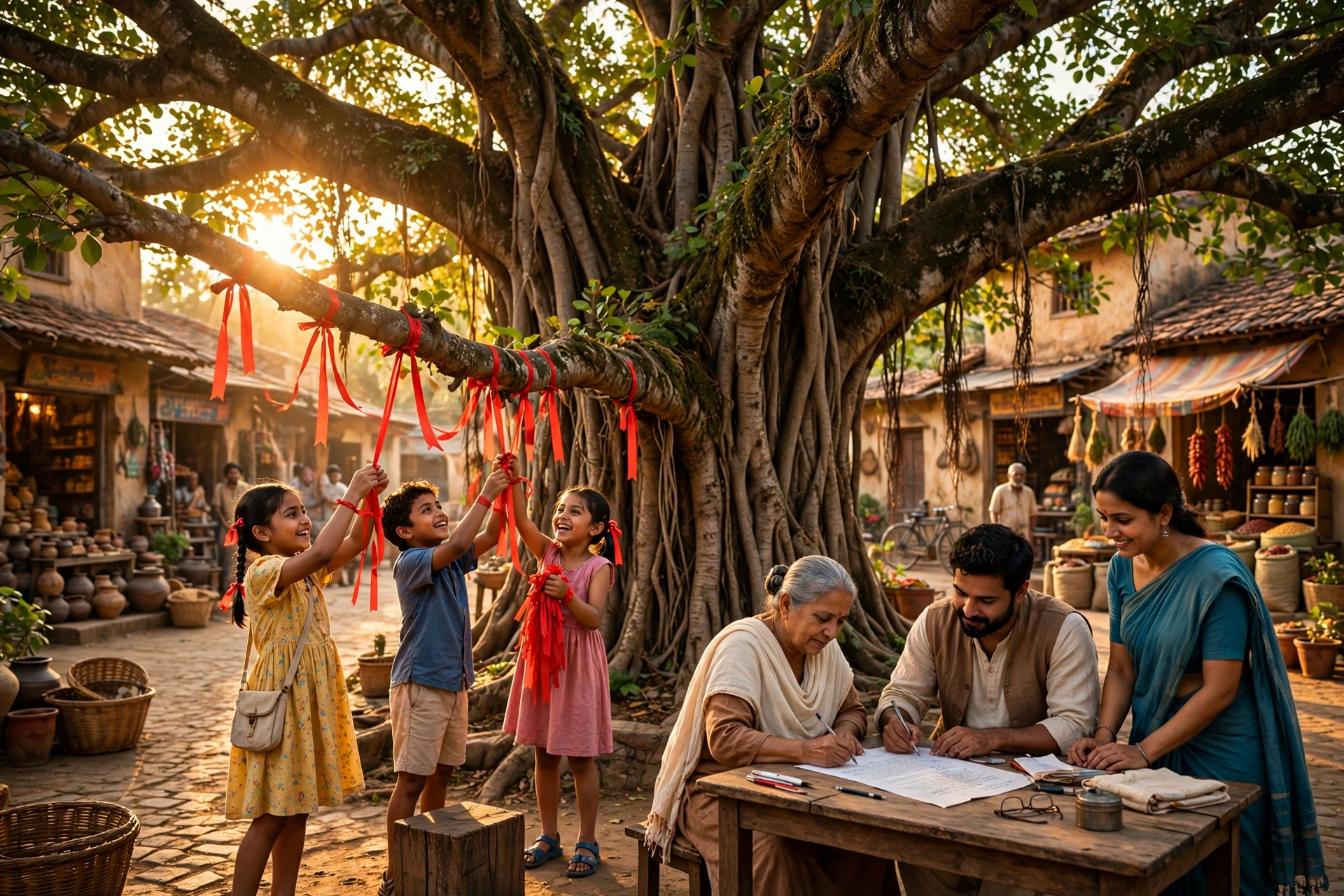
Then she did something braver. At break time, she stood on the low wall beside the school gate and told her classmates what was happening. Some of them laughed, because twelve-year-olds are not supposed to fight engineers. But some of them listened, and by lunch, eight children were walking with her to the square. Meera had brought a bundle of red ribbons from her grandmother's sewing box, and she tied the first one to a low branch herself, right above the painted cross. "The red cross says the tree will die," she told her friends. "Let us cover it with red ribbons that say it will live." One by one, the children tied ribbons to the branches until the lower limbs fluttered with colour, and the tree that had looked condemned in the morning looked, by evening, like it was dressed for a festival.
The ribbons did what no argument could have done: they made people stop and look. The shopkeeper, Rahim, came out of his shop and asked what the children were doing. When Meera explained, he stood for a long time staring at the tree, and then he said, slowly, "My father opened this shop because of the shade. People stopped here because of the tree." He went inside and came back with a chair, and sat beneath the branches for the rest of the evening, as if he were keeping guard. The next morning, the old men who played cards moved their game back to the stone bench for the first time in months, and the women brought their baskets of peas and sat in a circle, shelling and talking, the way they used to. The tree, which had been quietly fading into the background of everyone's busy lives, was suddenly the centre of the village again.
Meera's teacher, Mr. Irfan, heard about the ribbons and came to see for himself. He was a quiet man with glasses who rarely raised his voice, but when he read Meera's letter — she had shown him a copy, shyly, after class — he did something she had not expected. He helped her write a petition. Together they went from house to house in the evenings, Meera carrying the paper and Mr. Irfan explaining, in his calm, clear way, that the road could be bent slightly around the square instead of driven straight through it. The village headman signed. The shopkeepers signed. The mothers signed, some with their names and some with thumbprints pressed in ink. Even the bus driver signed, saying the shade was the only thing that made the midday stop bearable. By the end of the week, the petition carried two hundred and fourteen names — nearly every household in the village.
Still, the engineers returned. This time they brought a truck and a long saw, and the sound of the engine starting up in the square made Meera's stomach drop. She ran — she ran faster than she had ever run in her life — to the square, and stood in front of the trunk with her arms spread wide, her school satchel still on her back. For a terrible moment, she thought she was alone. Then she heard footsteps behind her. Her grandmother came first, leaning on her walking stick, her grey hair coming loose from its braid. Then Mr. Irfan. Then Rahim the shopkeeper, and the old card players, and the women with their baskets, and all eight of her classmates, and then more people, until a whole crowd stood in a ring around the tree, holding hands, saying nothing at all. The engineer switched off the saw. He looked at the crowd, at the ribbons, at the little girl standing in front of the trunk with tears running down her face and her arms still spread wide, and he did something no one expected: he sat down on the stone bench and listened.
Meera did not shout. She did not beg. She simply told him, in a voice that shook only a little, everything the tree was: the weddings celebrated beneath it, the funerals mourned beneath it, the children who had learned their first letters in its shade, the travellers who had rested under it on hot days and gone on their way blessed by its coolness. Her grandmother spoke too, her voice thin but steady, about arriving in the village sixty years ago and being welcomed under those same branches. The engineer listened to all of it, and then he looked up at the great green roof above them, and he said, "I will take this to my seniors. No saw will touch this tree until they have read your petition."
Two weeks passed, and the village waited. The ribbons faded a little in the sun, and Meera replaced them with fresh ones. Then one morning a letter arrived at the school, addressed to Meera herself, and Mr. Irfan read it aloud in the assembly so the whole school could hear. The road, the letter said, would bend around the square. The banyan tree would stay. In fact, the district had decided to build a small paved circle around it, with benches, so that travellers on the new road could stop and rest in its shade. Meera cried in front of the whole school and did not care one bit who saw her.
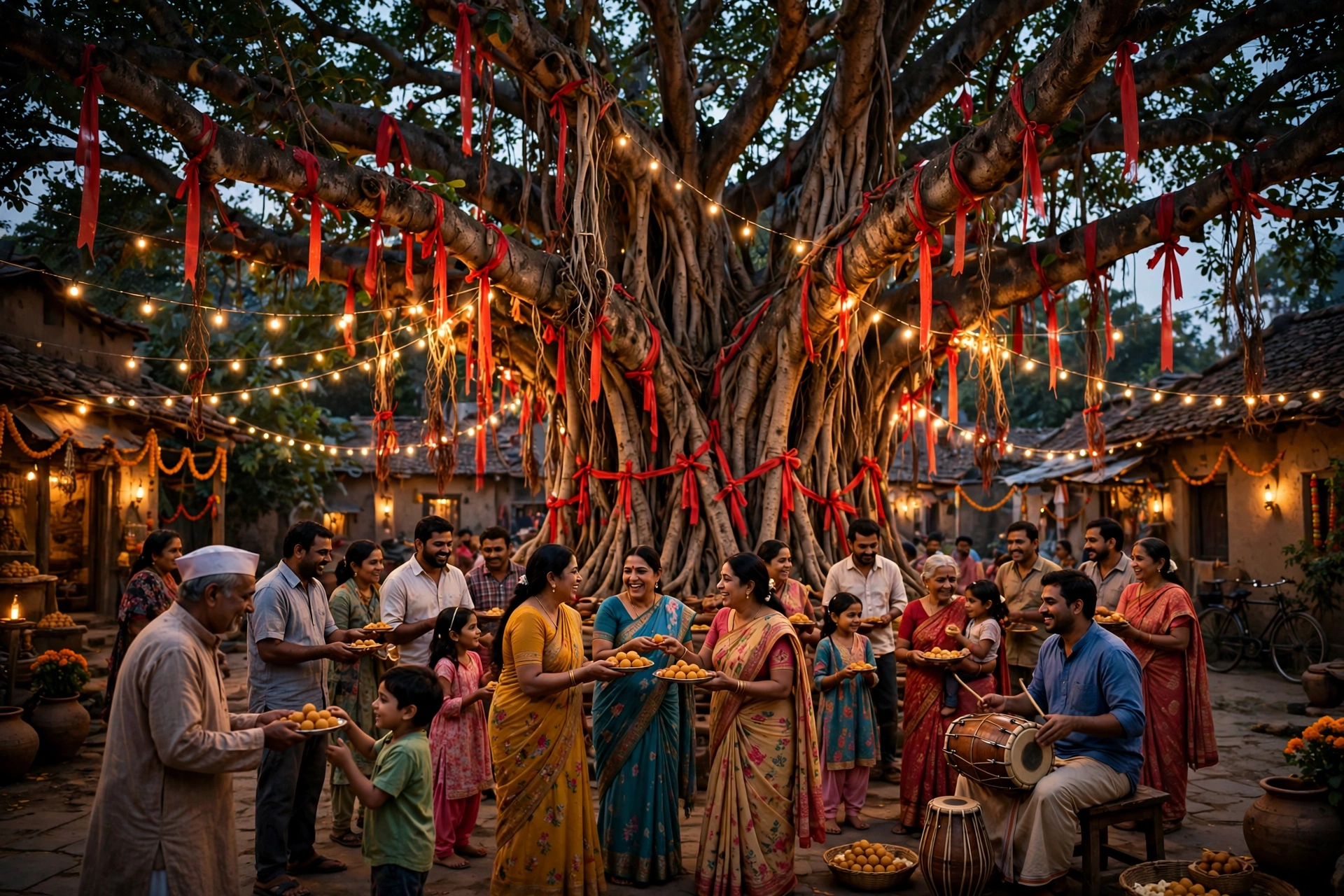
That evening, the village celebrated under the tree the way it had not celebrated in years. Someone brought sweets, someone brought a drum, and Meera's grandmother sat on her woven mat in the place of honour and told the story of the tree all over again — only this time, she added a new ending. She told of a twelve-year-old girl who had stood in front of a saw with nothing but her arms and her love, and how a whole village had found its voice standing behind her. The children listened, wide-eyed, and when the story was finished, the oldest man in the village stood up and said something Meera would never forget. "We thought the tree belonged to the past," he said. "This child has taught us that it belongs to the future too."
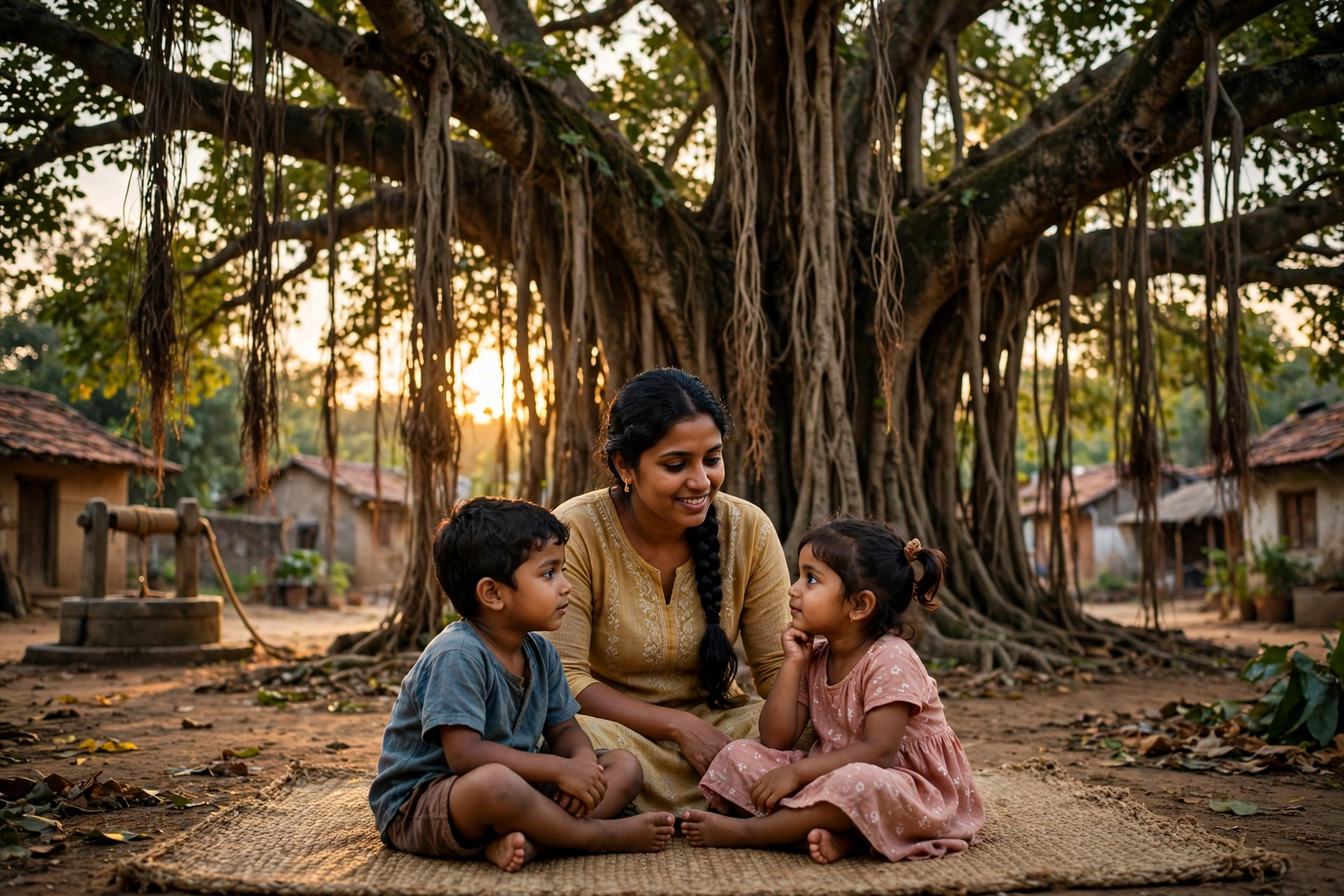
Years later, when Meera was grown and had children of her own, the banyan was still there, its branches wider than ever, its shade deeper and cooler. Travellers on the new road stopped in the little paved circle, read the small brass plaque that said the tree was protected by order of the district, and rested beneath it, grateful. And on warm evenings, Meera would bring her own children to the square, spread a mat beneath the lowest branch, and tell them stories — the old ones her grandmother had told her, and one new one, about a girl who refused to let a red cross be the last word.
For the tree had taught her the truest lesson of her life: that loving something is not a feeling you keep quietly inside you. It is something you stand up for, out loud, even when your voice shakes. A single person can seem very small against a road, a saw, and a government order. But a small voice, spoken with love and joined by others, can bend even a road. And what is saved by love is never truly lost — it grows, season after season, and shelters everyone who comes after.