On the morning Razia Bibi forgot her own daughter's name, a seventeen-year-old girl knocked on her door carrying a notebook, a pen, and a promise she did not yet know how to keep.
Razia Bibi was seventy-four and lived alone in the last house on Jasmine Lane, a small house with a blue door and a courtyard where a mango tree her husband had planted forty years ago still dropped its fruit every summer. She had been a schoolteacher once, and the whole lane still called her Bibi Jee out of respect. But lately, respect had started to mix with worry. She put sugar in the teapot twice and forgot the tea. She went to the market for onions and came home with lemons, confused about why she had gone out at all. One evening, she stood at her own gate for a long time, staring at her own house, as if she were trying to remember whether she lived there.
Her daughter, Sana, lived in the city, four hours away by bus. She called every Sunday, her voice always hurried. Razia always answered yes to everything, because she did not want to be a burden. She never told Sana that some mornings she woke up and could not remember what day it was, or that she had started writing her own name on a piece of paper and keeping it in her pocket, just in case she needed it.
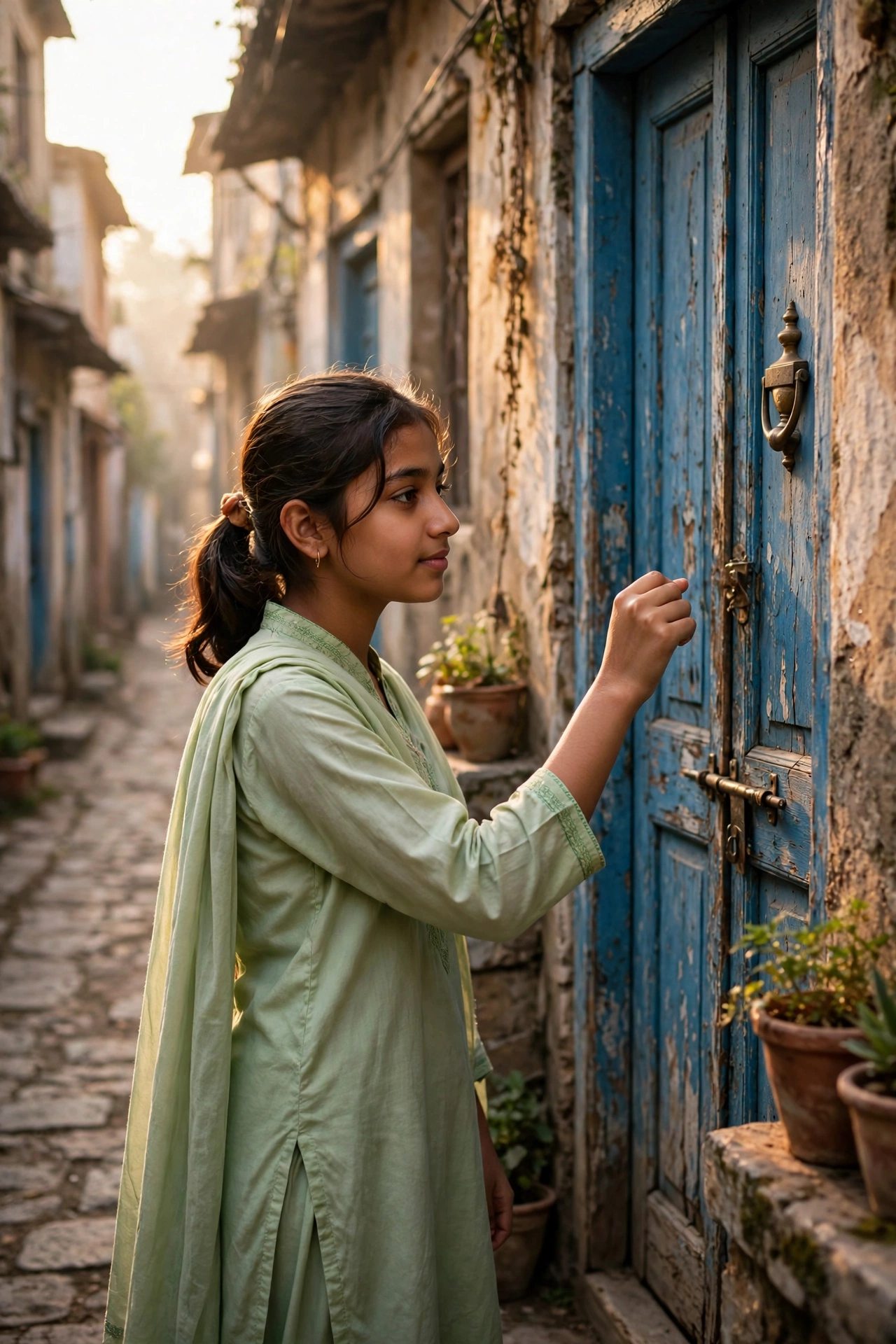
Mahnoor lived two doors down. She was seventeen, tall and quiet, her hair always tied back, her schoolbooks always under her arm. She had finished school that spring and was waiting for her college admission letter, and the waiting had left her restless. She had loved Bibi Jee since she was seven, when she fell off her bicycle in front of Razia's house and Razia carried her inside, washed the gravel out of her knee, and gave her a slice of mango with salt on it. "Cry if you need to," Razia had said, "but eat first. Sweet things make brave hearts." Mahnoor never forgot that afternoon.
So when Mahnoor saw Razia standing at her gate that morning, staring at her own house like a stranger, something in her chest tightened. She went to her room, took out a fresh notebook with a red cover, picked up her best pen, and walked the short distance to the blue door.
Razia opened it slowly. She looked at Mahnoor for a long moment, and for one terrible second, Mahnoor was sure she did not know who she was.
"Assalam-o-Alaikum, Bibi Jee," Mahnoor said, keeping her voice steady. "It is me, Mahnoor. From two doors down. I have come to sit with you for a little while, if you do not mind."
Razia's face cleared like sky after rain. "Mahnoor," she said. "Of course. Come in, child. I was just about to make tea, but I cannot remember if I already made it."
"You did not," Mahnoor said gently, though she had no idea whether that was true. "Let us make it together."
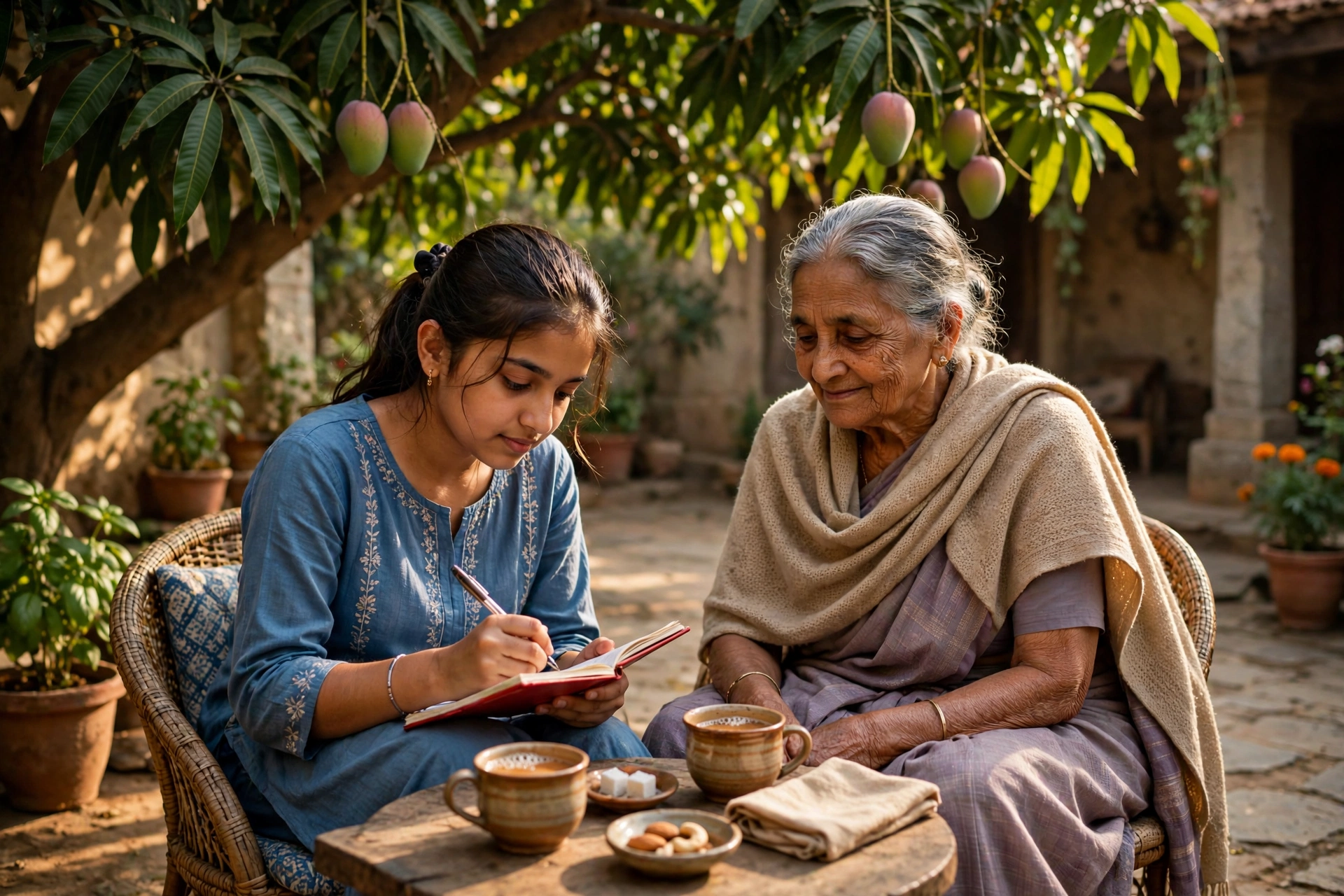
They sat under the mango tree, and Mahnoor poured the tea, and for a while they talked about nothing — the weather, the price of tomatoes. Then, carefully, as if she were opening a door that might be locked, Mahnoor said, "Bibi Jee, will you tell me a story about your life? I want to write it down."
Razia laughed, a small, surprised laugh. "My life? Child, my life is nothing special. I was a teacher. I married a good man. I raised a daughter. That is all."
"Tell me about the day you got married," Mahnoor said, and opened her notebook.
And Razia told her. She told her about the red dress her mother had stitched for her, about the henna that stained her hands for two weeks, about her husband, Bashir, who had been so nervous that he put his shoes on the wrong feet and walked into his own wedding like a man wading through a river. As she talked, her eyes grew brighter and the words came without stumbling. Mahnoor wrote it all down, and when she read it back, Razia pressed her hand to her chest and said, "Yes. That is exactly how it was. How did you know?"
"I did not know," Mahnoor said. "You told me. I only wrote it down."
The next afternoon, she knocked on the blue door again. "Tell me about the day Sana was born," she said.
Razia's face lit up like a lamp being switched on. She told Mahnoor about the long night, the monsoon rain hammering on the roof, the midwife saying, "It is a girl, and she has her father's eyes," and Bashir crying in the doorway because he had never held anything so small and so perfect. Mahnoor wrote it all down, and when she read it back, Razia wept — not from sadness, but from the wonder of hearing her own life returned to her, whole and clear again.
Day after day, Mahnoor came. She asked about the mango tree and learned that Bashir had planted it the week Sana took her first steps, so the tree and the girl had grown up together. She asked about the flood year and about Bashir's favourite lamb curry, and Razia recited its recipe as precisely as if she were reading it from a book. Every afternoon, Mahnoor read back yesterday's pages before asking for a new story, so the memories stayed warm.
The notebook filled up. "The Wedding." "The Day Sana Was Born." "The Mango Tree." "The Flood Year." "Bashir's Lamb Curry." "The School Where I Taught." And the hardest one of all: "The Winter Bashir Died." Razia told it slowly, her hands trembling around her teacup, about waking beside a man who had loved her for forty-one years and was suddenly gone. When Mahnoor read it back, Razia took her hand and said, "Thank you, child. I thought I had lost that day. You gave it back to me."
But memories, like old lamps, flicker. There were bad days now, days when Razia could not remember Mahnoor's name, days when she set a second plate at the table for Bashir. On those days, Mahnoor did not correct her. She simply sat beside her, opened the red notebook, and read. She read about the wedding and the wrong shoes, about the baby with her father's eyes, and as she read, Razia's face would slowly soften, and sometimes she would say, "That sounds like a good life. Was it mine?"
"Yes, Bibi Jee," Mahnoor would say. "It was yours. And it still is."
Then one Sunday, Sana called, and her voice was different — not hurried this time, but heavy.
"Ammi, I am coming on Friday. I have found a good care home in the city. You will have nurses and doctors. You cannot live alone anymore. You forgot my name, Ammi. I cannot sleep at night thinking of you alone in that house."
After the call, Razia sat in the courtyard for a long time without speaking. Finally she said, "If I leave this house, I will forget everything. The walls remember for me. The tree remembers for me. In a strange room, I will be nobody."
Mahnoor held her hand. "Then we will make sure the remembering travels with you," she said.
The next morning, Razia woke up and did not know Mahnoor at all. She opened the blue door to a girl she had never seen, and her eyes were frightened, and she said, "Who are you? What do you want?"
It was the worst moment of Mahnoor's life. For one heartbeat, she wanted to run home and never come back. But she looked down at the red notebook, sat down on the step, opened it, and began to read.
"I was married in a red dress my mother stitched for me," she read aloud, "and my husband put his shoes on the wrong feet and walked into his own wedding like a man wading through a river."
Razia stood in the doorway, listening. And slowly, like the sun coming up over a wall, recognition dawned on her face. "That is my story," she whispered. "How do you know my story?"
"Because you told me," Mahnoor said, her voice shaking. "And I wrote it down, so that even on the days you forget, the story remembers you."
Razia sat beside her, and Mahnoor read on, and by the time she reached "The Day Sana Was Born," Razia was holding her hand, and the fear was gone from her eyes.
"Stay," Razia said. "Please stay. You are my memory now."
On Friday, Sana arrived, a tired-looking woman in her forties with her father's eyes, carrying a suitcase for her mother and a heart full of guilt. She had already decided everything: she would take Razia to the city.
But in the courtyard, she found her mother sitting under the mango tree with a teenage girl she did not know, the girl reading aloud from a red notebook, her mother laughing — really laughing, the way Sana had not heard her laugh in years.
"Ammi?" Sana said.
Razia looked up, and for a moment Sana's heart stopped, because she was sure her mother would not know her. Then Razia smiled and said, "Sana. My daughter. You came on Friday, like you said. This is Mahnoor. She has been keeping my life for me."
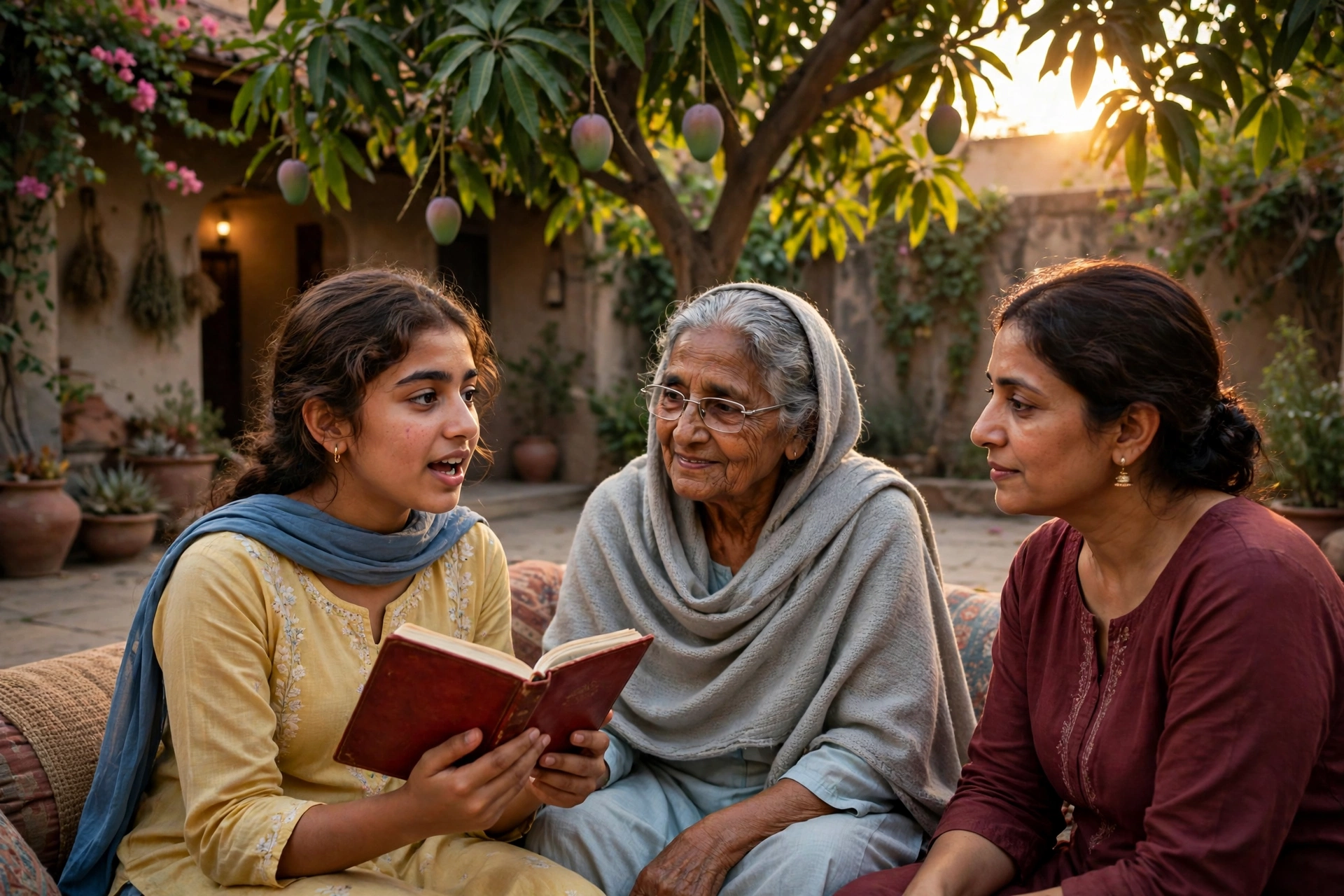
Mahnoor stood up and held out the notebook. Sana took it and began to read. She read about the wedding and the wrong shoes, about the monsoon night she was born, about the lamb curry with the secret pinch of sugar — a recipe Sana had been trying to get right for twenty years and had never once managed. And as she read, the tears came, because there it all was, her whole childhood, her parents' whole love story, written down in a young girl's careful handwriting, saved from disappearing.
She sat under the mango tree and read the whole notebook, cover to cover, while the afternoon turned to gold. When she finished, she closed it gently, looked at her mother, then at Mahnoor, and said the words that changed everything.
"Ammi is not going anywhere."
That evening, they made a new plan. Razia would stay in her house, under her mango tree. Sana would come home one weekend every month, call every evening, and read a page of the notebook to her mother whenever she sounded lost. And Mahnoor would keep coming every afternoon, because a memory needs a keeper, and she had become one.
It was not a perfect solution. There are no perfect solutions when someone you love is slowly forgetting. Razia still had bad days. But now, on those days, someone opened the red notebook and read — and the remembering became the story instead of the forgetting.
One afternoon, near the end of summer, Razia sat under the mango tree with the first notebook in her lap, running her fingers over the pages. She looked up at Mahnoor and said, very clearly, "I do not know if I will remember you tomorrow, child. But I want you to know that today, I am happy. A person whose life is written down can never truly be lost, because someone, somewhere, is holding the pages."
Mahnoor smiled, and she took out her pen, and she wrote that down too.
That is what a keeper of memories does. She writes it all down, so that when the forgetting comes, as it comes for all of us one day, the story does not end. It waits in a red notebook on a shelf by a blue door, for someone kind enough to open it and read it aloud. So if someone you love is starting to forget, do not turn away. Sit beside them. Write it down. Read it back. In saving someone else's story, you become part of it forever.