The telephone rang at eleven o'clock at night, and Dr. Ilyas knew before he picked it up that it would not be good news. In his small flat in the city, the sound cut through the quiet like a stone through still water. He had been a doctor for forty years, and he had learned that the calls which come late are never about small things. His hand shook a little as he reached for the receiver, not from fear, but from a habit his body had never forgotten: the habit of being needed.
"Doctor Sahab, forgive me for calling so late," said a trembling voice he recognised at once. It was Fatima, from the mountain village of Barial, where he had worked for most of his life. "It is Ayaan. My boy is burning with fever, and he cannot breathe properly. The road is closed with snow. The new doctor left last month, and there is no one here. Please, Doctor Sahab, tell me what to do."
Ilyas closed his eyes. He could see Ayaan clearly in his mind: a thin nine-year-old boy with bright eyes and a laugh that carried across the village square, a boy who had once brought him a handful of wild apricots after Ilyas had bandaged his scraped knee. He could also see the road to Barial, twelve kilometres of narrow mountain track that twisted between pine trees and steep drops, a road that became dangerous even in daylight when the snow came down hard. He had left that village only three months earlier, after his retirement, to live with his son in the city. He had said his goodbyes. He had handed over his clinic keys. He had promised his son he would rest.
"Keep him warm, Fatima," he said quietly, his voice already steadying into the calm tone he had used in a thousand emergencies. "Do not give him cold water. Put a damp cloth on his forehead. I am coming."
He did not stop to argue with himself. He did not call his son to ask permission. He put on his old brown coat, the one with the deep pockets that still smelled faintly of medicine, and he packed his leather bag: a stethoscope, a thermometer, a few small bottles, clean bandages, and the little torch he had carried for decades. His son, woken by the noise, stood in the doorway in disbelief.
"Abba, are you out of your mind?" his son cried. "It is a storm out there. The roads are closed. You are sixty-eight years old. You retired. This is not your responsibility anymore."
Ilyas looked at his son and smiled, the same gentle smile he had given to frightened parents for forty years. "My son," he said, "retirement took my clinic from me. It did not take my duty. If a child is struggling to breathe tonight, and I stay warm in this flat while knowing how to help him, then what was all those forty years for?"
The taxi driver refused to take him past the edge of the town. The snow was falling so thickly that the headlights could barely cut through it, and the road ahead had already disappeared under a white blanket. "I cannot go further, Uncle," the driver said, shaking his head. "You will not find a single vehicle on that mountain road tonight. Go back home. It is not safe."
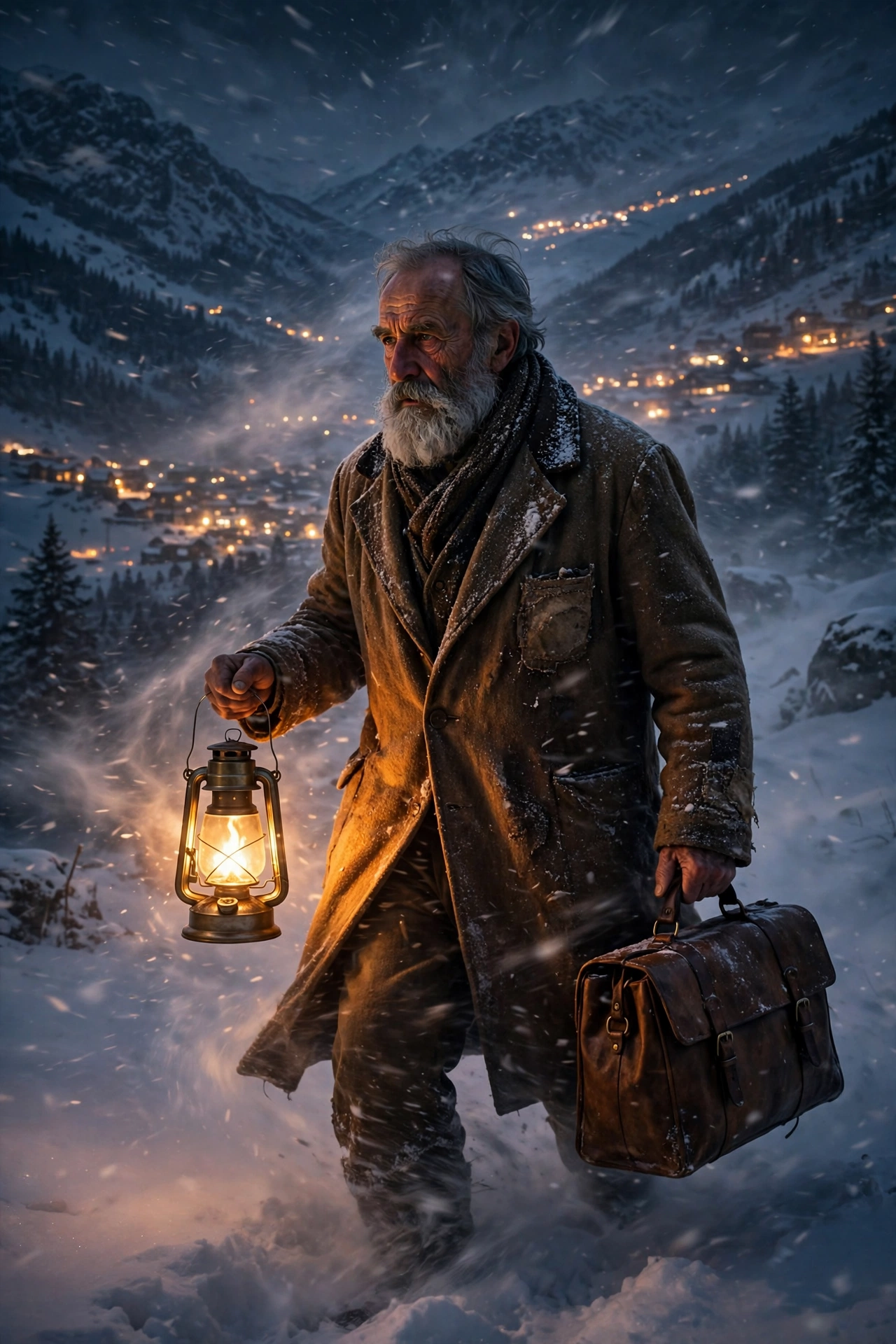
Ilyas thanked him, paid him, and began to walk. The wind struck his face like cold water, and within minutes his coat was heavy with snow. The path rose steeply, and every step sank into drifts that reached his ankles, then his knees. Twice he slipped on hidden ice and caught himself against a pine trunk, his breath coming in short, painful gasps. He was not a young man anymore. His knees ached, his chest felt tight, and the cold crept through his coat as if it were made of paper. More than once, a small voice in his head whispered that he should turn back, that he had already done enough in his life, that no one would blame an old man for staying home on such a night.
But then he thought of Ayaan's breathing, fast and shallow, and of Fatima's voice breaking on the telephone, and he kept walking. He thought of all the nights he had walked this same road in his younger days, carrying the same bag, answering the same kind of call.
Halfway up the mountain, the storm grew worse. The wind howled through the pines, and the lantern in his hand flickered and nearly went out. Ilyas stopped beneath a large pine tree, cupped the lantern with both hands, and waited for his breathing to settle. His fingers were numb, and he could no longer feel his toes. He thought about turning back for the last time, and in that moment he remembered something his own teacher, an old village doctor, had told him when he was a young man full of fear on his first night call. "A doctor is not measured by how many patients he cures in a comfortable clinic," the old man had said. "He is measured by the one patient he refuses to abandon when it would be easy to stay away." Ilyas had never forgotten those words. He shielded the flame, tightened his scarf, and walked on into the white darkness.
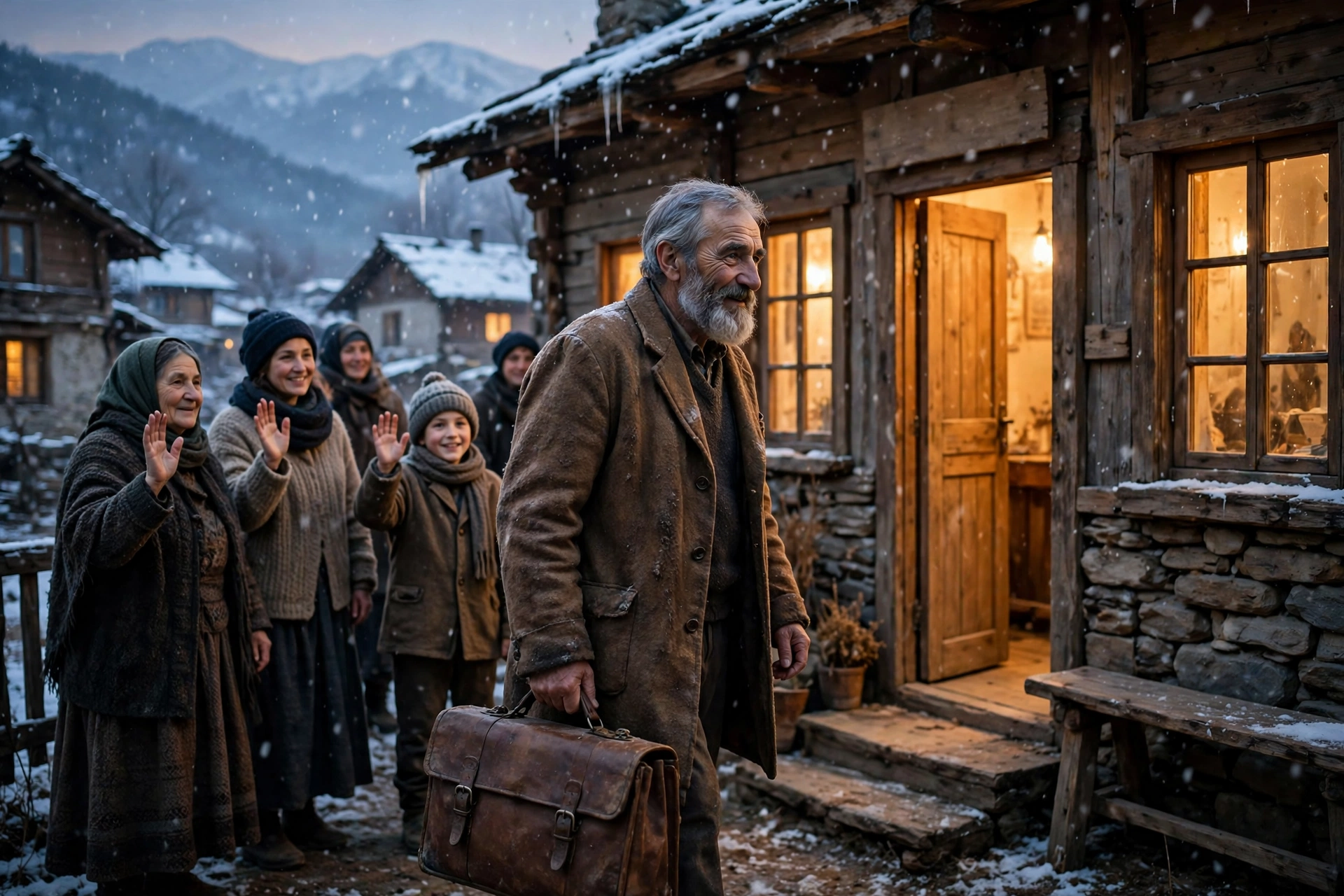
It was past two in the morning when he finally saw the faint lights of Barial through the snow. His legs were trembling so badly that he had to lean on a stone wall to stay upright, but he did not stop. The village dogs began to bark as he entered the narrow lane, and a door opened. It was old Karim, the shopkeeper, holding a lamp. "Dr. Ilyas!" he cried, his eyes wide with wonder. "Is it really you? In this storm?" Within minutes, word spread through the sleeping village like a small fire: the doctor had come back. Doors opened. People wrapped in shawls stepped out into the snow, staring at the old man who had walked twelve kilometres through a blizzard for one child.
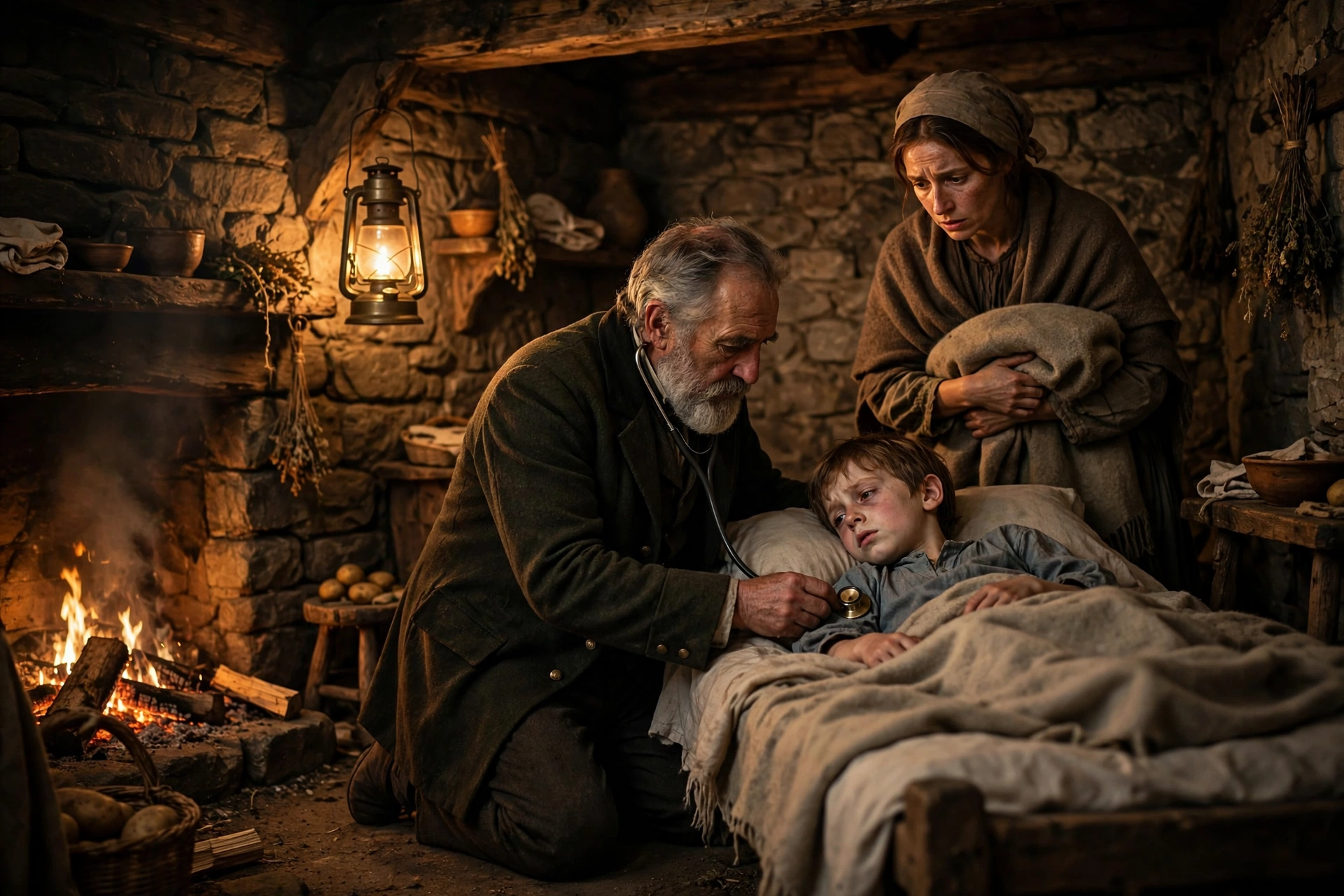
Fatima was waiting at her door, tears freezing on her cheeks. She took his snow-covered hands in hers and could not speak. Inside the small stone cottage, Ayaan lay on a thin mattress near the fire, his face flushed, his chest rising and falling too fast, his small body shaking with every breath. Ilyas knelt beside him, his old knees protesting, and placed a gentle hand on the boy's forehead. It was burning hot. He listened to the boy's chest with his stethoscope, and his heart sank: the rattling sound he heard was the sound of pneumonia, the illness he had feared. But fear was not something he allowed to stay long. He opened his bag with steady hands, gave the boy the medicine he had brought, wrapped him warmly, and showed Fatima how to sit him up so he could breathe more easily. Then he stayed. He stayed through the rest of that long night, wiping the boy's forehead, checking his breathing every few minutes, whispering to him softly when he stirred in his sleep.
By dawn, the storm had eased, and Ayaan's fever had begun to break. His breathing was slower, deeper, calmer. When he opened his eyes and saw the old doctor sitting beside him, he smiled weakly and whispered, "Doctor Uncle, did you walk all the way here for me?" Ilyas took the boy's small hand in his own cold, wrinkled one and said, "I would walk much further than that for you, my boy. That is what doctors are for."
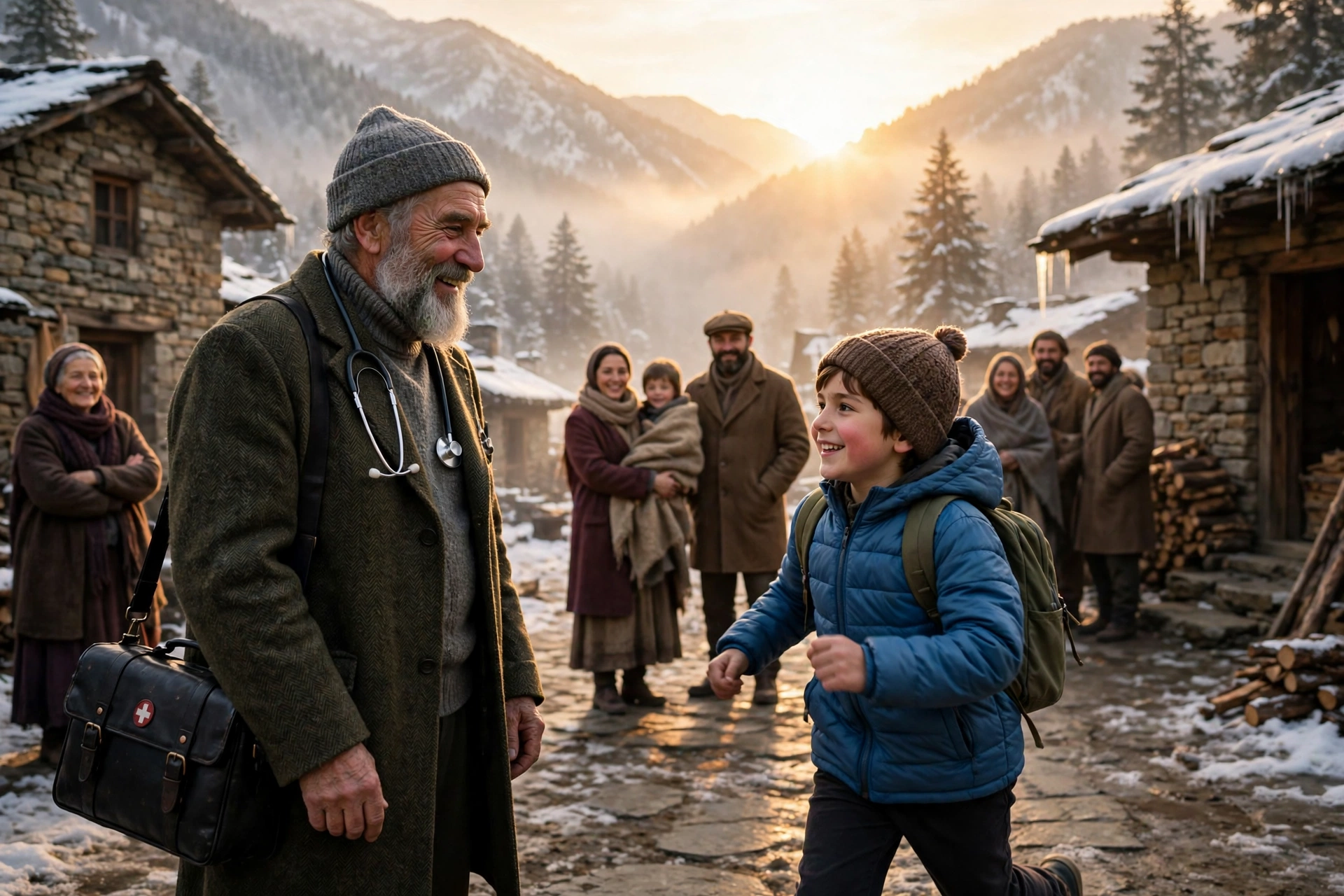
News of that night travelled faster than the snowplough that finally cleared the road the next day. The villagers came to Fatima's cottage one by one, not with gifts, because they had little to give, but with gratitude: a loaf of fresh bread, a jar of honey, a pair of woollen socks knitted in a hurry. Old Karim wiped his eyes and said what everyone was thinking. "We thought we had lost our doctor when he retired. Last night we learned that we had not lost him at all. He was only waiting to be needed again."
But the story did not end with one boy getting better, because kindness, once it is seen clearly, has a way of spreading. The young doctor who had left Barial a month earlier heard about that night from a relative, and he felt ashamed. He had left because the village clinic was old, the pay was small, and the winters were hard. When he heard that a sixty-eight-year-old retired doctor had walked through a blizzard for a single patient, he packed his bags and returned. "If he can do that at his age," the young doctor told the village elders, "then I have no excuse at mine." Together, the old doctor and the young doctor repaired the clinic, restocked its shelves, and made a promise to the village: Barial would never again be left without a doctor, not in summer, and not in the deepest snow of winter.
Ilyas did not return to the city flat that winter. He stayed in the small room above the clinic, the same room he had lived in for so many years, and every morning he opened the clinic doors before sunrise, just as he always had. His son visited him at first with worry in his eyes, afraid his father was working too hard. But when he saw the old man's face, brighter and more peaceful than it had been in months, he understood something important. His father had not been tired from working too hard. He had been tired from feeling useless. Purpose, his son realised, is not a burden that wears an old person down. It is the very thing that keeps them alive.
Years later, when Ayaan had grown into a tall young man, he would often tell the story of that stormy night to anyone who would listen. He would describe the old doctor arriving at his door covered in snow, like a man carved out of winter itself, and he would always finish with the same words. "That night, I learned that heroes do not always wear uniforms or carry great weapons. Sometimes they carry an old leather bag, walk through a storm, and sit beside your bed until morning." Ayaan went on to study medicine himself, and when he finished his training, he chose to work in a small mountain village, because he wanted to be the kind of doctor who would walk back through any storm for any child.
Dr. Ilyas never thought of himself as a hero. Whenever people thanked him, he would shake his head and say the same simple thing. "I only did what I promised to do on the day I became a doctor. A promise does not end when you grow old. It ends only when you stop keeping it."
And in the village of Barial, long after the snow of that winter had melted, the people remembered the night their doctor came back, not because he had to, but because his heart would not let him stay away. They remembered it whenever someone needed help and it would have been easier to look away, and they chose, instead, to walk towards the person in need, no matter how hard the road, no matter how dark the night.