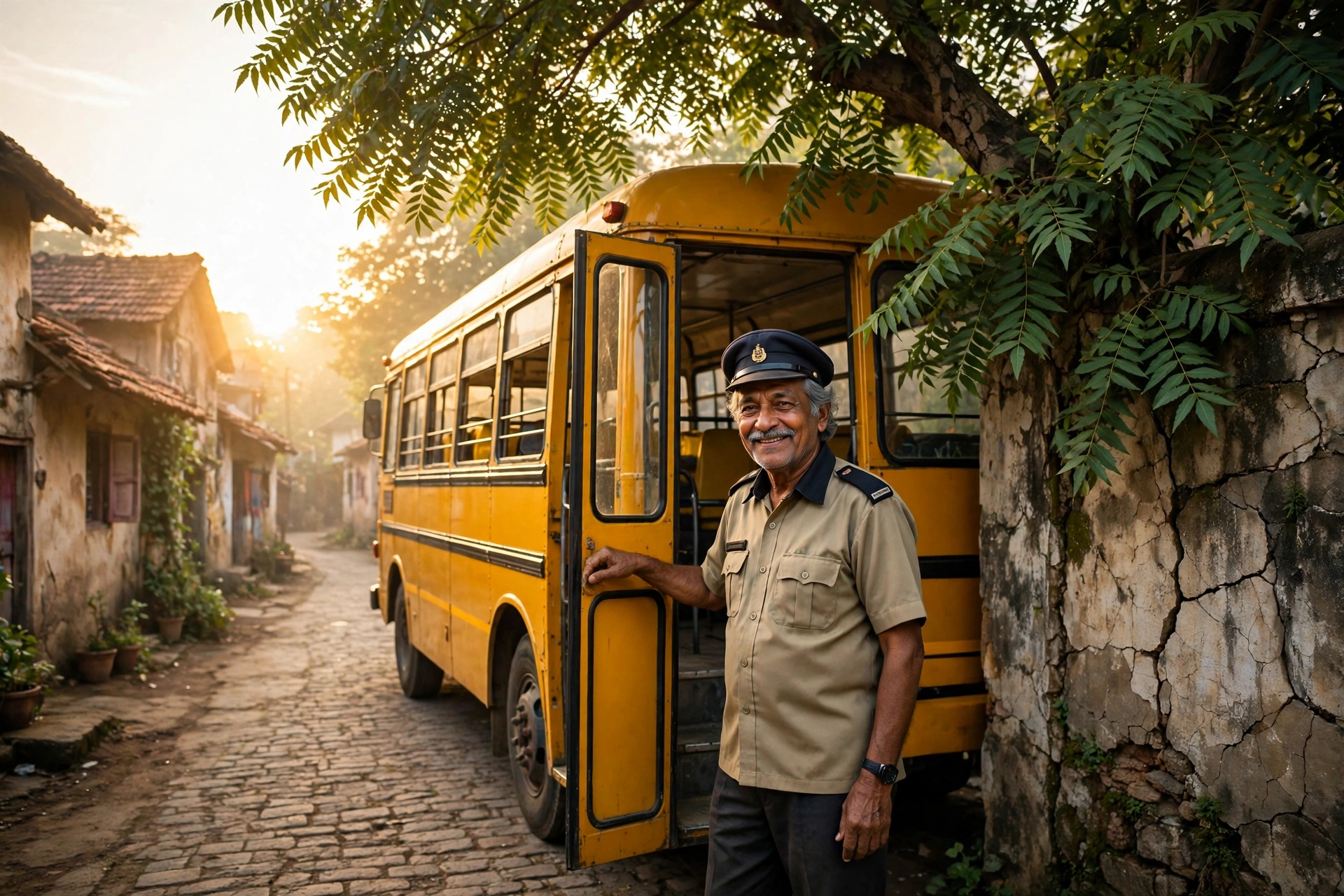
For twenty-three years, Rafiq had driven the same yellow school bus along the same route through the old part of town, and for twenty-three years he had never once been late. He woke at five, washed the windshield with a rag he kept folded in the glove box, checked the tyres the way his father had taught him — a firm kick, a careful look — and pulled out of the depot at exactly half past six, every single morning, rain or shine.
The children called him Uncle Rafiq, and the mothers at the stops trusted him the way you trust a man who has carried your most precious thing safely down the same road a thousand times. He knew every child by name. He knew who got carsick on the bend near the bakery and always sat them near the front. He knew which boy needed to be reminded to tie his shoelaces before he tripped on the steps, and which girl liked the window seat because she counted the pigeons on the rooftops as the bus rolled past.
But there was one stop where his perfect record quietly broke every single day, and everyone on the bus knew it, and nobody ever complained.
It was the last stop on the route, a narrow lane where an old neem tree leaned over a cracked wall, and the child who lived there was a small girl named Amna.
Amna was always late.
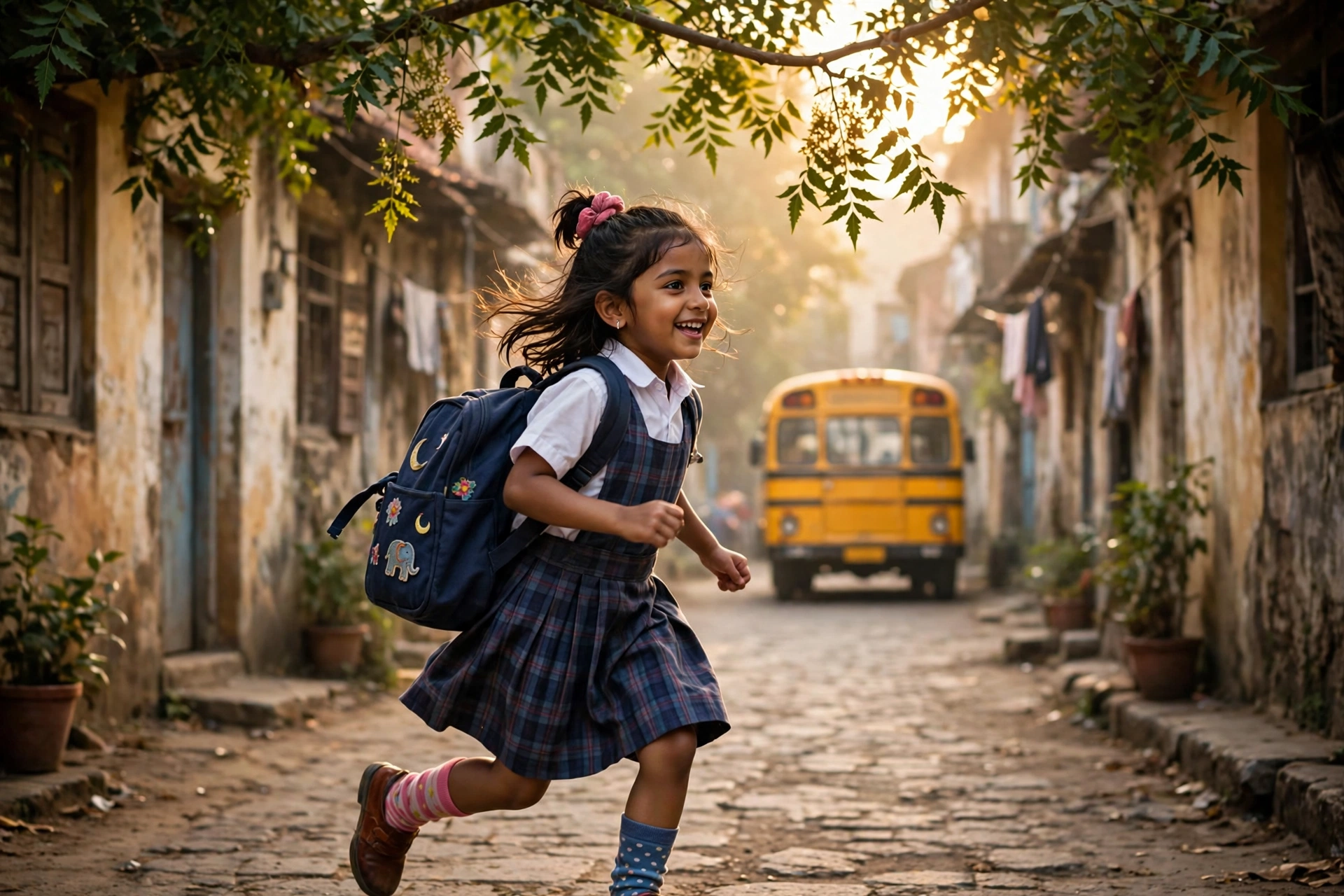
Not late by a minute or two, the way children sometimes are when a shoelace snaps or a schoolbag spills. Amna was late by five minutes, sometimes seven, sometimes ten, and she came running down the lane with her hair half-combed and her socks mismatched, clutching her bag to her chest, her breath coming in panicked little gasps, as if the whole world were chasing her.
The first week it happened, Rafiq did what any driver who prided himself on punctuality would do. He waited two minutes, checked his watch, sighed, and drove on — and watched in the mirror as the small girl came sprinting around the corner just as the bus turned away, her hand stretched out, her face crumpling. He told himself she would learn. Children learn quickly when a bus leaves without them. That was the rule of the road, and rules were rules.
The next morning, she was late again, and again he drove on. And again he saw her in the mirror, smaller and smaller, standing in the middle of the lane with her bag slipping off her shoulder, watching her classmates disappear around the corner.
On the third morning, something made him look a little longer. He saw what happened after the bus left. Amna did not go back inside. She stood there for a moment, wiping her eyes with her sleeve, and then she started walking — a long, lonely walk along the main road, her small legs carrying her toward a school that was forty minutes away on foot, past the lorries and the dust and the stray dogs, because her mother could not afford a rickshaw and there was no one else to take her.
Rafiq drove the rest of the route in silence that morning. The children sang their usual song, but he barely heard it. When he dropped them at the school gate and watched them spill out laughing, he kept looking for one small face among them, and it was not there. Amna arrived at school an hour later, her shoes dusty, her dress damp with sweat, her eyes red, and the teacher, who did not know about the bus, marked her late in the register and made her stand in the corner.
That evening, Rafiq did something he had never done in twenty-three years of driving. He parked the bus, walked to the narrow lane, and knocked on the door of the small house under the neem tree.
A tired-looking woman opened it, wiping her hands on her apron. Behind her, in the single small room, Amna sat on the floor doing her homework by the light of a single bulb, and beside her, on a thin mattress, lay an old man with a grey beard who could not move his legs.
"I am Rafiq," he said. "I drive the school bus."
The woman's face fell. "I know," she said quietly. "Amna told me the bus leaves without her. I am sorry. I try to get her ready on time, I truly do. But my father-in-law needs his medicine at dawn, and his breakfast, and his washing, and there is only me, and the mornings…" Her voice trailed off, and she looked down at her hands. "I tell her to run. She runs as fast as she can."
Rafiq looked past her at the old man on the mattress, who smiled at him with the patient smile of someone who has learned to wait for everything, and at Amna, who had looked up from her homework with wide, frightened eyes, certain she was about to be scolded.
"She is a good girl," Rafiq said gently. "She runs every morning. I have seen it in my mirror."
He went home that night and sat for a long time on his own doorstep, thinking. He thought about his father, who had driven a bus before him and had told him that a driver's job was not just to drive — it was to deliver every child safely, and safely meant all of them, not most of them. And he thought about the look on Amna's face in the mirror — not anger, not blame, just the quiet acceptance of a child who had already decided that the world would not wait for her.
The next morning, Rafiq pulled out of the depot at half past six, exactly on time, exactly as always. He drove the route the way he always did, stopping at every stop, calling every child by name. And when he reached the narrow lane under the neem tree, he stopped the bus, switched off the engine, folded his hands on the steering wheel, and waited.
The children on the bus giggled. "Uncle Rafiq, why are we stopping? She is not here yet!"
"We wait," he said simply. "That is what this stop is for."
Three minutes passed. Five. Seven. And then, around the corner, came the sound of small running feet, and Amna appeared, breathless, her hair half-combed, her socks mismatched, her bag bouncing against her back — and she stopped dead in the lane, staring at the yellow bus that was still there, waiting for her, as if she could not quite believe it.
"Quickly, quickly," Rafiq called, smiling, opening the door. "Your seat is getting cold."
She climbed aboard, and the whole bus cheered, and Amna laughed for the first time that any of them had ever heard her laugh — a bright, surprised sound, like a bird discovering it could sing.
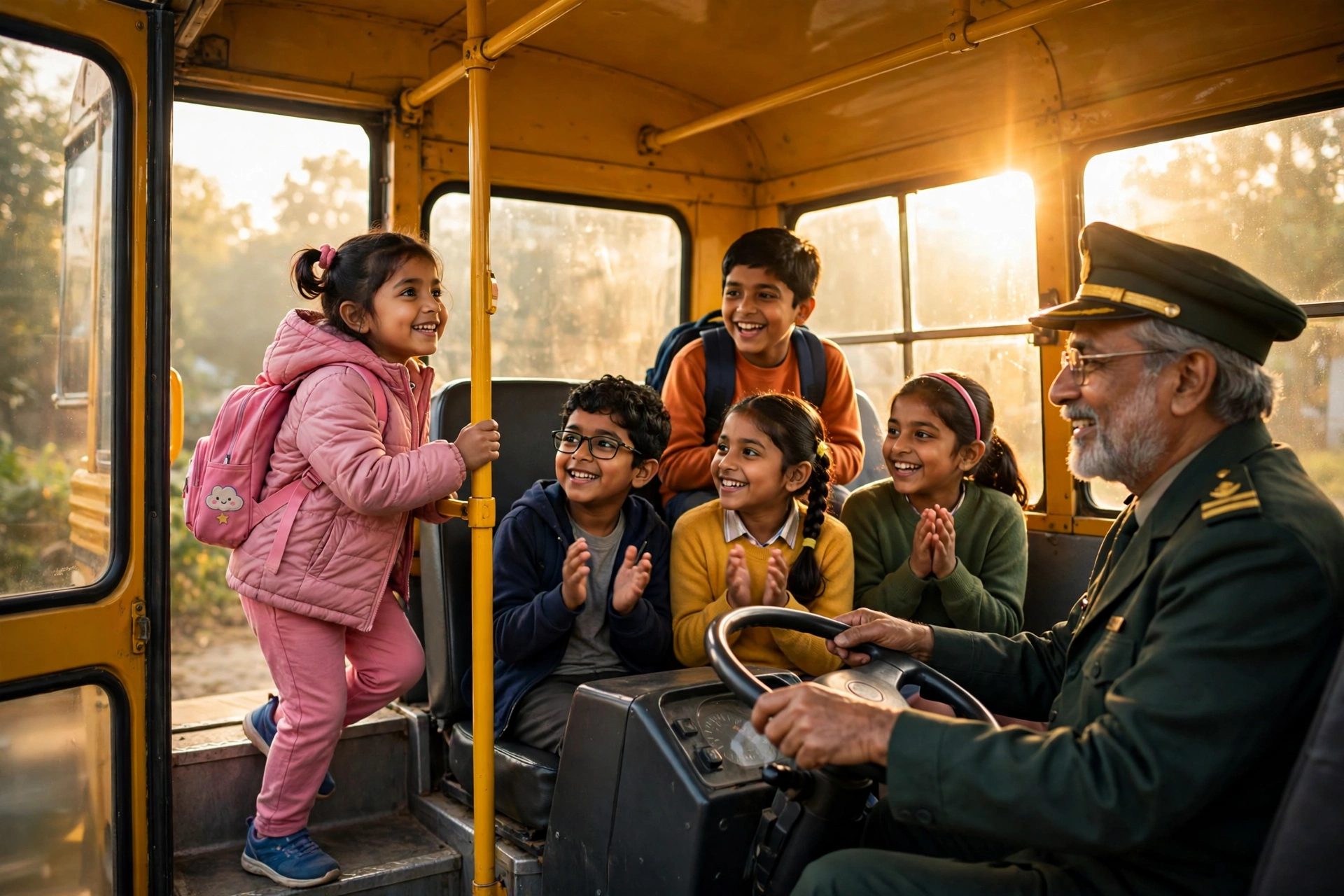
She sat by the window and pressed her face to the glass, and all the way to school she counted the pigeons on the rooftops, and when they arrived she was not late, and the teacher did not mark her name in the register, and nobody made her stand in the corner.
From that day on, the bus waited at the neem tree every morning. Five minutes, sometimes seven, sometimes ten. Rafiq adjusted his route in his head, took a shorter turn here, skipped a long red light there, and the bus still reached the school on time — because when a driver decides that no child gets left behind, the road somehow makes room.
The children began to look forward to the wait. It became their favourite part of the morning. They would press their faces to the windows and watch the lane, and the moment Amna appeared they would shout, "There she is! There she is!" and drum on the seats with excitement, as if they were waiting for a heroine to arrive. Some of them started saving her the window seat. One boy shared his lunch with her. A girl with ribbons in her hair taught her how to tie her shoelaces in a double knot so they would never come undone.
And Amna changed. The girl who used to run in panic began to run with joy, because now she was running toward something that would be there when she arrived. Her grades improved. She raised her hand in class. She started telling stories at lunchtime, and the other children gathered around to listen, because the girl who had once walked alone to school now had the whole bus as her friends.
Years passed the way years do on a school route — children grew taller, seats emptied and filled again, and one spring morning, Amna boarded the bus for the last time as a schoolgirl. She was taller now, her hair neatly combed, her bag slung over one shoulder, and in her hand she held a letter.
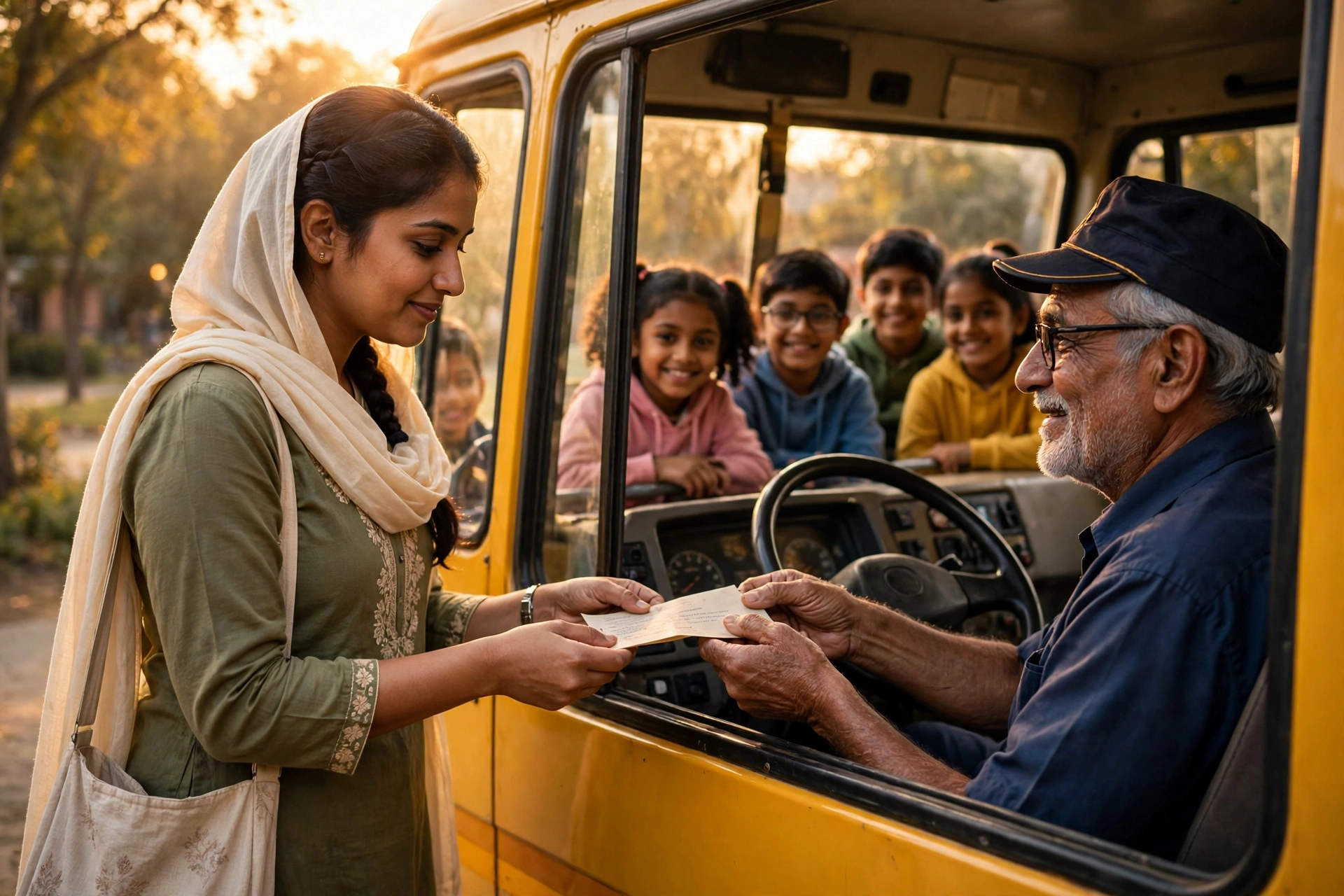
She walked to the front of the bus, where Rafiq sat with his hands on the steering wheel, older now, his hair more grey than black, and she handed him the letter with both hands, the way you hand someone something precious.
"I got a scholarship," she said, her voice trembling with pride. "To study to be a teacher. I leave next month. I wanted you to be the first to know."
Rafiq read the letter twice, and his eyes filled with tears, and he did not bother to hide them, because some tears are not sadness at all — they are a man's heart overflowing at the sight of a seed he once watered becoming a tree.
"You ran every morning," he said. "You never gave up. That is why you are here."
"No," Amna said, shaking her head. "I ran because someone waited. If the bus had left that day, I would have stopped running. I would have believed the world had no place for a girl like me. But you waited, and so I learned that I was worth waiting for."
She hugged him then, right there in the front of the bus, and every child on board cheered, and Rafiq, who had never once been late in twenty-three years, sat there for a full minute with his engine off, holding a letter in his hands, thinking that this — this single moment — was worth every minute he had ever waited.
Amna became a teacher, and then a headteacher, and years later she opened a small school of her own in the same old part of town, in a building with a neem tree outside its gate. And on the wall of her office, in a simple wooden frame, she hung a photograph of a yellow school bus, and beneath it she wrote the words she lived by every day: "No child gets left behind."
Rafiq drove his bus for ten more years after that, until his hands grew too stiff for the steering wheel and the depot gave him a small farewell party with cake and speeches. On his last day, he drove the route one final time, and at every stop the children waved, and at the narrow lane under the neem tree, he stopped the bus, switched off the engine, folded his hands on the steering wheel, and waited — out of habit, out of love, out of twenty-three years of knowing that some stops are not about the timetable at all.
And somewhere down the lane, a small child came running, breathless, hair half-combed, socks mismatched, and Rafiq smiled, opened the door, and said the words he had said a thousand times before: "Quickly, quickly. Your seat is getting cold."
Because kindness, he had learned, is not measured by how fast you arrive. It is measured by who you refuse to leave behind.