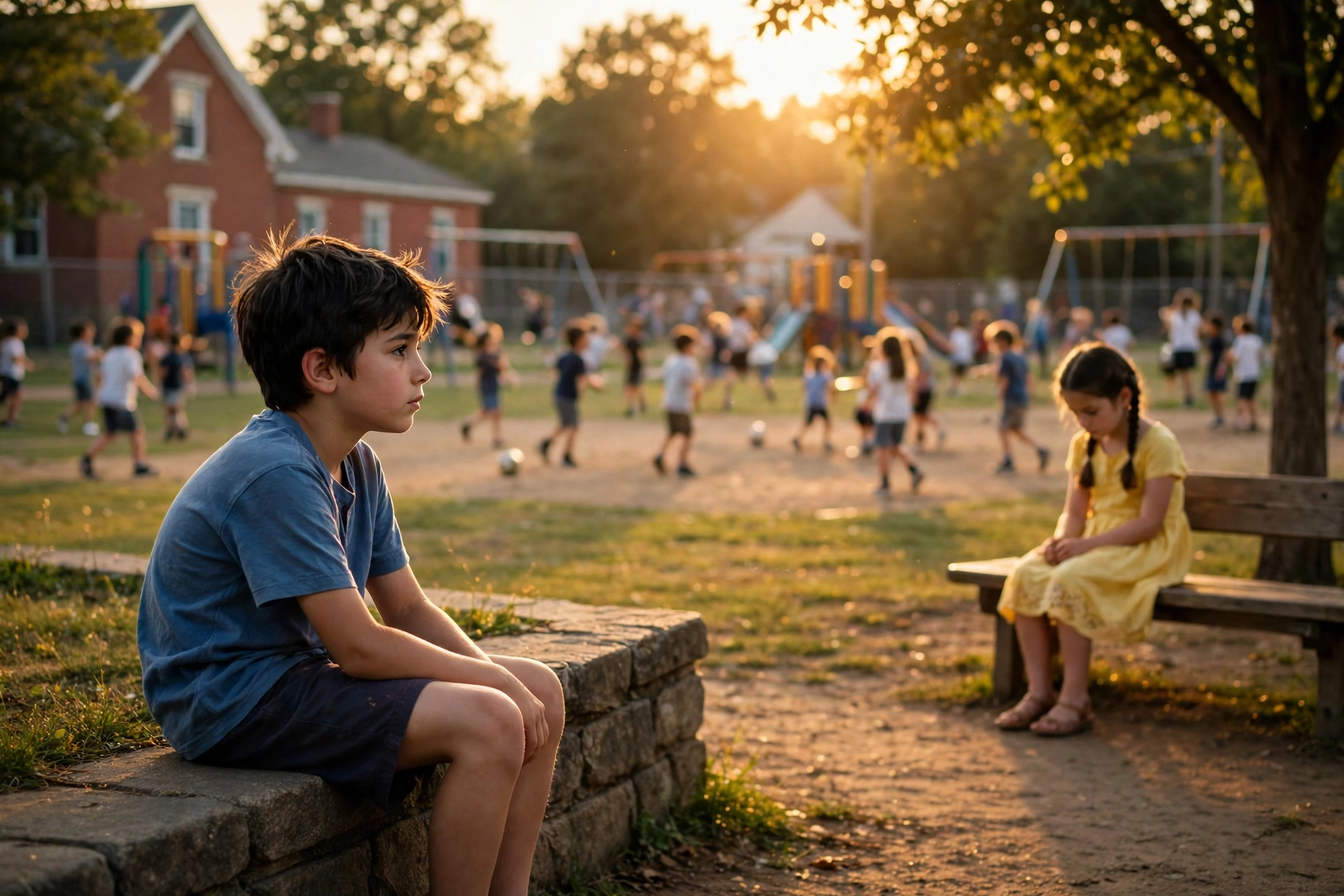
The first thing Kabir noticed about the new girl was not her yellow dress, or her two neat braids, or the way she carried her school bag hugged tight against her chest like a shield. It was the silence around her. In a schoolyard full of shouting, laughing, chasing children, she sat alone on the wooden bench beneath the old neem tree, and nobody spoke to her at all. Not because the children were cruel. They simply did not know how. On her very first morning, their teacher, Mrs. Das, had explained in a gentle voice that the new girl's name was Meera, that she had moved to town with her grandmother, and that Meera could not hear. She talked with her hands, Mrs. Das said, in a language made of shapes and movements, and she could read lips if you spoke slowly and faced her. The class had nodded seriously, the way children do when a teacher tells them something important, and then break time came, and nobody quite knew what to do next, so they did nothing at all.
Kabir watched her for three whole days before he did anything. He was ten years old, and he was not the bravest boy in his class, nor the cleverest, but he had a habit his mother called "noticing." He noticed the shopkeeper who limped, the dog that waited outside the bakery every morning, and the way his little sister hid her broken crayons so nobody would laugh at her drawings. And now he noticed Meera. He noticed that she ate her lunch slowly, watching the other children play, her eyes following the skipping ropes and the cricket ball as if she were watching a film she could not hear. And he noticed something else, something that made his chest feel tight in a way he could not explain: whenever a child ran past her bench laughing, Meera smiled, a quick, hopeful smile, as if she were ready to be invited. But no invitation ever came.
On the fourth day, Kabir walked over to her bench with his cricket ball under his arm and said, very loudly and very slowly, "HELLO. MY. NAME. IS. KABIR." Meera looked up at him, startled, and then she laughed. It was a real laugh, bright and sudden, and Kabir felt his face go hot. She pointed at his mouth, then covered her ears with her hands, then shook her head, still smiling. Kabir understood at once. He had been shouting at her as if her ears were simply far away, when the truth was that shouting made no difference at all. He felt foolish, and he apologised without words, pressing his hands together the way his grandmother did when she said sorry. Meera nodded, and her smile softened, and then she did something Kabir would never forget. She raised her hands and shaped them slowly in the air, as if she were drawing invisible pictures, and then she pointed at herself, and then at him, and then she placed her hand over her heart. Kabir did not understand a single sign. But he understood the feeling behind it perfectly. She was saying hello back, in the only language she had.
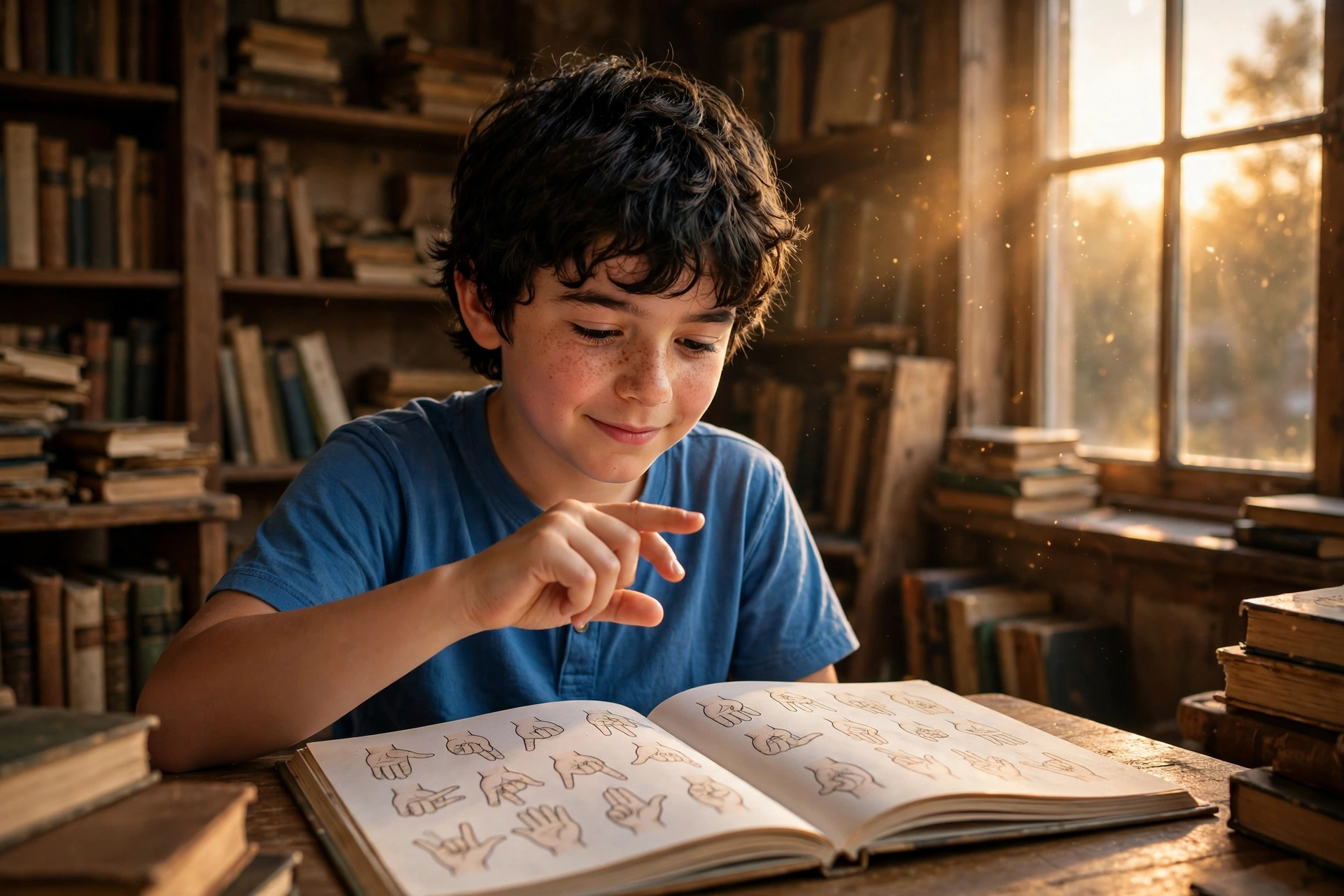
That afternoon, instead of going home, Kabir went to the small town library, a dusty, quiet building with tall shelves and a librarian named Mr. Rao who wore spectacles on a chain and knew every book by its smell, or so he claimed. Kabir marched up to the desk and said, "I need a book that teaches you to talk with your hands." Mr. Rao looked at him over his spectacles for a long moment, and then, without a single question, he climbed a ladder, pulled down a thick, worn book with a faded blue cover, and set it on the desk. "Sign language," he said. "It is a real language, Kabir, with grammar and jokes and poetry, just like the one you speak. It is not easy, but it is worth learning." He leaned closer and added, in a voice meant only for Kabir, "A person who learns another person's language is giving them the greatest gift there is. You are giving them a way back into the conversation."
Kabir carried the book home as if it were treasure. That evening he sat on the floor of his room and began. The first sign he learned was "hello," a simple wave of the hand from the forehead, and he practised it in front of his mirror until his little sister, peeking through the door, burst out laughing and asked him why he was saluting himself. The second sign was "friend," two hands hooking together like links in a chain, and Kabir liked that one so much that he practised it twice as long. The third was "play," and the fourth was "thank you," and by bedtime his fingers ached and his brain felt full, but his heart felt lighter than it had in days. The next morning, he woke up early and practised again before school, and when his mother asked him what he was doing, he said, "Learning, Amma. Something important."
At break time, Kabir walked up to Meera's bench, took a deep breath, and signed "hello." His hands were clumsy, and he was sure he had done it wrong, but Meera's face changed completely. Her eyes went wide, and her mouth fell open, and then she clapped her hands together once, hard, and signed something back so fast that Kabir understood nothing at all. He laughed, and she laughed, and then she slowed down, signing carefully, word by word, the way a teacher does for a brand-new student. "You," she signed, pointing at him. "Learn. My. Language." Then she placed her hand over her heart again, and this time Kabir knew what it meant, because he had looked it up the night before. It meant "thank you." And just like that, the silence around the bench broke open, not with sound, but with hands.
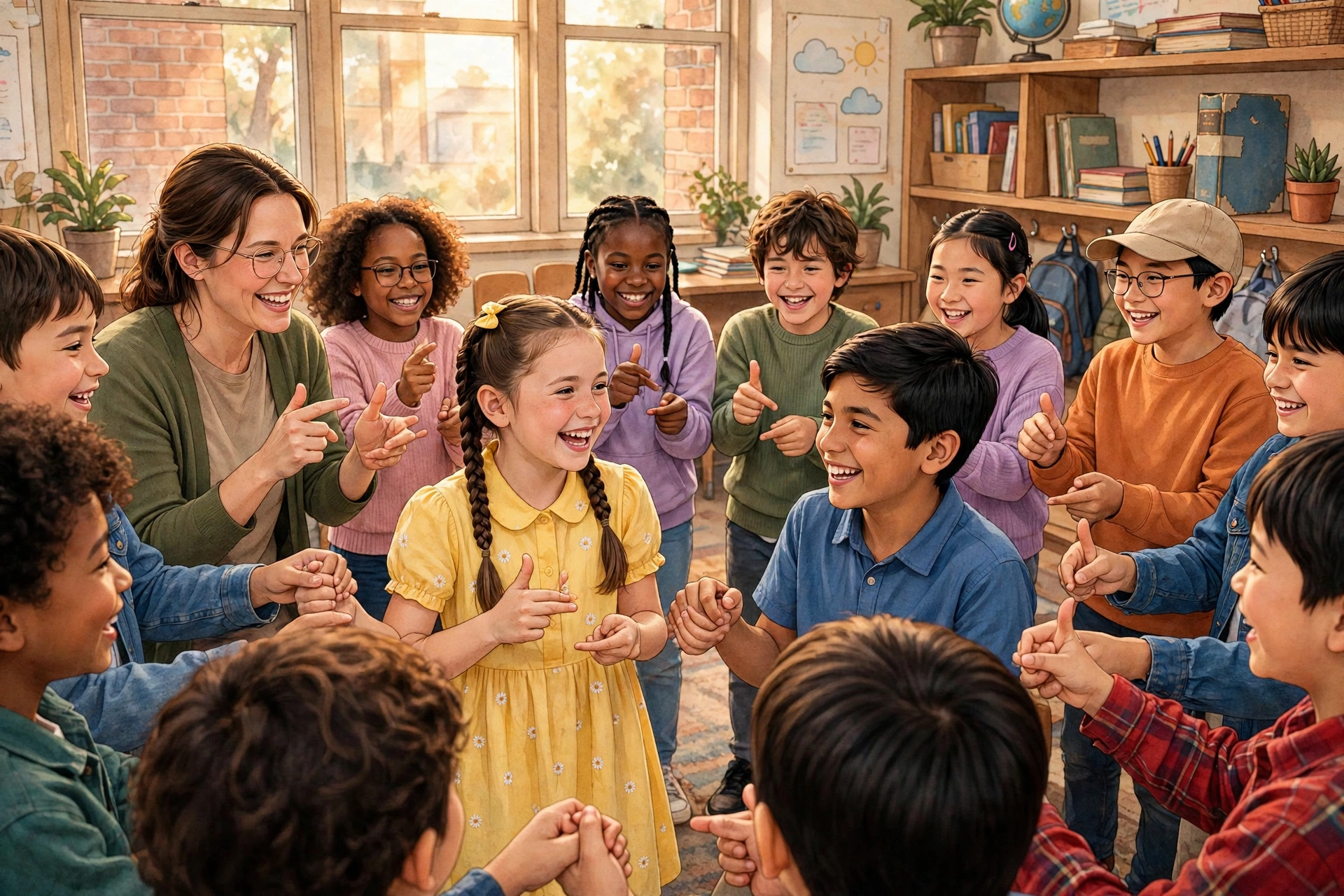
From that day on, break time belonged to the two of them. Kabir brought the blue book to school every day, and Meera became his teacher. She corrected his signs with endless patience, tapping his wrist gently when his hand shape was wrong, shaking her head and laughing when he mixed up "cat" and "dog" for the third time. In return, Kabir taught her the names of all the children in the class, spelling them out letter by letter on his fingers. Slowly, the other children began to gather around the bench, curious at first, then fascinated. One boy asked Kabir to teach him how to sign his own name. Then a girl asked, and then another, until half the class was sitting cross-legged in a circle, waving their hands in the air like a flock of cheerful birds, and Meera sat in the middle of it all, laughing harder than Kabir had ever seen anyone laugh.
Not everything was easy after that, because kindness, Kabir was learning, is not a single brave moment but a long series of small choices. There was a day when the class was choosing teams for the annual school play, a grand affair with costumes and songs that the whole town came to watch, and Meera's name was quietly left off every list. Nobody said it out loud, but everyone seemed to assume that a girl who could not hear could not be in a play. Kabir heard two boys whispering about it near the water tap, and something hot and stubborn rose up in him. That evening, he went to Mrs. Das's house with the blue book under his arm and a plan in his head, and he knocked on her door and asked, in his most polite voice, whether the play could have a part where the actors signed as well as spoke. Mrs. Das smiled a slow, thoughtful smile. "Kabir," she said, "I think you have just invented the best part of this year's play."
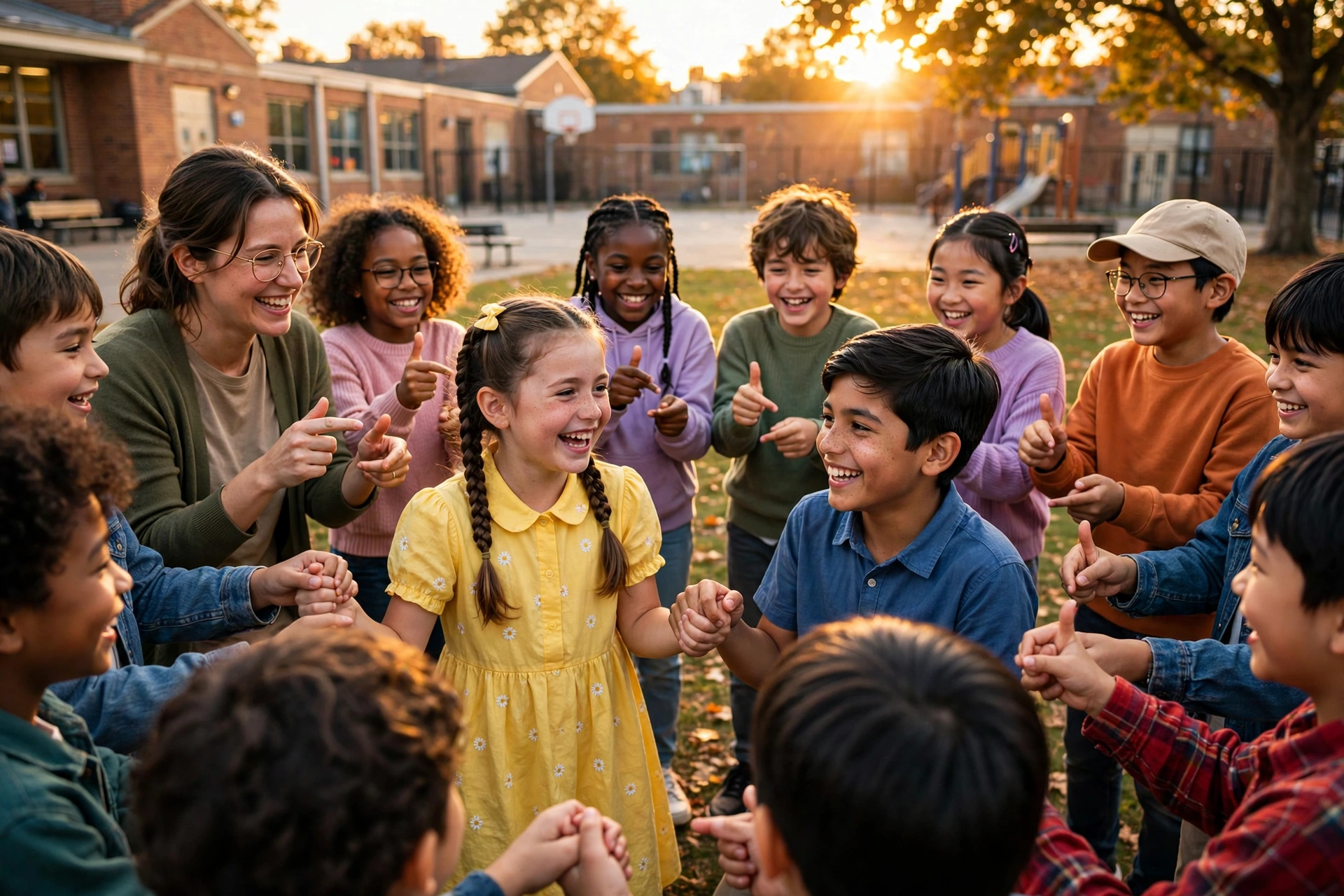
The rehearsals that followed were the happiest weeks of the whole school year. Mrs. Das rewrote the final scene so that the entire class signed the closing song together, their hands rising and falling in time, while Meera stood at the front, not at the back, and led them all. But Meera was patient, and Kabir was patient, and little by little the signs grew smooth and sure, until the day of the performance arrived and the school hall was packed with parents and grandparents and neighbours from all over town. When the final song began, the hall fell silent, and then every child raised their hands together, signing the words of a song about friendship and belonging, and Meera stood at the front, her yellow dress bright under the lights, her hands moving like music itself. There was not a dry eye in the hall, and when the last sign faded, the applause went on for so long that Mrs. Das had to raise her hand three times to quiet it down.
After the play, everything was different, not in a loud, dramatic way, but in the quiet way that real change happens. Meera no longer sat alone on the bench beneath the neem tree. She sat in the middle of a noisy, laughing group, and though she still could not hear their voices, she never missed a word, because her friends had learned to speak in a language she could understand. The school started a sign language club that met every Friday, and Mr. Rao ordered three more copies of the blue book for the library, because the first one was now so worn from use that its spine had to be taped together. And Kabir learned something that stayed with him for the rest of his life: the distance between loneliness and belonging is often just one person willing to learn a new way to say hello.
Years later, Kabir would forget many things about his school days: the lessons, the cricket scores, even the name of the play. Listening is not something you do with your ears alone. It is something you do with your time, your patience, and your willingness to meet another person exactly where they are, in whatever language they speak, even if that language is spoken entirely with your hands. And anyone, even a shy ten-year-old boy with a borrowed library book and clumsy fingers, can learn to do it. All it takes is noticing someone sitting alone, walking over to their bench, and deciding that their silence will not be the last word.
Meera still keeps the blue book, all these years later, taped spine and all, on a shelf in her own classroom, because she grew up to become a teacher herself, a teacher who teaches hearing children and deaf children side by side. And on the first day of every school year, she tells her new students the story of a boy who once shouted "hello" at her very loudly, and then went home and learned to say it properly, with his hands. She tells it because she wants every child in her class to understand the same thing Kabir understood beneath the neem tree all those years ago: that kindness is not about grand gestures or perfect words. It is about making the effort to reach someone, even when reaching them means learning a whole new language, one sign at a time. And if you ever see someone sitting alone, she tells them, do not just feel sorry for them from far away. Go and sit beside them. Learn their language. Say hello in the way they can hear it best. You might just change their whole world, the way one boy changed hers.