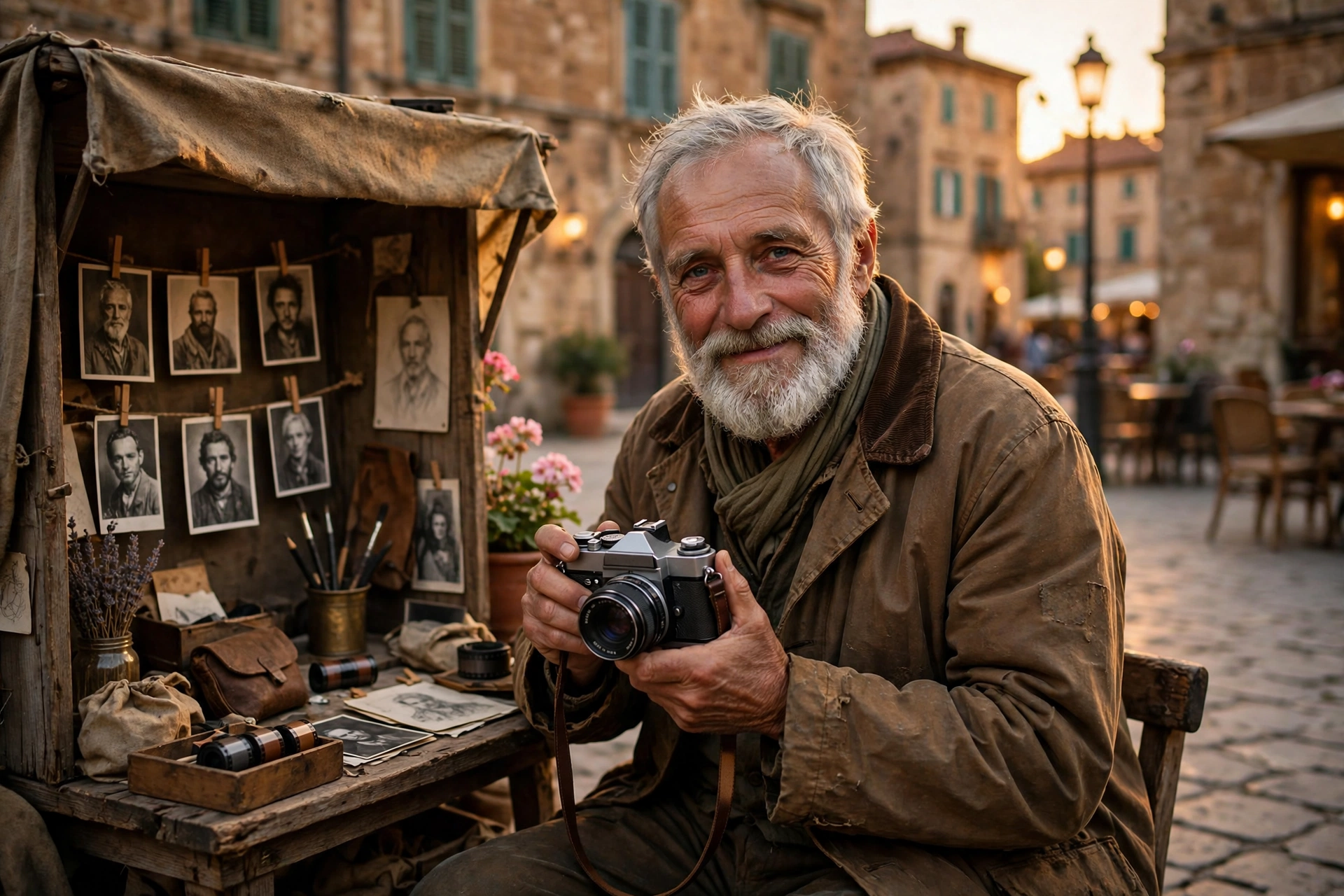
Every morning, long before the tea stalls opened and the shutters rattled up along the old city square, Rahim unlocked his little wooden stall beneath the plane tree and set out his life's work. A faded canvas canopy, a stool with one wobbly leg, a box of film rolls, and his camera — an old, heavy thing with a brass ring around its lens, worn smooth by forty years of hands. Rahim was seventy-two now, with a silver beard and kind eyes that crinkled at the corners whenever he smiled, which was often. He wore the same brown coat in every season, patched at the elbows, and he knew every face in the square by name: the fruit seller, the schoolchildren, the woman who sold jasmine garlands, the policeman who always stopped to straighten his cap before having his picture taken.
Rahim was the best photographer the square had ever known, and the strangest. He charged whatever people could afford, and when they could afford nothing, he charged nothing at all. A bride on her wedding day, a labourer holding his newborn son, a grandmother in her best shawl — he photographed them all, developed the prints in the tiny dark room behind his stall, and handed every picture over with both hands, as if it were something precious. Because to him, it was. "A photograph belongs to the person in it," he would say, whenever anyone asked why his own stall had no pictures of his own on its walls. "It is their memory, not mine. Why would I keep what belongs to someone else's heart?"
And so the walls of Rahim's stall stayed bare, year after year, while the walls of half the city filled with his work. Portraits hung in sitting rooms and shops and hallways all over town, smiling down at the people they belonged to. Rahim never minded. He went home each evening to a small, quiet room above a bakery, ate his supper alone, and slept beneath a ceiling that held no pictures at all. Only those who knew him well understood the sadness tucked behind his smile: forty years ago, Rahim had loved a woman named Laila, who had laughed like rain on a rooftop and who had died young, before cameras were common and before he had learned to keep anything for himself. He had given away her portrait, too — to her mother, who had wept and thanked him — and he had never taken another photograph of his own life again.
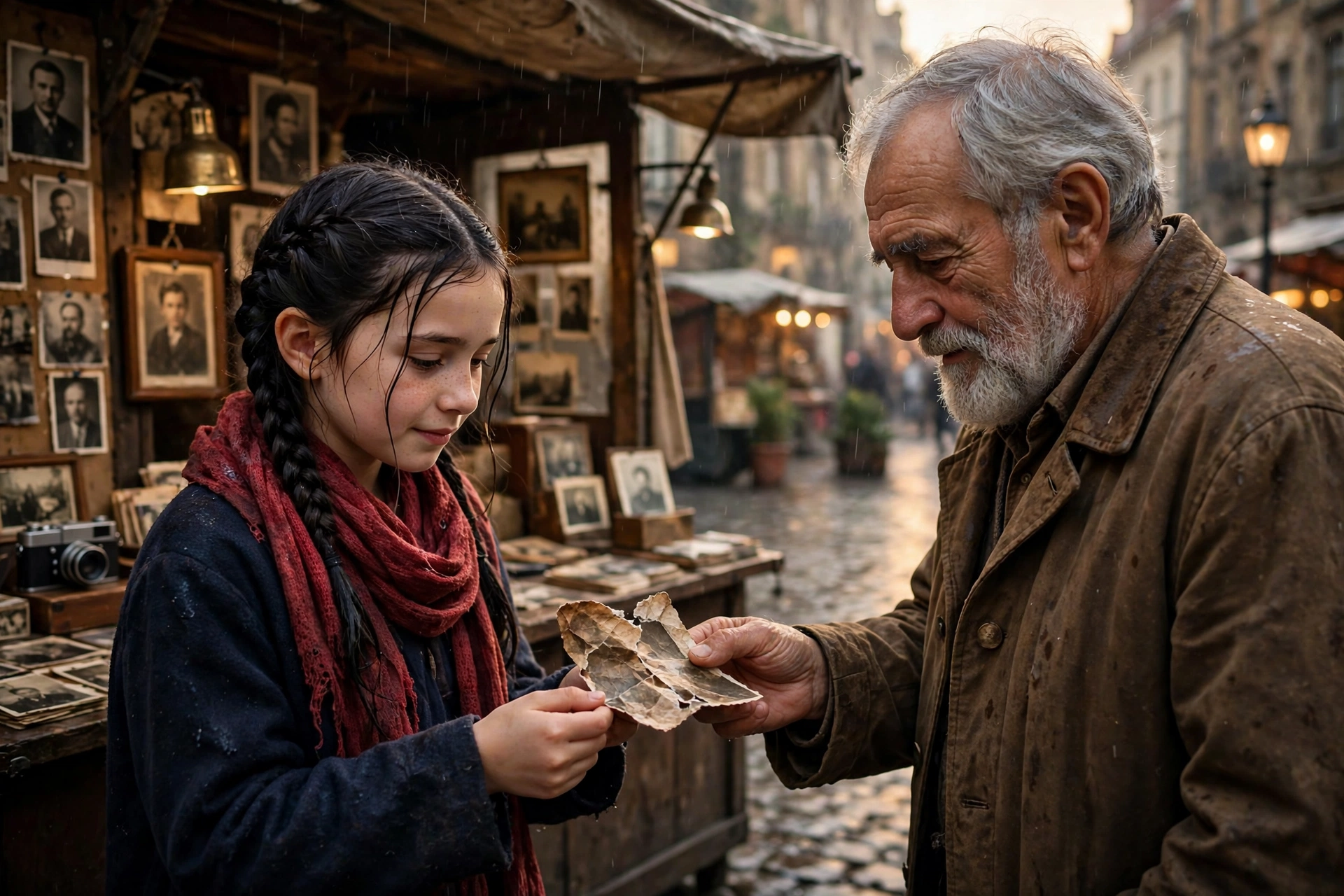
It was raining on the afternoon Amna found him. The rain came down in silver sheets over the square, drumming on the canvas canopy, turning the dust to mud and sending everyone running for shelter. Everyone, that is, except one small girl standing in the rain, clutching something to her chest with both hands. She was ten years old, with dark braided hair plastered to her cheeks and a faded red scarf wrapped tight around her neck, and she was crying — not loudly, the way children cry when they have scraped a knee, but quietly, the way people cry when they are trying very hard not to.
Rahim saw her from his stall and beckoned her under the canopy at once. "Come, child, come out of the rain," he called, in the gentle voice he used for frightened animals and shy brides. "You will catch your death out there." Amna stepped under the canopy, shivering, and slowly opened her hands. In her palms lay a photograph — or what was left of one. It was torn at one corner, creased down the middle, and soaked through, its colours bleeding into one another like a watercolour left out in the storm. But through the damage, a woman's face could still be seen, smiling softly, holding a small child in a sunny courtyard.
"My mother," Amna whispered. "Our house flooded last month, in the big rains. We lost everything. This is the only picture I have left of her. She died two years ago, and now the rain is taking her away too." Her voice broke, and she looked up at Rahim with eyes that held a question she was almost afraid to ask. "Can you save her? Please. I will pay you when I am grown, I promise. I will pay you anything."
Rahim took the wet photograph as carefully as if it were a newborn bird. He had repaired photographs before — he knew how to dry them slowly, how to photograph them again and print them fresh, how to coax a fading face back into the light. But this one was so damaged, and the child holding it was so afraid, that he did something he had never done for a stranger. He pulled up the wobbly stool, sat the girl down beside his little heater, wrapped his own dry shawl around her shoulders, and said, "Child, you do not need to pay me anything, now or ever. Sit here and get warm. I am going to bring your mother back."
For three days, Rahim worked on Amna's photograph as if it were the most important portrait of his life. He dried it slowly between sheets of clean paper, so it would not curl or crack. He photographed it with his old camera in soft, even light, and in his dark room he worked long past sunset until the woman's smile came back — not perfect, not new, but clear and warm and unmistakably hers. When he finally handed the fresh print to Amna, along with the original, wrapped safely in wax paper, the girl stared at it for a long time in silence. Then she threw her arms around his waist and sobbed into his brown coat, and Rahim, who had not been hugged like that in many years, stood very still and patted her braided hair, and felt something inside his chest loosen for the first time in a long while.
After that day, Amna came to the square every afternoon after school. At first she came to thank him, bringing small gifts she could afford: a guava from her grandmother's tree, a drawing of his stall, a paper star she had folded herself. Then she came because she liked to watch him work, the way he talked to nervous brides until they laughed. And then she came because the stall had become the one place where she did not feel like a girl who had lost everything. She swept the floor, she sorted the film rolls, and she learned to say "look at the bird, not at the camera," just the way Rahim did, which always made children laugh at exactly the right moment.
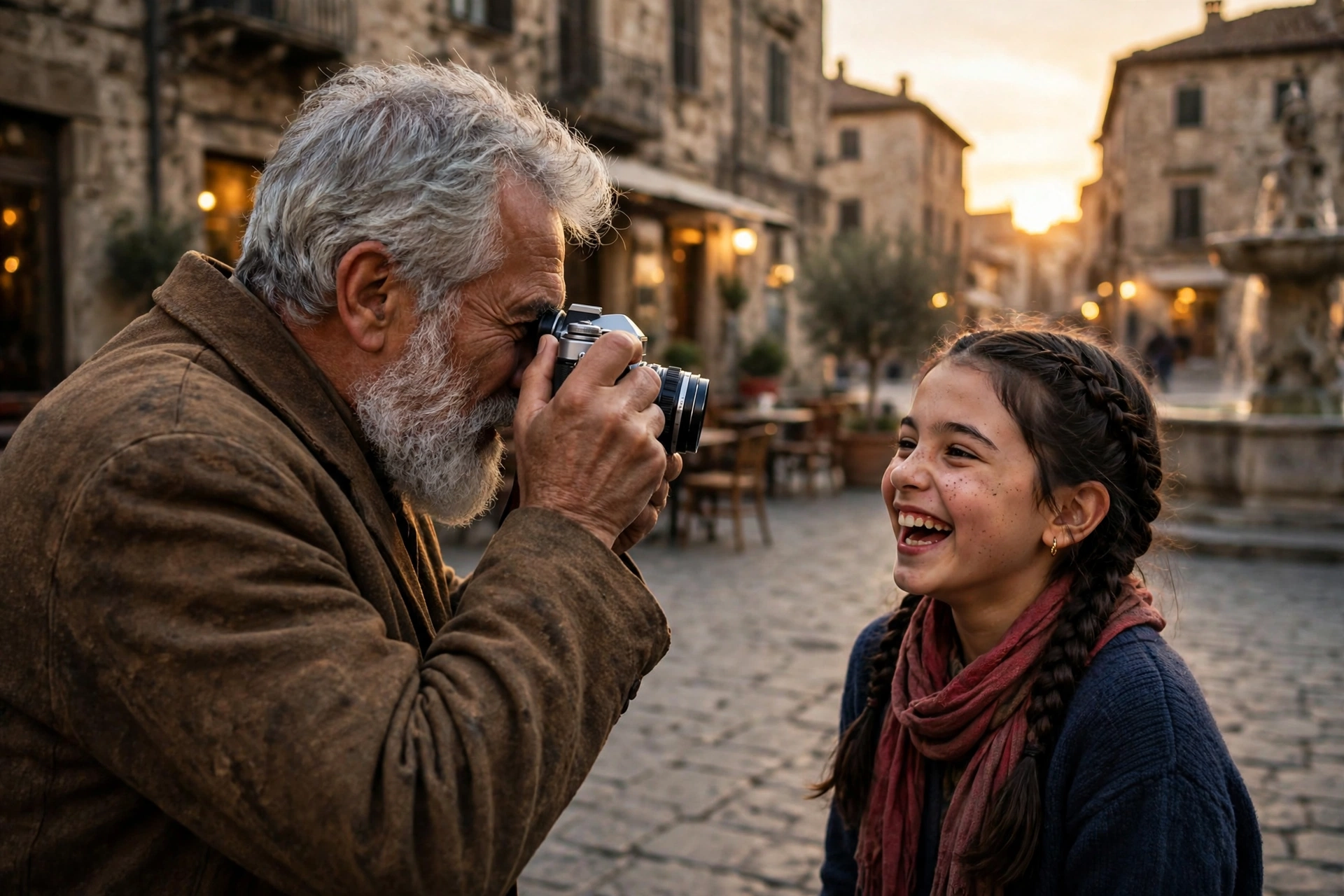
One golden evening, as the sun turned the square to honey and the swallows circled the plane tree, Rahim did something he had not done in years. He turned his camera on Amna herself. "Stand by the fountain," he said, "and think of something happy." Amna thought of her mother, smiling in the sunny courtyard, and of the fresh print now kept safe in her grandmother's trunk, and of the old man who had brought her mother back, and before she knew it she was laughing — a real, bright, surprised laugh that rang across the square like a bell. Click. Rahim developed the print that very night, and when he gave it to her the next morning, Amna gasped. It was the first photograph of herself smiling since the flood. "I forgot I could look like this," she whispered, and she held the picture to her chest the way she had once held the torn one.
But Amna, who missed nothing, had noticed something about Rahim's stall that no one else seemed to see. His walls were bare. In all the years he had given photographs to everyone else, he had never kept a single one for himself — not of a bride, not of a friend, not of Laila, not even of the square he loved. One afternoon, while Rahim was developing prints in the dark room, Amna asked the fruit seller about it, and the fruit seller told her the story of Laila, and of the portrait given away long ago, and Amna understood at once. The old man who saved everyone's memories had no memory of his own left to hold.
Amna said nothing about what she had learned. She simply began to arrive earlier each day, and to watch more closely, and to ask more questions: how to load the film, how to hold the camera steady, how to wait for the exact moment when a person's real face appears. Rahim, delighted to have a pupil, taught her everything, never suspecting that she was planning something. She practised on the jasmine seller, on the policeman, on pigeons and cats and the plane tree itself, until her hands were steady and her eye was true. And on Rahim's seventy-third birthday, when the square was full of people who had come to wish him well, Amna did the thing she had been preparing for weeks.
She waited until the light turned gold, the way Rahim always liked it, and until he was standing by his stall, laughing with the fruit seller, his silver beard catching the sun. Then she lifted his own camera — heavier than she expected, but steady in her hands — and she said, in a clear voice, "Rahim Uncle, look at me." He turned, surprised, and smiled the smile she had come to love, the one that crinkled the corners of his eyes. Click. The whole square went quiet, and then everyone cheered, because they all understood what had just happened, even before Amna did.
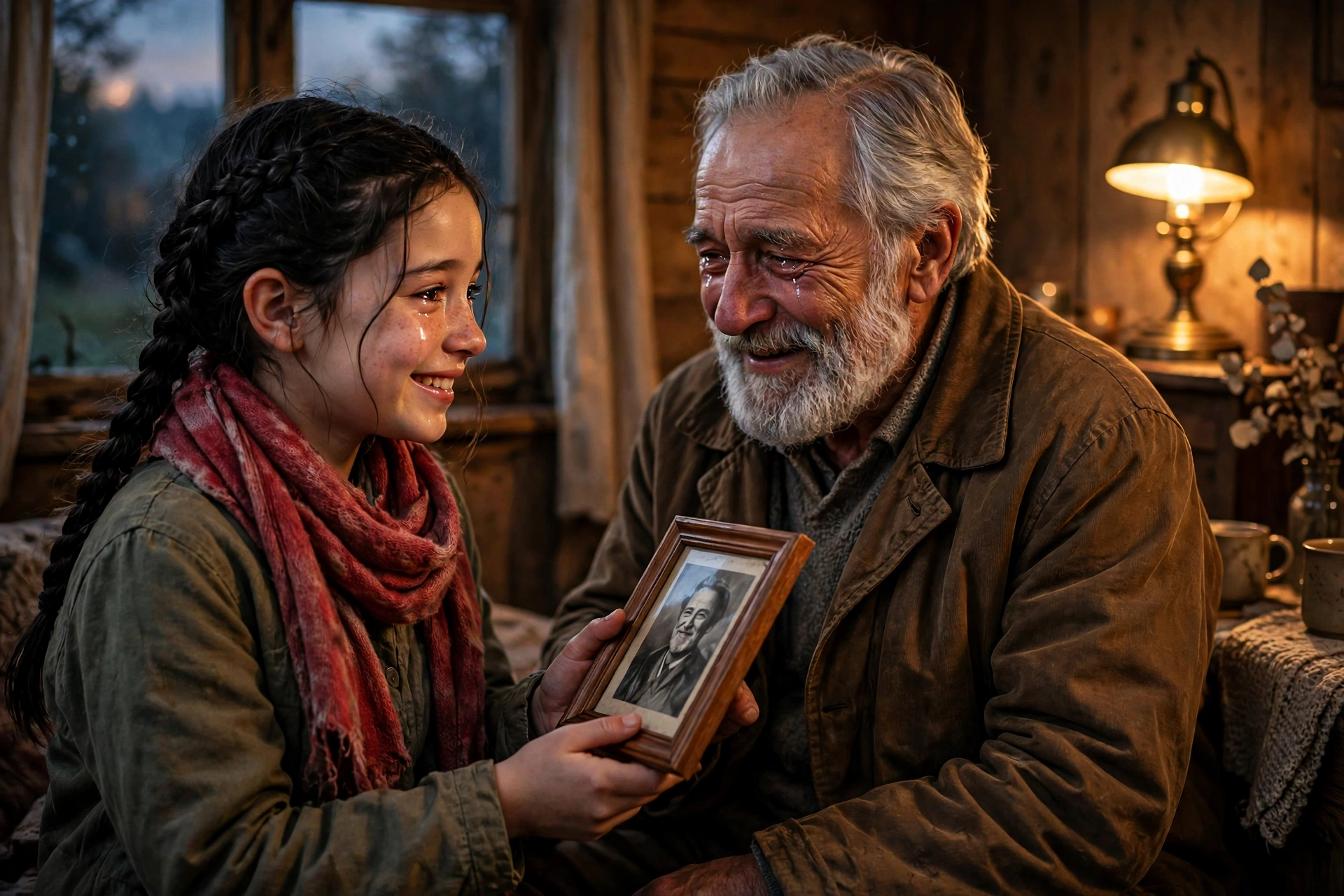
That night, Amna developed the print herself, with Rahim guiding her hands in the dark room, and she mounted it in a simple wooden frame she had bought with coins saved from weeks of skipping sweets. The next morning, she carried it to the stall with great ceremony, and in front of all the regulars of the square, she hung it on the bare wall — the first photograph the stall had ever held. It showed an old man in a worn brown coat, smiling in golden light, with his life's work all around him. Underneath it, in her neatest handwriting, Amna had written on a small card: "For the man who gave everyone their memories. Now you have one of your own."
Rahim stared at the photograph for a long time, and his hands, which had held a camera steady for forty years, trembled. Then he did something the square had never seen him do. He sat down on the wobbly stool and cried — not with sadness, but with the deep, overflowing gratitude of a man who had spent his whole life giving and had finally, at seventy-three, allowed himself to receive. Amna put her small hand in his, and the fruit seller clapped, and the jasmine seller wiped her eyes with her shawl, and the policeman stood a little straighter, as if he were on parade.
From that day on, the stall in the square had one photograph on its wall, and only one. Rahim still gave every other portrait away, with both hands and a small bow, exactly as he always had. But each morning, before he opened the canopy, he looked at the picture of himself smiling in the golden light, and he remembered that kindness is not measured by how much we empty ourselves for others. Sometimes, the kindest thing of all is to let someone love us back. And every afternoon, Amna still comes to the square after school, her red scarf bright against the dust, to remind the old photographer, without ever needing to say it, that no one who spends a lifetime giving light to others should ever have to sit alone in the dark.