For eleven years, the Starlight Cinema on Mill Road had not shown a single film. Its painted sign had faded from gold to the colour of old tea, its glass doors were chained, and the posters in the display cases had bleached white under the sun until the smiling faces on them were nothing but ghosts. People in the town walked past it every day without looking, the way you walk past a house where someone once lived and died — politely, and a little afraid of remembering.
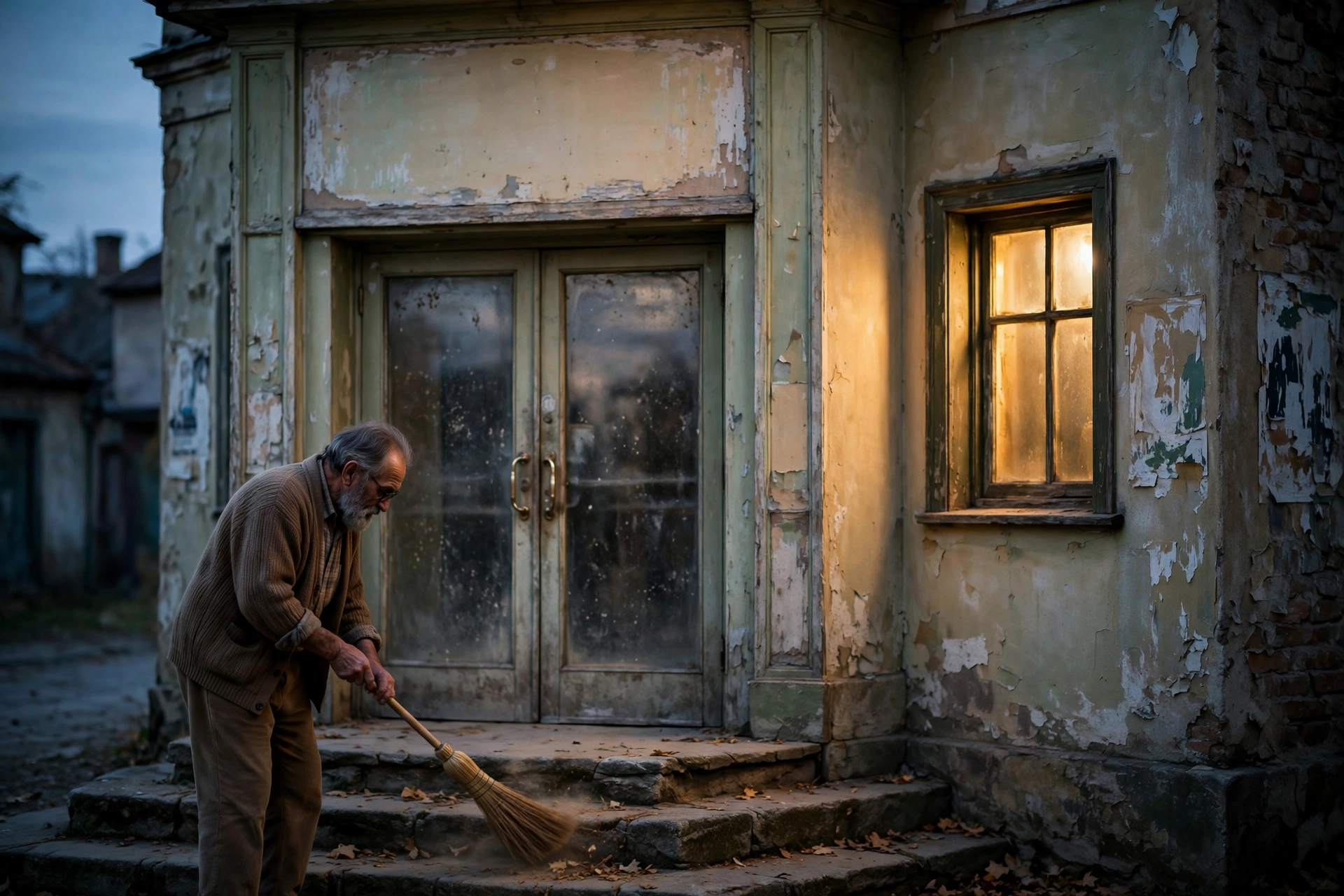
But every morning at six, Yusuf unlocked the side door with a key as long as his hand, stepped inside, and switched on one small lamp in the lobby. He had been the caretaker of the Starlight since he was twenty-four years old, and he was seventy-one now. The cinema had closed when the big multiplex opened beside the highway, with its air conditioning and its ten screens and its popcorn that cost more than a day's wages. One by one the town's people had stopped coming. The last film the Starlight ever showed was a comedy about a fisherman, and only nine people had sat in the dark to watch it. Yusuf still remembered their laughter, thin as it was, and the way it had rolled around the empty seats like a marble in a tin.
When the owner sold the building to a developer who never came, Yusuf was offered a small pension and told his work was finished. He nodded politely, the way he always did, took the key home, and returned the next morning anyway. Nobody stopped him. Nobody owned the place enough to care, and nobody loved it enough to object.
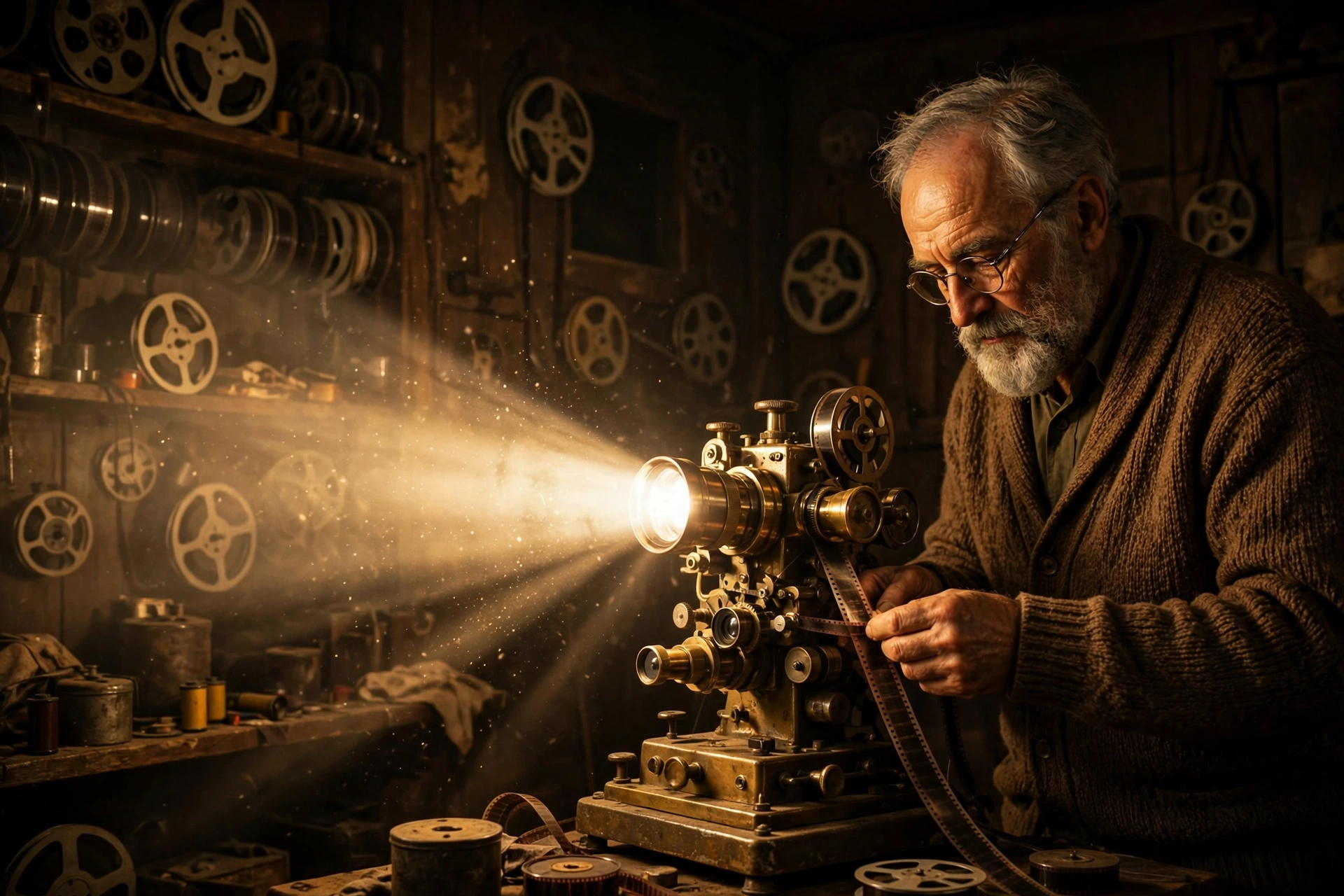
So he kept his routine. He swept the lobby until the dust rose in pale clouds and settled again on the worn red carpet. He polished the brass rails along the aisle, though no hand had touched them in years. He dusted the seats, row by row, all four hundred and twelve of them, and he straightened each one as if a full house were about to arrive. In the projection room he oiled the old brass projector, the one his father had taught him to thread when he was a boy, and he ran the reels of the last film through his hands just to hear the soft clicking sound they made. His wife, Amina, had sold tickets at the little wooden counter for thirty-eight years, and she had died the winter before the cinema closed. Sometimes Yusuf stood behind that counter in the quiet and said good evening to no one, just to hear his own voice in the place where hers used to be.
His daughter, who taught in the city, called every Sunday and begged him to move. "Abba, come and live with us," she would say. "There is a room ready, and the grandchildren ask for you. Why do you stay in a town where even the cinema is gone?" Yusuf always gave the same answer. "A cinema is not gone while someone still opens its door," he said. "And besides, who will keep the projector warm?"
The town thought he was kind, and a little mad, and mostly they left him alone. Children on their way to school sometimes pressed their faces to the glass doors and laughed at the old man sweeping an empty lobby.
One cold evening in November, as Yusuf was locking the side door, he heard a small voice behind him. "Uncle, why do you sweep a cinema nobody comes to?"
He turned. A boy of about nine stood on the pavement, thin as a reed, with a school bag hanging off one shoulder and a football tucked under his arm. His shoes were torn at the toes. Yusuf knew him by sight — Hamza, the son of the widow who sold vegetables at the corner of Mill Road, a boy who had never once, in all his nine years, been inside a cinema.
"Because it is my job," Yusuf said, smiling. "And because a place that has made people happy should not be left to the dust."
Hamza pressed his face to the glass door and peered into the dark lobby. "Is it true there is a big white wall inside where pictures move?" he asked.
"It is true," Yusuf said. "It is called a screen. And the pictures move because of light."
"Light?" Hamza's eyes widened. "You mean the wall is magic?"
Yusuf laughed, a sound he had almost forgotten how to make. "Not magic, son. A machine, and a lamp, and a man who knows how to make them talk to each other. Come tomorrow after school, and I will show you."
The next afternoon Hamza arrived at four o'clock sharp, breathless from running, his school bag still on his back. Yusuf took him through the side door and up the narrow stairs to the projection room, where the old brass projector stood like a sleeping animal. Yusuf switched on the lamp, threaded a reel of the old fisherman comedy, and the machine woke with a hum and a click. A beam of white light shot out of the little window and cut through the dust of the dark hall below, landing on the screen like a small sun.
Hamza gasped. "It is magic," he whispered. "You lied, Uncle. It is magic."
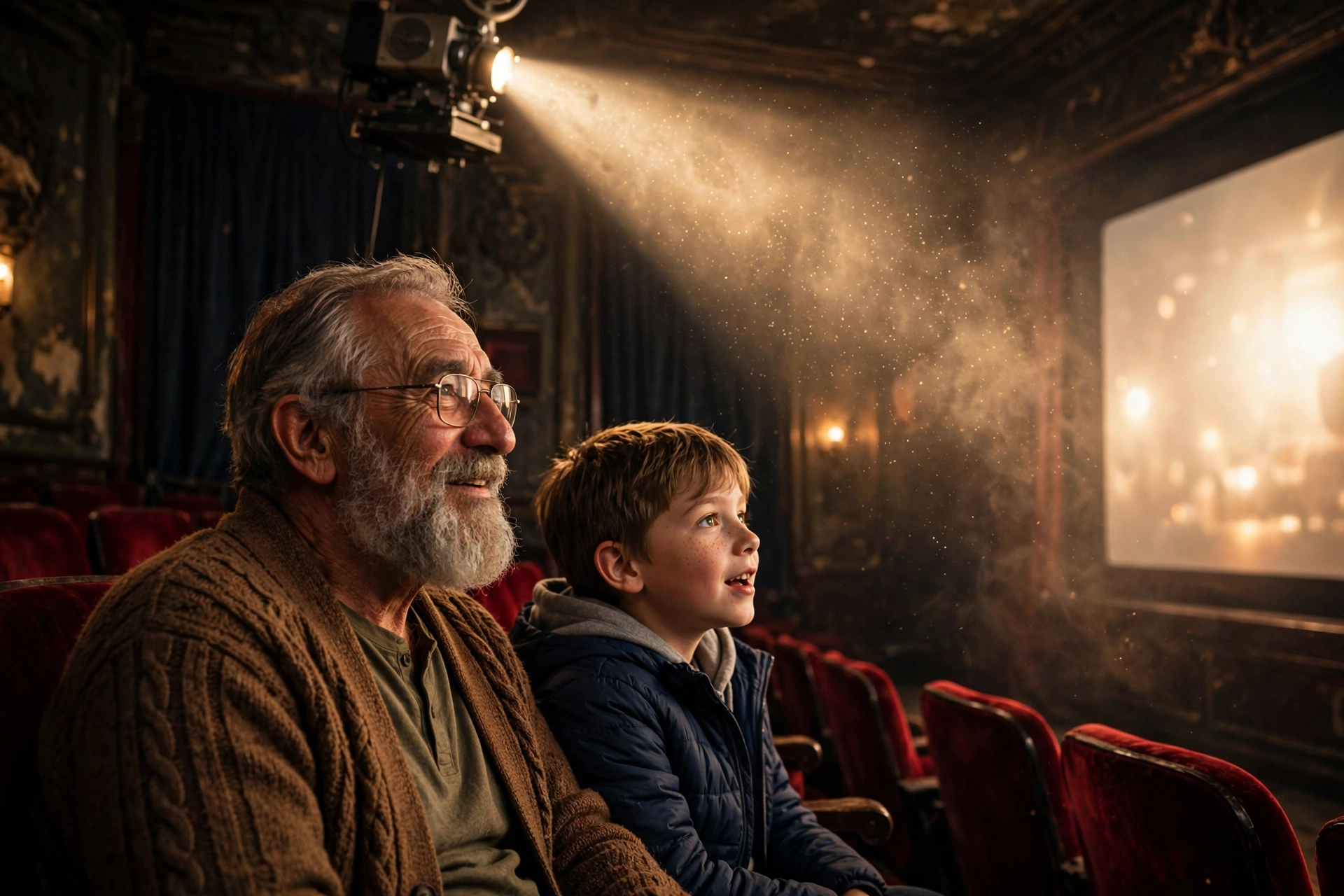
They sat together in the front row, the old man and the boy, and watched the fisherman fall off his boat for the hundredth time. Hamza laughed so hard he fell off his seat, and Yusuf laughed too, and for the first time in eleven years the Starlight Cinema sounded like itself again.
After that, Hamza came every day. He swept the lobby beside Yusuf, and he learned to dust the seats, and he learned the names of all the rows. He asked a thousand questions — how does the light carry the picture, why does the film have little holes along the edge, who were the people in the faded posters — and Yusuf answered every one, slowly, the way you answer a question you have waited years to be asked. Hamza told his friends at school, and at first they did not believe him. A cinema with no tickets? An old man who shows films for free? But one afternoon three of them followed him, and Yusuf let them in, and they sat in the dark with their mouths open while the light danced on the screen.
Word travels in a small town the way smoke travels in a still room — slowly at first, and then all at once. Within a fortnight, a dozen children were coming every evening. Then their mothers came, curious, carrying baskets of food. Then the old men who had once courted their wives in the back rows came too, leaning on their sticks, pointing at the seats where they had sat fifty years ago. The vegetable seller came, and the tailor, and the bus driver, and the woman who ran the tea stall, and the Starlight Cinema, which had been silent for eleven years, filled up with the sound of people again — with laughter and whispering and the rustle of sweet wrappers and the creak of four hundred and twelve old seats.
Yusuf never charged a single rupee. When the tailor pressed money into his hand, Yusuf folded it back into the man's pocket. "The cinema was never about the money," he said. "It was about the dark, and the light, and sitting together. You cannot sell that. You can only share it."
But there was a problem, and Yusuf knew it before anyone else did. The old projector was dying. Its lamp flickered and dimmed, and the motor coughed, and one evening, halfway through the film, the beam simply went out. The hall sat in darkness, and the children groaned, and Yusuf stood in the projection room with his hand on the warm brass and felt his heart sink. The part he needed had not been made in thirty years. He had checked. He had written letters. He had asked everyone he knew.
That night, after the last child had gone home, Yusuf sat alone in the front row and looked at the dark screen. "I am sorry, Amina," he whispered. "I kept it open as long as I could."
He did not know that Hamza had stayed behind, hiding two rows back, and had heard every word.
The next morning, Hamza went to school with a plan. He told his teacher, Miss Farah, about the cinema and the broken projector. Miss Farah told the other teachers. The children of the town went home and told their parents, and the parents told each other, and by Friday evening, something had happened that had not happened on Mill Road in eleven years: people were standing outside the Starlight Cinema with their hands full. The tailor brought a box of tools. The electrician brought wire and a spare lamp he had kept in his shop for twenty years. The bus driver brought his cousin, who had once repaired projectors in the city before the multiplexes came. The vegetable seller brought a pot of biryani. And the town's people, one by one, put money into an old biscuit tin that Hamza held out with both hands — ten rupees, fifty rupees, a hundred — until the tin was so heavy the boy could barely lift it.
Yusuf stood in the doorway, and his hands shook, and he could not speak at all.
It took three weeks. The cousin from the city came every evening after his shift, and Yusuf worked beside him, and Hamza handed them tools and held the torch and asked a thousand more questions. They cleaned the motor, they rewound the reels, they fitted the new lamp, and on a cold evening in December, Yusuf pressed the switch, and the beam of light shot out of the little window again — brighter than it had ever been, cutting through the dark hall and landing on the screen like a small sun rising.
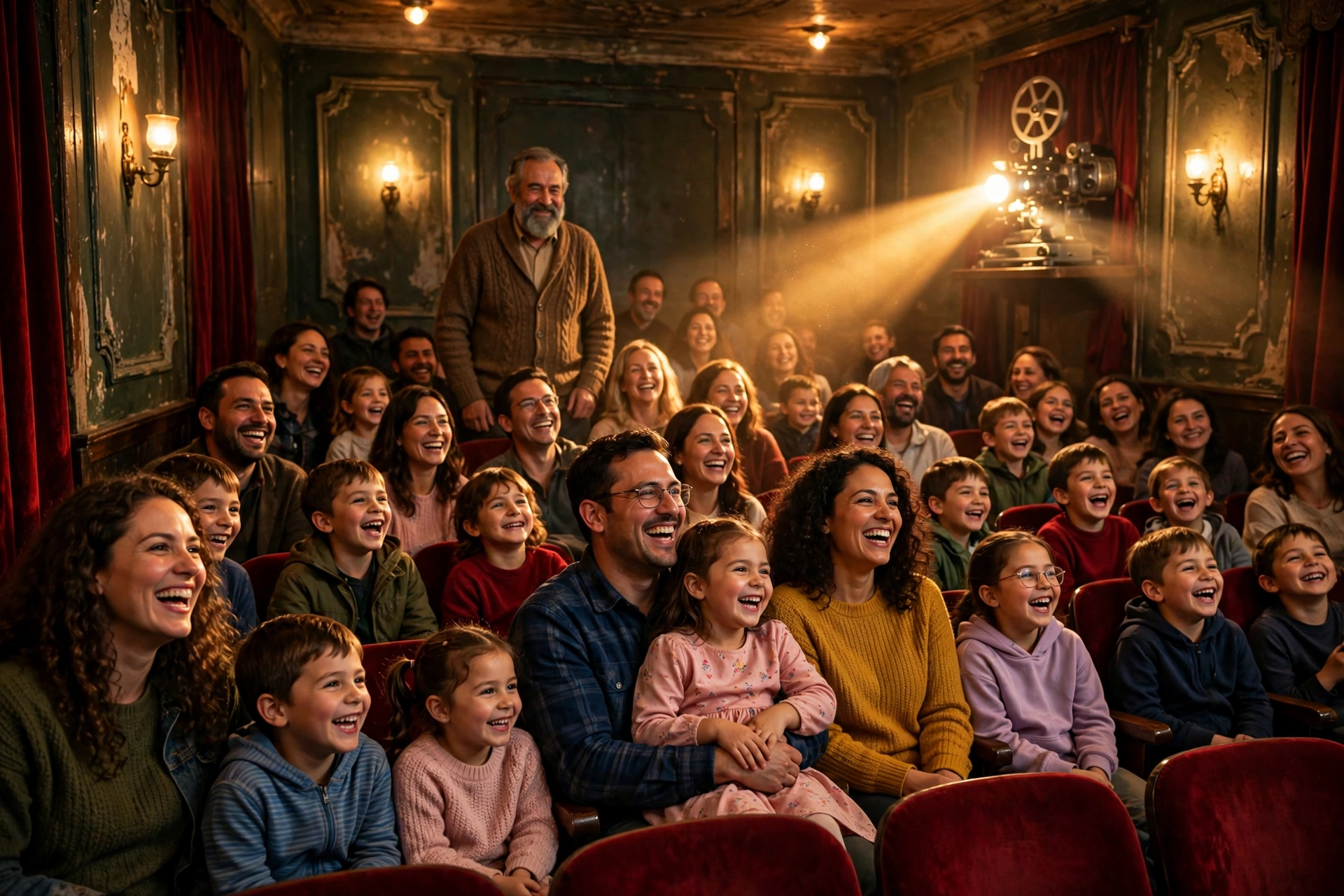
That night the Starlight Cinema showed its first film in eleven years, and every seat was full. Four hundred and twelve people sat in the dark together, and when the fisherman fell off his boat, the whole hall shook with laughter, and Hamza, sitting in the front row beside the old caretaker, laughed until tears ran down his face.
After the film, the people did not leave. They stayed in their seats, and the electrician stood up and said, "We should do this every week." And the tailor said, "I will mend the seats." And the bus driver said, "I will paint the sign." And the vegetable seller said, "I will bring food." And Miss Farah said, "And the children will choose the films."
Yusuf stood at the front of the hall, in the glow of the screen, and looked at all their faces. "I kept this place for eleven years," he said, his voice trembling, "because I believed that a room built for stories should never stay dark. But I was wrong about one thing. I thought I was keeping it for the past. I was keeping it for all of you."
In the spring, the developer who had bought the building came to town, ready at last to tear the cinema down and build shops. He stood in the lobby with his papers and his plans, and he found four hundred and twelve people standing in the hall behind Yusuf, and Hamza standing in front of him, holding the old biscuit tin, which was full again. The developer looked at the faces, and at the polished brass rails, and at the old man who had swept an empty lobby for eleven years, and he did a strange thing. He folded his papers, put them in his pocket, and said, "Perhaps the town needs a cinema more than it needs shops." He sold the building back to the town for the price of the land it stood on, and the town gave it to Yusuf, in trust, for as long as he lived — and after him, to Hamza, who by then knew how to thread a projector better than anyone.
Today the Starlight Cinema shows a film every Friday night, and the tickets cost nothing, and the seats are always full. Yusuf still unlocks the side door every morning at six, and he still switches on one small lamp in the lobby, and he still sweeps the floor. But now, when he opens the door, the light from inside spills out onto Mill Road, and the children on their way to school press their faces to the glass — not to laugh at an old man sweeping an empty lobby, but to see if the light is on yet, and to ask, as they always do, "Uncle, what are we watching tonight?"
And Yusuf always smiles, and always gives the same answer: "Something wonderful, my children. Something wonderful."
The Starlight never needed a crowd to be worth keeping. It only needed one old man who refused to let its light go out, and one small boy who was brave enough to follow it.